A four-week website that took six months to finish isn't a horror story we made up, it's a real project we worked on. The gap almost never comes down to the designer or the platform. It comes down to how fast a business can review and respond once the clock starts. Here's what actually determines your timeline, stage by stage, and the real story behind that six-month delay.
Table of contents
Cost of delays
How many pages you need changes everything
Discovery and planning: 3 to 7 days
Design: 1 to 2 weeks
Content and copywriting: 1 to 3 weeks (the real bottleneck)
Development and build: scales with page count
Revision rounds: where timelines actually break
A real example: 4 weeks estimated, 6 months delivered
Common mistakes that stretch out a website project
FAQ
1. Cost of delays
Every extra week your new site isn't live is a week your old one keeps turning people away. If your current site looks dated or loads slowly, visitors quietly leave for a competitor before they've read your offer. A stalled redesign doesn't just delay improvement, it keeps the leak open.
2. How many pages you need changes everything
Before the stages, the biggest single factor in your timeline is page count. Every number below already includes a normal buffer for one round of revisions.
A 4-page website, home, about, services, contact, typically takes around 3 weeks from kickoff to launch. A 7-page site, with a few extra service pages or a blog, typically takes around 5 weeks.
Bigger sites don't always take proportionally longer. A larger site built mostly from repeatable templates can move faster than a smaller site full of custom, one-off pages. Page count matters, but how much of the site is templated versus bespoke matters just as much.
All of these numbers assume feedback comes back within a day or two each round. If reviews take longer, the timeline stretches well past the estimate, exactly what happened in the real example below.
3. Discovery and planning: 3 to 7 days
Every project starts with figuring out what the site needs to do: agreeing on the pages, the goals for each, and who it's trying to reach.
For a straightforward business site, this takes less than a week. We ask about your customers, your competitors, and what you want visitors to do once they land, whether that's calling, filling out a form, or booking a call.
This is also where we agree on a sitemap, a list of every page and how they connect. Getting this right early saves you from expensive changes later, once a designer has already built around the wrong structure.
If you already know your pages and goals, this stage moves faster. The businesses that move quickest are the ones who've thought about their site before the project starts, not during it. Our guide on what to prepare before starting a website project covers exactly what to have ready.
4. Design: 1 to 2 weeks
Once we know what the site needs to do, design is about how it looks and feels. We usually build a homepage concept first, since that sets the tone for every other page.
For a homepage and a handful of key inner pages, this typically takes one to two weeks including one round of revisions. Complex sites, or ones with custom illustration or photography, take longer.
Design timelines stretch when a business wants to see many directions before picking one. That's understandable, but every extra concept adds days. We recommend narrowing to one clear direction early and refining it, rather than exploring five looks in parallel. Visitors form an opinion about a website in a fraction of a second, and this stage exists to make sure that split-second impression is the right one.
5. Content and copywriting: 1 to 3 weeks (the real bottleneck)
This is the stage most business owners underestimate, and it usually decides how long your project actually takes. Content means your words, images, testimonials, and any videos you want on the site.
If you already have professional photos, clear descriptions of your services, and a handful of reviews ready, this stage moves fast. Starting from nothing, it can easily take longer than design and build combined.
Gathering good content is usually harder than people expect, and it's rarely the designer's fault when it takes time. It requires decisions from you, often several people in your business, about how you want to describe what you do. Content is the piece most agencies quietly build extra weeks around, even if they don't say so upfront.
6. Development and build: scales with page count
Once design is approved and content is ready, building the actual site is usually the most predictable stage, tracking closely with page count. A 4-page build on a platform like Squarespace often takes less than a week. A 7-page build is closer to a week and a half to two weeks. This is the core of what our Launch service delivers once your content is ready.
This is where the homepage design gets turned into every other page, forms get connected, and the site gets set up to work properly on phones and tablets, not just desktop.
Development timelines grow with functionality more than page count alone. A basic brochure site with a contact form is quick. A site with online booking, a member area, or a store takes longer, because there's more to build and test. If a developer quotes an unusually short build stage for a complex site, ask what's included, a fast quote sometimes means a template with light changes rather than a tailored build.
7. Revision rounds: where timelines actually break
Here's the part almost nobody mentions when quoting a timeline. Design and build stages are usually accurate. What's harder to predict is how quickly you, the client, can review the work and give feedback.
A typical project includes two to three revision rounds. Each should take a business day or two to review if you've set aside the time. Most people don't, because running a business is more urgent than reviewing a mockup.
We plan every project around a rough timeline, but we always tell clients the same thing: the project moves at the speed of your feedback, not ours. A four-week estimate assumes you can turn around comments within a day or two each round. If that's not realistic for your schedule right now, say so upfront so we can plan around it.
8. A real example: 4 weeks estimated, 6 months delivered
We want to be specific here, because specifics are more useful than a general warning.
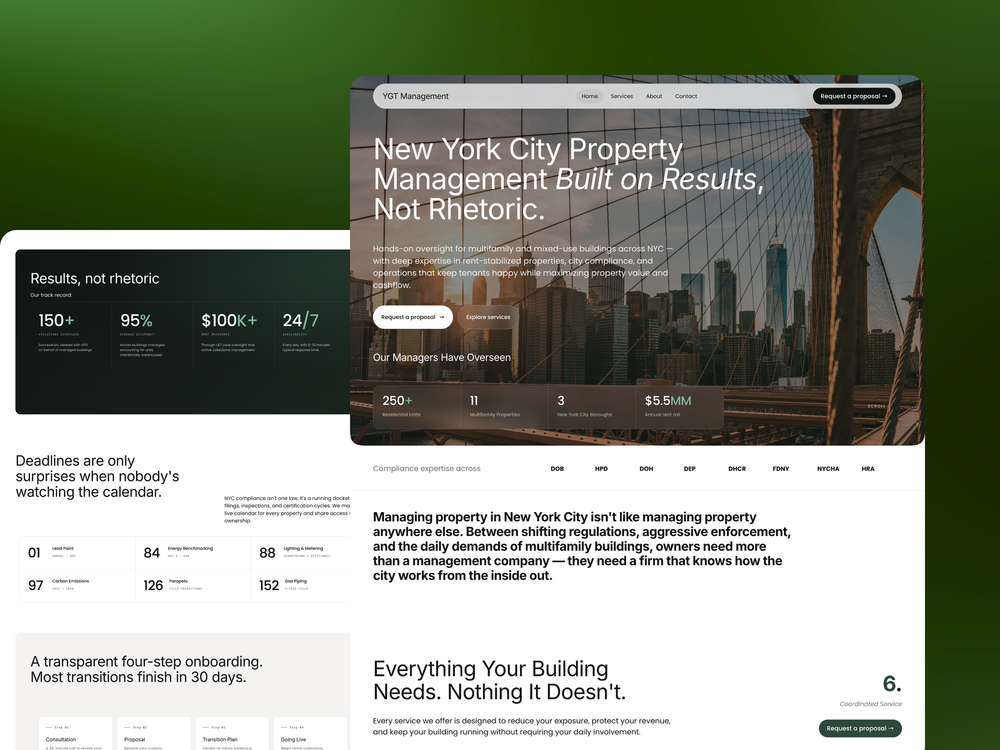
We once built a 12-page website for a b2b facilities management company. Most pages followed a similar, repeatable template, so our estimate was 4 weeks from kickoff to launch, in line with the page-count guide above.
Around the time the project started, the client's own business took off. New contracts, new hires, more urgent priorities. Completely understandable, but calls got rescheduled, feedback on the homepage sat unanswered for weeks, and revisions we needed approved to move forward simply didn't happen on schedule.
That 4-week project took 6 months to finish. Not because the design changed or the build was complicated, but because we couldn't get the input we needed, when we needed it, to build a site that actually fit the business.
We tell this story often because it's the single biggest factor in how long your website takes: not the designer, not the platform, but whether your business can carve out time to review and respond during the project.
9. Common mistakes that stretch out a website project
A few patterns show up again and again in projects that run long.
Not naming one decision maker
If feedback has to be collected from three people before it comes back to your designer, every round takes three times as long. Pick one person to gather input and give the final word.
Starting the build before the content is ready
It's tempting to get moving on design before you've written a word of copy. But design built around placeholder text usually needs rework once real content arrives, since real sentences are rarely the same length as filler text.
Underestimating how long good photos and testimonials take to gather
If you need to schedule a photographer or wait on customer reviews, build that time into your plan from day one, not as an afterthought in week three.
Booking calls too far apart
A quick 15-minute call to unblock a decision is far faster than a week of back-and-forth emails. If your project has stalled, the fastest fix is usually a short call, not another written explanation.
Treating the launch date as fixed, no matter what
Tying a launch to a trade show or a big campaign sounds efficient, but it creates pressure to rush revisions, which usually shows up later as things you wish you'd changed.
Faster, clearer communication consistently produces better results than more content or more features. The same logic applies inside a website project. Speed of feedback matters more than volume of changes.
The bottom line
A 4-page website typically takes about 3 weeks and a 7-page site about 5 — but every estimate assumes feedback comes back within a day or two each round, and the real bottleneck is almost never design or development, it's how quickly the client gathers content and approves revisions. One real 12-page project we've seen stretch from a 4-week estimate to 6 months proves the point starkly. We build in that reality from the start, structuring timelines around your actual availability, not a best-case fiction.
FAQ
How long does it take to build a small business website?
A 4-page site typically takes about 3 weeks and a 7-page site about 5 weeks, assuming content and feedback are provided promptly at each stage.
What's the biggest factor that delays a website project?
Slow client turnaround on providing content and approving revisions is the single biggest factor — design and development phases are usually far more predictable.
How long does the design phase of a website take?
Design typically takes 1 to 2 weeks, though this can extend if multiple rounds of feedback and revisions are needed.
Can a website project really take 6 months instead of a few weeks?
Yes — a project scoped for 4 weeks can stretch to 6 months when content delivery, decision-making, and revision approvals are repeatedly delayed on the client side.
How can I speed up my website project timeline?
Have your content ready before kickoff, designate one decision-maker, and set aside dedicated time each week to review and approve drafts promptly.
More insights