

Engineering firm websites that make capability legible.
Custom Squarespace sites for engineering firms — disciplines and capability published, standards and accreditation visible, and enquiries that arrive with the technical detail already attached. Fixed price agreed before we start, and you own everything.
Engineers assess suppliers on paper, then decide whether to make contact.
A specifier, procurement lead or project engineer is checking whether you can hold the tolerance, meet the standard and deliver at the volume. Marketing language does not just fail to persuade them — it actively counts against you.
Most engineering firm websites
The marketing-language problem
Innovative, world-class, solutions-focused. To a technical reader this reads as a firm with nothing specific to say about its own capability.
The buried-detail problem
Specifications, standards and capability inside gated PDFs. Specifiers eliminate the supplier who made them ask.
What we build instead
A site that publishes capability and tolerances, surfaces standards and accreditation, explains disciplines in the language engineers use, and captures technical detail at enquiry.
- Capability
- Tolerances published
- Standards
- Accreditation visible
- Language
- The words engineers use
- Enquiry
- Captures technical detail
Built for how technical buyers actually specify
Every element below exists because it changes whether you meet a requirement on paper.
Capability published
Disciplines, tolerances, materials, capacities and software. Technical buyers qualify before any conversation happens.
Standards and accreditation visible
ISO, sector approvals and chartered status surfaced properly. These gate whether you can be considered at all.
Projects with the engineering in them
The constraint, the approach, the result. A photograph of a finished asset proves nothing about how you solved it.
Written for engineers
Precise, specific, unembellished. Legibility to a technical reader is the trust signal in this sector.
Findable for the discipline
Pages per discipline, process, standard and sector, matching the technical searches buyers actually run.
Documents easy to reach
Datasheets, certifications and capability statements downloadable in one click. Gating technical documents loses more enquiries than it captures.
A technical business we did this for
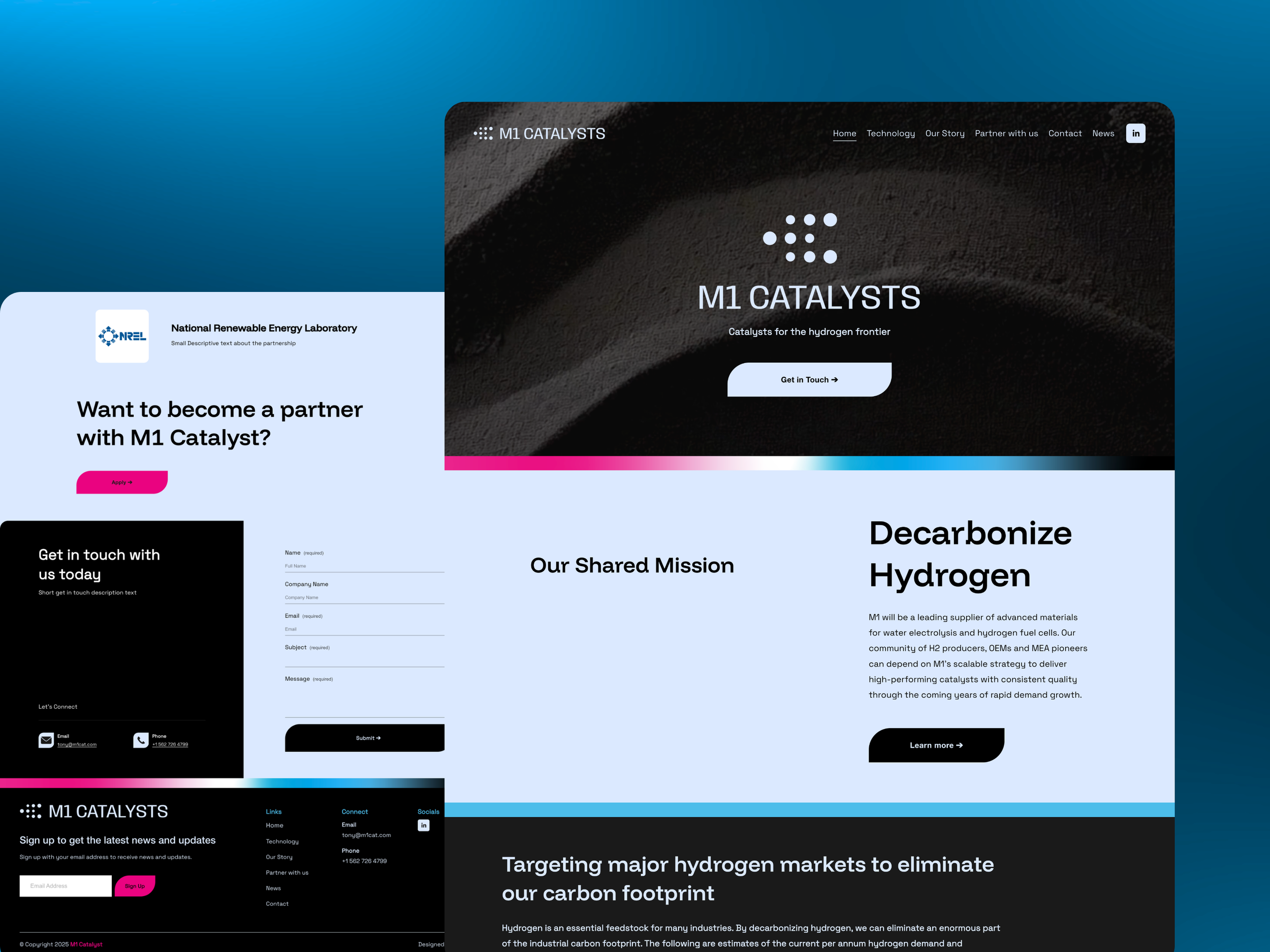
M1 Catalysts
An industrial catalyst supplier selling to engineers and technical buyers who assess capability before they ever make contact, and who dismiss marketing language instantly.
Written for engineers
Cited by AI search
“Mikkel was a terrific web design partner for us in launching our business. Strategic, collaborative, and thoughtful in his approach.”

Anthony K.
M1 Catalysts
How your engineering firm website gets built
Four stages, in the same order every time. How long each takes depends on the size of the site — you get the timeline in writing before anything starts.
-
01
Discovery
One call and a short form. Which work is most profitable, which you want more of, and what clients ask before they commit.
-
02
Copy first
Every page written for you and sent as a document to review. You approve what the site says before you see how it looks.
-
03
Design & build
Built custom from a blank canvas — desktop and mobile — with SEO, schema and analytics wired in as we go, not bolted on after.
-
04
Launch & handover
If you have an existing site, every URL is redirected so rankings hold. Then training, 30 days of support, and full ownership in your name.
We launch, rebuild, grow and maintain engineering firm websites.
Two fixed-price projects to get the site right, two monthly retainers to keep it working. Most clients start with a project, then add one retainer.
You have the direction. We build it properly.
For companies with their design and content already settled, or moving from another platform without changing the substance. The thinking is done — this is the part where it gets built and lands without incident.
Everything reconsidered, then rebuilt around it
For companies where the site is not just dated but wrong — the wrong message, the wrong structure, aimed at the wrong buyer. We start with what it should say and work outward from there.
Visibility that compounds instead of resetting
Fewer buyers reach a results page at all now — they ask an assistant and act on the answer. Being the source that answer draws on is the work, and it is won slowly rather than switched on.
The web team you would hire, without the headcount
For companies that want the site run rather than repaired. Someone who knows it inside out, works to your rhythm, and gets to things before you have noticed them.
Grow and Maintain can run together after any project. Not sure which you need? The discovery call settles it in thirty minutes.
Questions engineering firms ask us
Will we lose our current search rankings?
+
No. Every URL is mapped and 301-redirected before launch, and rankings are measured either side so anything bringing in technical enquiries keeps working.
Why does marketing language count against us?
+
Because a specifier reading innovative or world-class concludes you have nothing specific to say about your own capability. Precision reads as competence in this sector; superlatives read as absence.
What should be published rather than gated?
+
Disciplines, tolerances, materials, capacities, software and standards. Engineers assess suppliers on paper before making contact, and a gated capability statement is one a competitor published openly.
Where do accreditations and chartered status belong?
+
High up. ISO, sector approvals and chartered engineer status gate whether you can be considered at all, so they belong in the first few seconds rather than a footer.
How should projects be presented?
+
With the engineering in them — the constraint, the approach, the result. A photograph of a finished asset proves you were involved but nothing about how you solved it.
Do we need pages per discipline?
+
Yes, plus process, standard and sector. Buyers search structural, civil, mechanical or process engineering alongside the standard they need to meet. Internal team names rank for none of it.
Will AI answers cite technical content?
+
They will, and in narrow engineering niches there is very little competition for it. Properly structured technical pages are exactly what answer engines quote as a source.
Who writes the content — and can our engineers review it?
+
We write every page and deliver it as a document for technical review before any design work begins. Precision matters more than polish, so your engineers correcting detail is expected rather than a delay.
Can our team update it without a developer?
+
Yes. Capabilities, projects, certifications and datasheets are all editable in-house, with a recorded walkthrough of your own site. If nobody has time, there is a management retainer.
What does it cost, and who owns the site?
+
Projects start from $3,750, with the exact figure set by page count, functionality and whether existing content is being migrated. You get a fixed number in writing before anything begins — no hourly billing and no scope surprises. Full detail on the pricing page. You own the result outright: the domain, the Squarespace account and every piece of content are in your name from day one, with no agency lock-in.

Be specified on paper.
Thirty minutes, free. We work out what the site needs to do and tell you straight whether we're the right team for it. Not ready to talk? Have us pull your current site apart on video instead.



