

E-commerce websites that sell what a screen cannot show.
Custom Squarespace e-commerce sites — product pages that answer the real objection, photography that carries the argument, and a checkout with nothing in the way. Fixed price agreed before we start, and you own everything.
The hard part of e-commerce is selling something the buyer cannot hold.
Whatever the product does in person — how it sounds, how it tastes, how it feels in a room — none of it survives the screen. The page has to substitute for the experience, and most product pages substitute a bullet list instead.
Most online store websites
The specification problem
Dimensions and materials describe the product without ever making anyone want it. Specifications confirm a decision; they do not create one.
The invisible problem
Buyers search by category, use case and comparison. Sites built as one shop page with a grid appear for almost none of it.
What we build instead
Product pages that answer the objection directly, photography treated as the primary argument, shipping and returns stated up front, and category pages that rank.
- Product pages
- Answer the objection
- Photography
- The primary argument
- Shipping and returns
- Stated up front
- Categories
- Pages that rank
Built for how online buyers actually decide
Every element below exists because it changes whether a visit becomes an order.
Product pages that answer the objection
Structured around the one doubt stopping the purchase, rather than a specification table nobody asked for.
Photography as the argument
In-context imagery at scale, because the buyer is trying to imagine the product in their life and cannot do it from a white background.
Shipping and returns up front
Cost, timing and the returns policy visible before checkout. Undisclosed shipping is the most common reason a basket is abandoned.
Category pages that rank
Real pages per category and use case, targeting the searches buyers run before they know your brand exists.
Checkout friction removed
Guest checkout, saved details, no unnecessary steps. Every extra field between basket and payment costs orders.
Fast on mobile
Most product discovery happens on a phone, often from a social link. A slow product page is closed before the first image loads.
Two brands we did this for
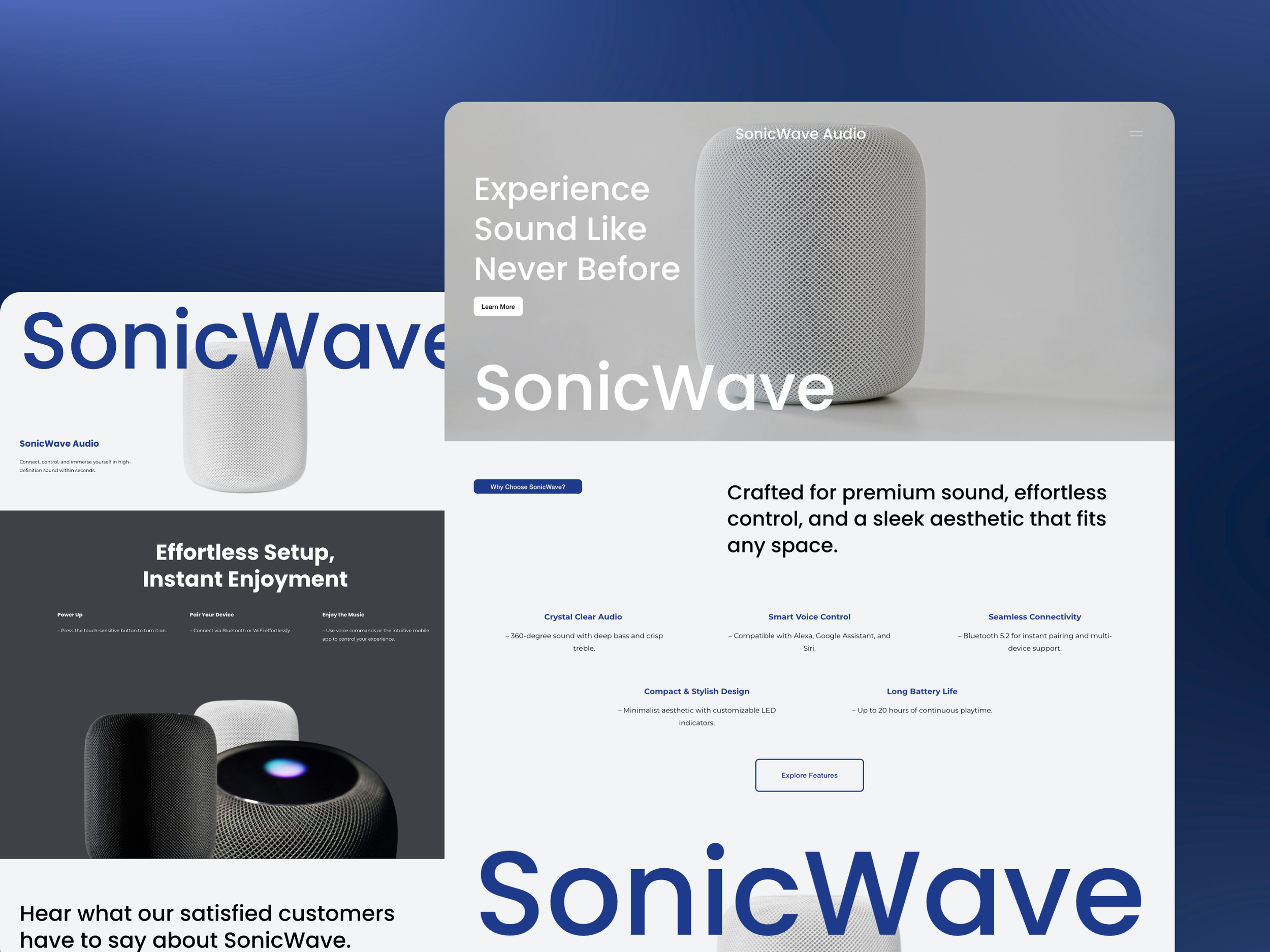
SonicWave Audio
A premium audio brand selling speakers and sound systems where the argument rests on two things people cannot experience through a screen: how it looks in a room, and how it sounds.
Shown in context
Built to compare
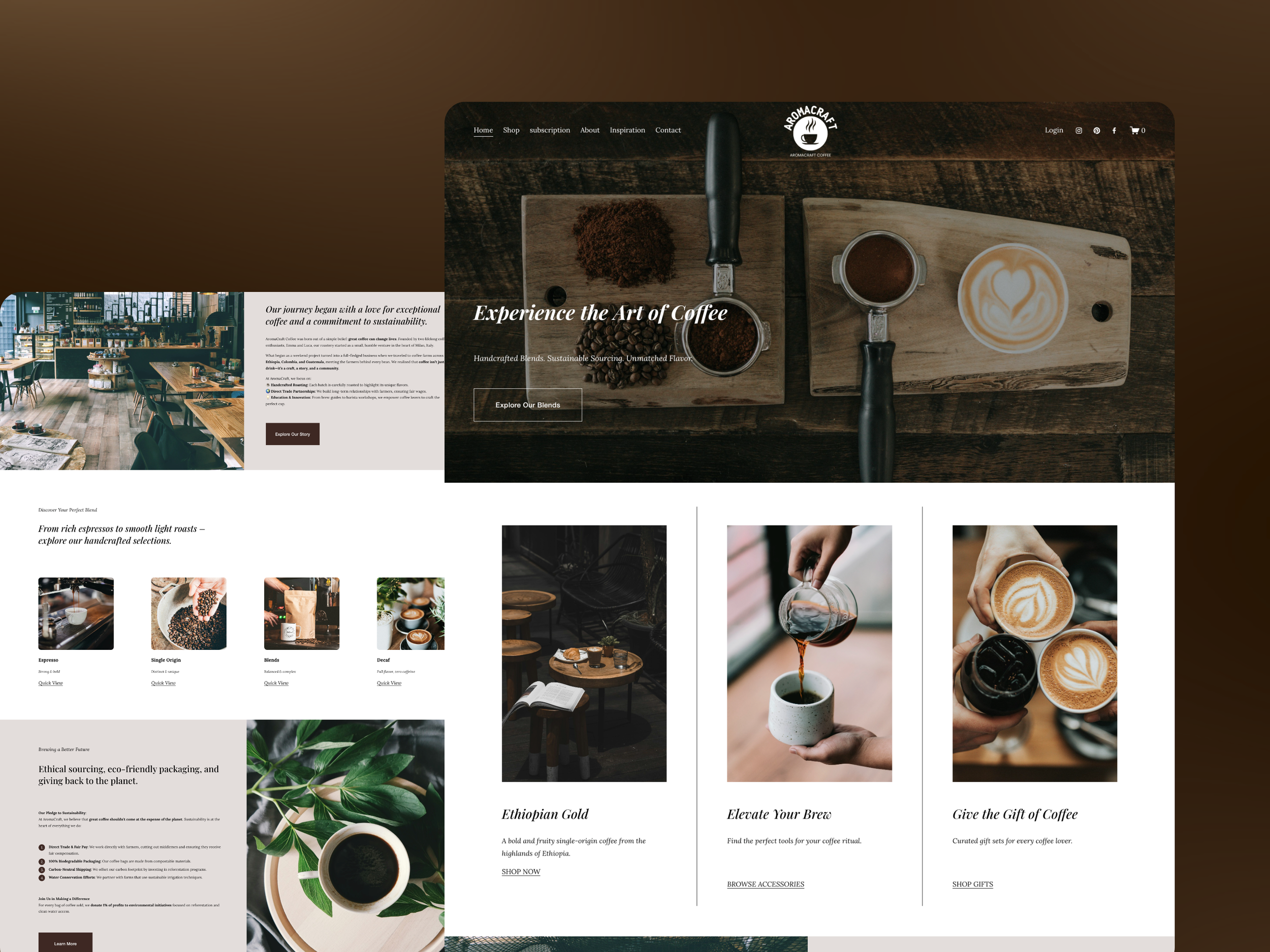
AromaCraft Coffee
A specialty coffee roaster selling beans and cafe product online, where the whole proposition is a flavour the buyer cannot experience before paying for it.
Flavour made legible
Repeat built in
How your e-commerce website gets built
Four stages, in the same order every time. How long each takes depends on the size of the site — you get the timeline in writing before anything starts.
-
01
Discovery
One call and a short form. Which work is most profitable, which you want more of, and what clients ask before they commit.
-
02
Copy first
Every page written for you and sent as a document to review. You approve what the site says before you see how it looks.
-
03
Design & build
Built custom from a blank canvas — desktop and mobile — with SEO, schema and analytics wired in as we go, not bolted on after.
-
04
Launch & handover
If you have an existing site, every URL is redirected so rankings hold. Then training, 30 days of support, and full ownership in your name.
We launch, rebuild, grow and maintain e-commerce websites.
Two fixed-price projects to get the site right, two monthly retainers to keep it working. Most clients start with a project, then add one retainer.
You have the direction. We build it properly.
For companies with their design and content already settled, or moving from another platform without changing the substance. The thinking is done — this is the part where it gets built and lands without incident.
Everything reconsidered, then rebuilt around it
For companies where the site is not just dated but wrong — the wrong message, the wrong structure, aimed at the wrong buyer. We start with what it should say and work outward from there.
Visibility that compounds instead of resetting
Fewer buyers reach a results page at all now — they ask an assistant and act on the answer. Being the source that answer draws on is the work, and it is won slowly rather than switched on.
The web team you would hire, without the headcount
For companies that want the site run rather than repaired. Someone who knows it inside out, works to your rhythm, and gets to things before you have noticed them.
Grow and Maintain can run together after any project. Not sure which you need? The discovery call settles it in thirty minutes.
Questions e-commerce brands ask us
Will we lose our current search rankings?
+
No. Every URL is mapped and 301-redirected before launch, including product and category pages, and rankings are measured either side.
Can Squarespace handle a real product catalogue?
+
For most brands, comfortably — variants, subscriptions, discount rules, inventory and the major payment and shipping integrations are all native. Where a catalogue or fulfilment requirement genuinely exceeds it, you hear that on the call rather than after the build.
What should a product page actually do?
+
Answer the one objection stopping the purchase. A specification table confirms a decision; it does not create one. Dimensions and materials belong further down the page than most brands put them.
Does photography really decide it?
+
In-context imagery does. The buyer is trying to imagine the product in their life and cannot do that from a white background, so photographs of the thing where it will actually live carry the argument.
Where do shipping costs and returns belong?
+
Before checkout, visibly. Undisclosed shipping is the most common reason a basket is abandoned, and a returns policy stated up front removes more hesitation than a discount code.
Do we need category pages?
+
Yes, plus use case. Buyers search categories and situations before they know your brand exists, and a single shop page with a grid competes for almost none of that.
How do we increase repeat orders?
+
Subscriptions where the product suits it, and email capture that is actually positioned to collect. Both are native, and both are usually underused compared with paid acquisition.
Who writes the content — and can we review it?
+
We write every page and deliver it as a document for your review before design begins, which is when product language and tone are easiest to sharpen.
Can we add products ourselves?
+
Yes. Products, variants, collections, pricing and content are all editable in-house, with a recorded walkthrough of your own site. If nobody has time, there is a management retainer.
What does it cost, and who owns the site?
+
Projects start from $3,750, with the exact figure set by page count, functionality and whether existing content is being migrated. You get a fixed number in writing before anything begins — no hourly billing and no scope surprises. Full detail on the pricing page. You own the result outright: the domain, the Squarespace account and every piece of content are in your name from day one, with no agency lock-in.

Sell it before
they can touch it.
Thirty minutes, free. We work out what the site needs to do and tell you straight whether we're the right team for it. Not ready to talk? Have us pull your current site apart on video instead.



