The private hospital trust signals every website needs to convert self-pay patients
Self-pay patients are spending significant personal money on treatment, and the private hospital trust signals on a website must build that trust at a high standard. Most private hospital websites fall short because they treat trust as a credential list rather than an architecture. The detail of how clinicians are introduced, how outcomes are described, and how pricing is acknowledged all matter. Here is what the best ones do differently.

Why a website for private hospital must earn trust before it earns a consultation
A website for private hospital that consistently converts self-pay patients into booked consultations is one that understands a specific truth about the self-pay decision: the patient who is funding their own treatment is performing a genuinely commercial evaluation of whether the quality of care they will receive justifies the significant personal financial investment they are being asked to make. This evaluation is not satisfied by institutional impressiveness or premium visual presentation alone. It requires specific, verifiable evidence of clinical quality, consultant expertise, and patient outcome standards that allows the self-pay patient to make a confident and informed judgement that the private option is superior to the NHS alternative in the ways that matter most for their specific treatment situation.
The trust challenge that private hospitals face with self-pay patients is specifically different from the trust challenge they face with insured patients. The insured patient is using their insurance company's judgment about the hospital's quality as a proxy for their own assessment. The self-pay patient has no such proxy. They must evaluate the hospital's quality directly, from the evidence available on the website, from independent review sources, and from the specific consultant profiles that give them confidence in the surgical or clinical expertise of the individual who will be responsible for their care. The website that provides this evidence comprehensively, specifically, and in a format that the non-specialist patient can meaningfully assess, wins the self-pay consultation from the patient who is capable and motivated to find the evidence they need. The website that provides only generic quality claims loses this patient to a competitor that communicates more specifically.
A well-built website for private hospital deploys trust signals not as a compliance exercise or as a general credibility display but as a specifically commercial architecture designed to address the specific questions that the self-pay patient is asking at each stage of their evaluation of the hospital. The CQC rating that addresses the specific safety and quality concern. The consultant outcomes data that addresses the specific surgical quality concern. The patient satisfaction scores that address the specific care experience concern. And the financial transparency that addresses the specific value-for-money concern. Each of these trust signals serves a specific commercial function in the self-pay patient's evaluation, and the website that deploys each at the specific position in the patient journey where it is most commercially effective will consistently convert a higher proportion of its self-pay traffic into booked consultations than the website that aggregates trust signals in a single credentials section and hopes that the motivated patient will find them.
CQC rating and regulatory standing as baseline trust for self-pay patients
The Care Quality Commission rating is the most directly and most independently verifiable measure of clinical quality and patient safety available to any patient evaluating a private hospital in the UK, and its display on the hospital's website should be both prominent and specific. A CQC rating that is displayed in the footer of the homepage, visible only to patients who scroll to the bottom, is performing almost no commercial trust-building work for the self-pay patient who is evaluating the hospital from the homepage and forming their first impression of its quality before they have had the opportunity to scroll. The CQC rating prominently displayed in the header of every page, with a specific reference to the most recent inspection outcome and a direct link to the full inspection report, is the baseline trust signal that establishes the hospital's regulatory quality standing before any other content has been read.
The most recent CQC inspection report contains specific language about the quality of individual services, the safety culture of the organisation, and the patient experience standards across different departments, that is far more commercially useful as a trust-building tool than the headline rating alone. The private hospital website that extracts the most relevant commendations from its most recent inspection report, particularly those that address the specific clinical services where self-pay patients are most likely to be evaluating, and displays them specifically alongside the headline rating, is using an existing regulatory document as one of the most commercially productive trust signals available on the site, at no cost beyond the editorial decision to communicate it effectively.
Professional accreditations from recognised clinical bodies provide a layer of specialty-specific quality assurance that the general CQC rating cannot provide and that is specifically valuable for the self-pay patient who is evaluating a hospital for a specific procedure or in a specific clinical specialty. A hospital whose orthopaedic surgery service holds accreditation from the British Orthopaedic Association, whose cancer care service is accredited by the Association of Cancer Physicians, or whose cardiac service holds recognition from the British Cardiovascular Society, is communicating a level of specialty-specific clinical quality validation that is specifically relevant to the patient whose treatment falls within that specialty. These accreditations should be displayed prominently on the relevant specialty and procedure pages rather than only on a general accreditations page that most procedure-specific patients will never navigate to independently.
The Private Healthcare Information Network ratings and the hospital's published clinical outcomes data through the PHIN platform provide the independent comparative clinical performance data that is the most specific and the most commercially powerful clinical quality evidence available to any self-pay patient who is comparing private hospital options for a significant procedure. A hospital whose PHIN data shows clinical outcomes at or above the national average for its primary surgical specialties, displayed and explained specifically on the relevant procedure pages, is providing the self-pay patient with the specific evidence they need to make a confident quality assessment that no amount of premium visual presentation can substitute. The hospital that communicates this data honestly, with appropriate explanation of what the metrics measure and how to interpret them in the context of the patient's specific procedure, is demonstrating a quality of clinical transparency that the most sophisticated self-pay patients, those who are most capable of evaluating the evidence provided, will find specifically decisive in their hospital selection decision.
Consultant profiles as the most commercially significant trust signal
The individual consultant profile is the most commercially significant trust signal on a private hospital website because private patients are, in almost every case, choosing a specific surgeon or physician rather than a general institutional quality standard. The patient who has been told they need a hip replacement is not choosing between hospitals as such. They are choosing between the specific consultants who can perform their hip replacement, and evaluating hospitals on the basis of which one offers access to the consultant or the quality of consultant expertise that their treatment requires. The consultant profile that provides specific and impressive evidence of the surgeon's expertise, outcomes, and approach to patient care is doing the most commercially significant trust-building work available on the website, and the hospital that invests in genuinely excellent consultant profiles will consistently generate more self-pay enquiries from the patients who are specifically consultant-shopping than the hospital whose consultant profiles provide only basic biographical and credential information.
The specific elements of a consultant profile that most effectively convert self-pay patients into consultation bookings include the surgeon's personal outcomes data for their primary procedures, presented with appropriate clinical context and in terms that a non-specialist patient can meaningfully assess. Their subspecialty expertise within their broader specialty, which differentiates a general orthopaedic surgeon from a specialist in complex revision hip surgery or a specialist in sports knee reconstruction, in terms that allow the patient with a specific clinical situation to assess whether this consultant's expertise is specifically relevant to their need. Their professional recognitions and specialty body memberships that establish their standing within the specialist community. And a personal statement about their approach to patient care, including their philosophy of shared decision-making, their availability to patients outside formal appointment settings, and their specific commitment to the quality of the surgical outcome they will deliver.
Video introductions from consultants are the highest-impact single addition available to any private hospital consultant profile page, because they allow the self-pay patient to form a personal impression of the consultant's communication style, warmth, and approach to patient relationships before any direct contact has been made. A two-to-three minute video in which the consultant discusses their clinical approach, their specific subspecialty expertise, and what they most want their patients to understand before they come for a first consultation, creates a quality of pre-consultation familiarity and personal trust that written biography cannot replicate. For a self-pay patient who is making the decision of which consultant to trust with a significant surgical procedure, this personal impression formed through a video introduction is one of the most commercially decisive trust signals available on any private hospital website.
The patient testimonial that appears on the consultant profile page, specifically attributed to a named patient who underwent the same procedure as the prospective patient is considering, is the peer-level social proof that most directly reinforces the clinical trust evidence provided by the consultant's credentials and outcomes data. A testimonial from a patient who describes the experience of consulting with this specific surgeon, their experience of the pre-operative preparation and the procedure itself, and the quality of the outcome and the post-operative care, provides the specific and personally relevant evidence that a prospective patient who is considering the same procedure will find immediately applicable to their own evaluation of whether to trust this consultant with their care. The placement of this testimonial on the consultant profile page, immediately before the consultation booking call to action, is the deployment that produces the maximum commercial return from the social proof it provides.
Consultant profiles with outcomes data and personal testimonials convert the self-pay patient that credential lists alone cannot reach.
We build private hospital websites with trust architectures designed for the most commercially significant patient decisions.
Patient satisfaction scores and independent review integration
The self-pay patient who is evaluating a private hospital with a significant financial commitment applies the same critical scepticism to self-curated testimonials on the hospital's own website that any sophisticated consumer applies to first-party promotional content. The most commercially effective patient satisfaction evidence on a private hospital website is therefore the evidence that comes from independent sources rather than from the hospital's own selection of positive patient experiences. Third-party review platforms, including Google Reviews, Trustpilot, and the Friends and Family Test results published through NHS Digital for private hospitals that participate in this programme, provide the specific independent validation that self-selected patient testimonials cannot match, because their independence makes their positive content specifically credible in a way that first-party selection cannot produce.
The integration of live third-party review scores into the private hospital website, through a review widget that displays the hospital's current Google or Trustpilot rating on the homepage and on the procedure and specialty pages, provides the independent social proof signal at the specific positions where it is most commercially effective for the self-pay patient's evaluation. A self-pay patient who sees a Google rating of 4.8 from three hundred and forty reviews prominently displayed on the homepage of a private hospital, before they have engaged with any of the hospital's own promotional content, is receiving an automatically credible social proof signal that is qualitatively different from anything the hospital can provide about itself. This third-party validation is particularly important for the self-pay patient who is appropriately cautious about the self-promotional content of any commercial healthcare website and who needs external confirmation of quality before they will commit the personal financial investment that self-pay treatment requires.
The patient experience content that goes beyond review scores to describe the specific tangible dimensions of the private hospital experience, through detailed patient journey narratives, video stories from patients who have been through specific procedures, and before-and-after outcome accounts that speak to the quality of life improvement that private treatment achieved, provides the most personally persuasive form of social proof available for the patient who is evaluating whether the premium private experience is worth the additional cost over the NHS alternative. These specific patient experience stories do not simply assert that the private experience is superior. They describe it in terms that allow the prospective patient to form a realistic and compelling picture of what their own experience would be like, which is a qualitatively more commercially effective form of social proof than the abstract quality claim that most private hospital testimonial content provides.
The wait time and access advantage that private hospitals can demonstrate through specific and verifiable claims about their consultation availability and procedure scheduling speed is a trust signal of a specific commercial character that is most directly relevant to the self-pay patient who is motivated primarily by the speed and access benefits of private treatment over the NHS alternative. A hospital that can demonstrate, through an online booking tool that shows available consultant appointment slots within the current week, or through a specific and verifiable claim that all patients are seen within five working days of their initial enquiry, is providing evidence of the access advantage that is the most persuasive commercial argument available to any private hospital whose primary competitive advantage over the NHS pathway is the elimination of the waiting time that the patient is currently facing. This specific access evidence, communicated visibly and verifiably on the hospital's website, converts the motivated patient who is being driven primarily by access urgency more effectively than any amount of clinical quality claims, because it directly addresses the specific commercial driver that is making the private option attractive to this patient in the first place.
Financial transparency as a trust signal for the cost-conscious self-pay patient
Financial transparency on a private hospital website is the trust signal that most directly addresses the specific anxiety of the self-pay patient who is facing a significant personal financial commitment and who needs to understand the cost of treatment before they feel able to commit to a consultation. The instinct of most private hospital marketing teams is to avoid publishing prices, believing that price transparency will expose the hospital to unfavourable comparisons with competitors or will deter patients who might have booked if they had first been persuaded of the quality before encountering the cost. In practice, the complete absence of financial information deters a larger proportion of the patients the hospital most wants to attract, because the self-pay patient who cannot get any sense of the cost of treatment from the hospital's website will not commit to a consultation whose financial implications they cannot assess in advance.
The specific financial transparency that private hospital websites should provide, in the format that produces the highest conversion rate from self-pay patient traffic, is not a comprehensive price list but a specific indication of the typical cost range for the most common procedures performed at the hospital, accompanied by a clear explanation of what is included in that cost and what might affect the final total. A self-pay patient who understands that a hip replacement at this hospital typically costs in the range of twelve to eighteen thousand pounds including the surgeon's fee, the anaesthetist's fee, the theatre and facility fees, and the inpatient stay, is a patient who can make a preliminary affordability assessment without making a phone call, and who can therefore proceed to the enquiry stage with a level of financial preparation that makes the consultation more productive and the likelihood of proceeding to treatment genuinely higher than for the patient who arrives at the consultation without any prior financial orientation.
Financial transparency removes the uncertainty that stops motivated self-pay patients from taking the next step.
We design private hospital websites with trust architectures that convert the most commercially valuable self-pay patients.
The premium patient experience as a trust signal in its own right
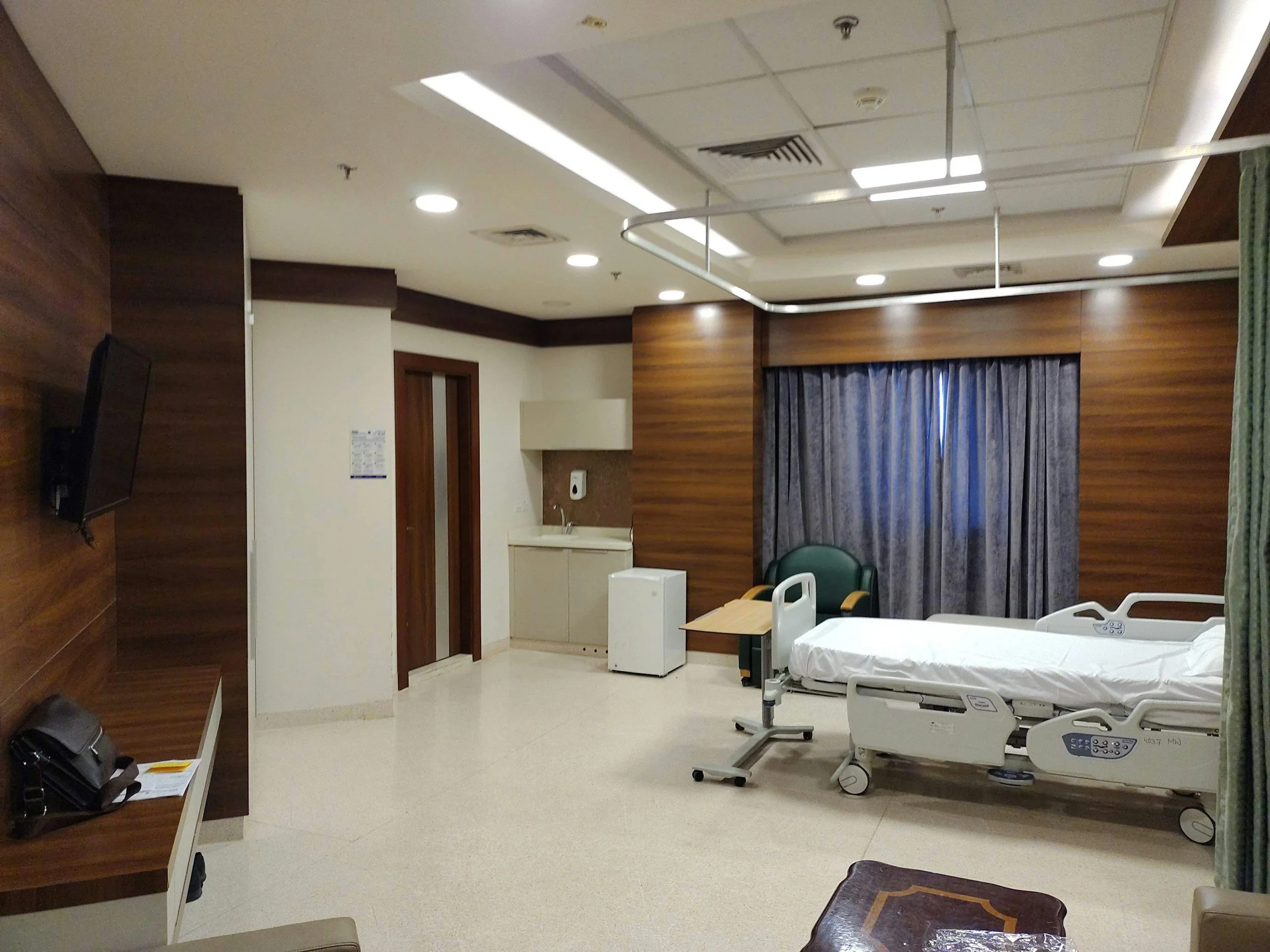
The tangible dimensions of the private hospital patient experience, the single en-suite room, the restaurant-quality meals, the hotel-standard amenities, the concierge-style personal attention, and the direct consultant access throughout the inpatient stay, are trust signals as well as service standards, because they communicate specifically and visually the quality of the environment and the level of personal attention that the self-pay patient's investment will secure. A private hospital website that communicates these specific experiential dimensions through genuinely high-quality photography of the actual rooms, the actual dining facilities, and the actual private patient environment the patient will occupy, is providing the self-pay patient with the specific visual evidence of premium value that generic quality claims cannot produce. The patient who has seen their actual private room on the hospital's website, with the specific amenities visible and appealing, has begun the process of visualising themselves as a patient in this environment, which is the specific form of pre-commitment that the premium experiential communication is designed to create.
The concierge services, visiting hours, car parking, and logistical support that private hospitals provide to their patients and their families during a potentially stressful inpatient stay are specific and commercially significant trust signals for the self-pay patient who is evaluating whether the premium private experience delivers the personal attention and the logistical ease that justify its cost. A detailed and specific private patient experience section on the hospital's website, covering the specific standards of room provision, the dining options including a personalised menu, the visiting arrangements for family members, the dedicated private patient coordinator service, and the discharge planning that ensures the patient leaves with a clear understanding of their recovery pathway and follow-up schedule, communicates the specific quality of personal attention that distinguishes a premium private hospital from a basic private provider and that provides the specific evidence of experiential superiority that the self-pay patient's cost-benefit evaluation requires.
The post-treatment follow-up service that private hospitals provide, including the named consultant's direct availability for post-operative questions, the structured follow-up appointment schedule, and the dedicated private patient team's ongoing support throughout the recovery period, is a trust signal that directly addresses one of the most common anxieties of the prospective private patient: whether the premium service they are paying for will continue after the procedure itself or whether they will be effectively discharged to the NHS system at the point when the hospital's profitable clinical intervention has been completed. The private hospital website that explicitly communicates the post-treatment follow-up standards, with specific detail about the duration, the format, and the accessibility of the follow-up care, is providing the specific reassurance that the most commercially sophisticated self-pay patients specifically seek when they are evaluating whether the private hospital experience represents genuine value at the premium price point it commands.
The communication of the private patient coordinator service is a specific and commercially valuable trust signal for the self-pay patient who has concerns about the administrative and logistical dimensions of organising and navigating private hospital treatment for the first time. A dedicated private patient coordinator who manages every aspect of the patient's journey from initial enquiry through clinical assessment, procedure scheduling, inpatient admission, and post-discharge follow-up, removes the administrative complexity that makes private healthcare feel daunting to the first-time self-pay patient. The website that names and describes this service specifically, and that allows the prospective patient to initiate contact with the private patient team through a clearly identified and easily accessible channel, is communicating a level of personalised administrative support that is a genuine and specific differentiator from both the NHS pathway and the less personally managed private hospital alternatives that the self-pay patient is evaluating alongside this one.
Deploying trust signals at the highest-impact positions throughout the website
The commercial return on the trust signal library a private hospital builds is determined almost entirely by where those signals are deployed rather than by the quality of the signals themselves. The most impressive CQC inspection commendation produces almost no commercial return if it is confined to an accreditations page that most self-pay patients never navigate to independently. The same commendation, displayed on the relevant specialty page immediately before the consultation booking call to action for patients considering treatment in that specialty, is performing the most commercially effective work available on that page: providing the independent quality validation at the specific moment when the motivated patient is closest to deciding whether to take the next step.
The procedure page is the highest-value trust signal deployment location on any private hospital website, because it is the page where the self-pay patient who has arrived from a specific procedure search is making the specific and high-value evaluation that will determine whether they make an enquiry. The procedure page that provides the clinical quality evidence through PHIN outcome data or consultant-level outcomes, the peer-level social proof through a specific patient testimonial from someone who underwent the same procedure, the financial transparency through a clear cost indication, and the access evidence through specific wait time information, all before the primary consultation booking call to action, is providing the complete trust architecture that the self-pay patient's most commercially significant evaluation requires. The procedure page that provides only clinical information without any of these specific trust signals is leaving the patient without the evidence they need to move from information gathering to committed action.
The consultant profile page is the second most commercially significant trust signal deployment location, because it is where the self-pay patient who has progressed from the procedure page and has identified one or more consultants they want to evaluate further is making the final selection decision. The consultant profile that provides personal outcomes data, video introduction, specific patient testimonials from the relevant procedure, and a direct consultation booking mechanism, is providing the trust architecture for the final and most commercially decisive evaluation that the self-pay patient makes before committing to a specific consultation booking. The hospital that invests in building consultant profiles to this standard will consistently convert a higher proportion of the self-pay patients who reach the consultant selection stage into confirmed consultation bookings than the hospital whose consultant profiles provide only biographical and credential information without the specific trust signals that the self-pay patient's final evaluation requires.
The homepage trust signal deployment should be calibrated to provide the first impression of quality that motivates the newly arrived self-pay patient to continue their evaluation of the hospital rather than to navigate away to a competitor. The CQC rating, the headline review score, the headline outcomes achievement, and the named consultant expertise in the hospital's primary specialties, each displayed specifically and prominently in the homepage's above-the-fold area, create the immediate quality impression that establishes the baseline of trust from which the patient's more detailed evaluation of procedure pages and consultant profiles will proceed. This first-impression trust architecture is the foundation on which every subsequent specific trust signal in the patient's evaluation journey is built, and the hospital that gets this foundation right will consistently convert a higher proportion of its homepage visitors into the more detailed evaluation that eventually produces a high-value treatment enquiry.
Trust signals deployed at the highest-impact positions convert the self-pay patient that misplaced signals miss.
We design private hospital websites with trust architectures deployed for maximum commercial impact.
Building the trust architecture that consistently converts self-pay patients
A website for private hospital that consistently converts self-pay patients into booked consultations is built on a specific and deliberately deployed trust architecture that addresses the commercial questions the self-pay patient is asking at each stage of their evaluation with the specific evidence most likely to produce a positive and confident answer. CQC ratings and inspection commendations that establish regulatory quality baseline. PHIN outcome data and consultant-level outcomes evidence that establish clinical quality at the procedure-specific level. Independent review scores and specific patient testimonials that provide peer-level social proof at the highest-impact positions. Financial transparency that removes the cost uncertainty that prevents motivated patients from committing to the next step. Premium experience communication that provides the specific visual and narrative evidence of the experiential value that self-pay pricing commands. And a consultant profile standard that makes it possible for the self-pay patient to complete their consultant selection with genuine confidence in the clinical expertise and the personal approach of the surgeon or physician they are choosing to trust with their care.
The private hospitals that build their websites to this trust architecture standard consistently generate a higher proportion of their self-pay patient enquiries from the highest-value procedure categories, because the depth and specificity of the clinical quality evidence they provide is most persuasive to the patients who are making the most carefully evaluated treatment decisions. These patients, who arrive at the initial consultation with a high level of pre-formed confidence in the hospital's clinical quality and the consultant's specific expertise, convert to treatment at a higher rate than the patients who arrive having done minimal pre-consultation research, because the quality evaluation that should precede the treatment commitment has already been substantially completed through the specific and comprehensive trust evidence provided by the hospital's website.
For private hospitals whose current websites provide some trust signals but not the comprehensive, specifically deployed architecture described in this article, the improvement available from systematically addressing the specific gaps in the trust signal deployment is typically significant without requiring a complete website rebuild. The PHIN data can be added to procedure pages. The consultant video introductions can be produced and embedded in consultant profiles. The independent review integration can be implemented on the homepage and procedure pages. The financial transparency section can be created and linked prominently from the self-pay information navigation. Each of these specific additions produces a measurable improvement in the proportion of self-pay visitors who complete the evaluation journey and commit to a consultation booking.
If you want a website for your private hospital that builds the specific trust architecture that consistently converts self-pay patients into booked consultations, we can help. Take a look at our approach to private hospital website design and book a free call to discuss how better trust architecture could transform your hospital's self-pay patient conversion rate.
Written by
Mikkel Calmann
See how we build trust into private hospital websites that convert self-pay patients.
See what a properly trusted private hospital website looks like.
More web design insights for private hospitals