The private hospital website redesign mistakes costing you high-value patients every month
Most private hospital website redesign projects produce a more premium-looking version of a site that was already failing to generate high-value enquiries. The visuals improve, the navigation is tidier, and nothing fundamental about lead generation changes. This article names the specific mistakes that are costing hospitals the most enquiries each month and explains what a properly briefed redesign must address to deliver genuinely different commercial outcomes.

Why private hospital website redesigns so often fail to improve what matters commercially
A private hospital website redesign that produces a more visually impressive website without producing more high-value treatment enquiries is the most common and commercially frustrating outcome of the significant investment most private hospitals make in their digital presence. This outcome happens consistently because most redesign projects are briefed as visual improvement projects rather than as commercial patient acquisition improvement projects. The brief asks for a premium aesthetic, a modern layout, better photography of the facilities. The design agency delivers exactly what was requested. The website looks significantly more impressive. And then the treatment enquiry volume does not improve, because the problems that were preventing high-value patient conversions were never in the visual design. They were in the procedure page depth, the consultant profile quality, the trust signal architecture, the financial transparency, and the local search foundations, none of which a visual redesign brief typically requires to be addressed.
The specific commercial failures that cause a private hospital website to underperform need to be identified before the redesign brief is written, not after the redesigned site has launched and the enquiry volume has failed to improve. This identification comes from assessing the current site through the eyes of the specific patient types the hospital most wants to attract: the NHS waitlist patient who is evaluating private options for the first time, the insured patient who is exercising their right to choose, and the self-pay patient who is making the most carefully evaluated healthcare investment of their life. Each of these patient types has specific information needs and specific commercial concerns that the private hospital website redesign must address to produce a genuinely improved commercial outcome rather than a merely more attractive version of the same commercial failure.
This article identifies the specific mistakes that most consistently cause private hospital websites to lose high-value patients every month, and explains what each mistake costs the hospital commercially and what a properly briefed redesign must address to produce a genuinely different commercial outcome.
Thin procedure pages that rank for nothing and convert no one
The most consistently damaging mistake on private hospital websites is the provision of thin, generic procedure pages that describe clinical services briefly without providing the depth of specific, patient-useful content that allows the pages to rank for high-value procedure searches and to convert the patients who arrive through any channel into treatment enquiries. A procedure page that provides two hundred words of clinical description and a contact form is failing on two commercial dimensions simultaneously: it does not rank competitively for the high-value procedure searches that represent the hospital's most commercially significant digital patient acquisition opportunities, and it does not provide the specific investment case, the clinical evidence, and the consultant expertise communication that converts the motivated self-pay or insured patient into an enquiry when they arrive through any other channel.
The redesign that addresses this mistake invests in developing substantive, clinically specific, and commercially intelligent content for every major procedure the hospital performs. Each procedure page should be developed to the depth, typically eight hundred to twelve hundred words or more of genuinely patient-useful content, that allows it to rank competitively for the specific procedure and condition searches that represent the hospital's highest-value patient acquisition opportunities. The content should address the clinical indications for the procedure, the surgical or clinical approach used at this hospital, the consultant expertise available, the expected timeline from consultation to procedure to recovery, the specific post-operative or post-treatment support provided, the clinical outcome data for this procedure at this hospital, and the financial pathway for both self-pay and insured patients. This is the standard of procedure page content that ranks for high-value searches and converts the patients who arrive through those rankings into treatment enquiries, and it is the standard that the redesign brief should explicitly require for every major procedure page on the redesigned site.
The consultant profile pages that most private hospital websites provide are the second most consistently damaging commercial failure identified across the sector, and they are the failure that the most commercially motivated self-pay patients notice most acutely because consultant selection is typically the most commercially decisive stage of the private treatment decision. A consultant profile that provides a name, a specialty, a list of the hospitals the consultant works at, and a brief biographical paragraph, is providing the minimum available information without providing the specific clinical excellence evidence, the personal approach communication, and the outcomes data that the self-pay patient needs to make a confident consultant selection decision. The redesign that addresses this invests in developing genuinely excellent consultant profiles for every consultant associated with the hospital, to the specific standard described in the trust signals article, and treats the consultant profile page as the most commercially significant page on the entire website for the patient who is in the final stage of their private treatment decision.
The financial information failure that affects most private hospital websites is not merely the absence of specific pricing, which most hospitals are reluctant to publish for competitive reasons, but the absence of any financial orientation whatsoever for the self-pay or insured patient who needs to understand the financial dimensions of their treatment options before they feel able to commit to the enquiry process. A private hospital website that provides no information about the typical cost range of its most common procedures, no explanation of the self-pay financial pathway, no guidance on the insurance pre-authorisation process, and no contact details for the financial counselling or patient liaison service that can help patients understand their options, is creating a specific financial uncertainty that prevents a meaningful proportion of motivated prospective patients from taking the next step of making contact. The redesign that addresses this invests in creating a comprehensive private patient financial information section, linked prominently from the homepage and from every procedure and specialty page, that gives self-pay and insured patients the financial orientation they need to take the next step with confidence.
No search foundation that captures high-value patients at the procedure search stage
A private hospital website redesign that does not address local search and procedure-specific SEO foundations will produce a more premium-looking website that remains invisible in the specific procedure and condition searches that represent the hospital's most commercially significant digital patient acquisition opportunities. The visual redesign does nothing to improve the hospital's Google Business Profile, to create the procedure-specific content depth that allows the site to rank for high-value procedure searches, to implement the schema markup that enables richer and more authoritative search result displays for clinical searches, or to address the technical performance issues that are limiting the site's ability to rank competitively against both NHS trust websites and competing private hospital and independent surgical centre websites for the procedure searches that represent the highest-value patient acquisition opportunities in the private healthcare market.
The Google Business Profile audit that should be one of the first activities of any private hospital website redesign project, because the Business Profile is the most directly and most quickly improvable local search asset available to the hospital and because its optimisation produces measurable commercial results in increased high-value patient enquiry volume before the redesigned website has even launched. A hospital that takes four to six months to complete a website redesign can optimise its Business Profile, establish a review acquisition process, implement specialty-specific secondary categories, and develop its business description to include the specific procedure and consultant expertise keywords that capture the most commercially valuable local procedure searches during those months, launching the redesigned website into a local search environment that is already materially better than the one the previous site was occupying.
The procedure and specialty content pages that the redesign should develop for the hospital's highest-value clinical service areas are the content that most directly and most durably improves the hospital's organic search visibility for the highest-commercial-value procedure searches. The redesign brief that specifies the minimum content depth, the minimum clinical evidence standards, and the minimum patient-facing communication quality required for each procedure page, and that requires these standards to be met before the redesigned site launches, will produce a site that ranks for a significantly wider range of high-value procedure searches from day one and that generates correspondingly more high-value patient enquiries from organic search from the first weeks of its operation than the redesign that launches with the same visual improvements but without the substance of procedure-specific content that organic search rankings require.
A redesign that addresses commercial failures alongside visual ones produces outcomes the visual-only alternative cannot.
We approach private hospital website redesigns with a commercial brief that fixes the specific failures that cost enquiries.
Poor mobile experience that loses the high-value patient researching between meetings
The patient who is considering private hospital treatment for a significant procedure is not exclusively the older patient browsing from a desktop computer in their home office. They are increasingly the working professional who is comparing private hospital options during commutes, between meetings, and in the brief windows of time available between work commitments when the question of their health and their treatment options is sufficiently pressing to demand their attention. This patient's experience of the private hospital website is primarily a mobile experience, and the quality of that mobile experience is the first direct indication they receive of the quality of service and attention they can expect from the hospital itself. A mobile website that loads slowly, that requires horizontal scrolling to read procedure information, that has consultant profiles that are difficult to navigate with a thumb, and that has enquiry forms that demand extensive text entry on a mobile keyboard, is communicating a specific quality of customer experience that is inconsistent with the premium service standards the hospital's pricing implies.
The redesign that addresses the mobile experience failure invests in genuinely mobile-first design for every patient-facing function of the website, treating the mobile experience not as a responsive adaptation of the desktop design but as the primary design context from which the desktop adaptation is derived. The procedure pages must be readable and navigable on a phone without pinching or horizontal scrolling. The consultant profiles must be as easily browsable on a small screen as on a large one. The enquiry forms must collect the minimum necessary information with the minimum necessary text entry. And the page load times must meet the Core Web Vitals performance standards that both Google's ranking algorithm and the impatient professional patient require. Each of these mobile experience improvements is both a commercial conversion improvement, increasing the enquiry conversion rate from mobile visitors, and a local search improvement, improving the search rankings for mobile device searches that represent the majority of local procedure search traffic.
The older patient demographic that forms a significant proportion of the private hospital's patient population for certain procedure categories, particularly orthopaedic surgery, cardiac care, and oncology, has specific digital accessibility needs that many private hospital websites have never considered in their design decisions. Text that is too small to read comfortably for patients with age-related vision changes. Navigation menus that require precise tapping to operate. Enquiry forms that demand the kind of accurate small-screen typing that patients with reduced dexterity find frustrating. Each of these specific accessibility failures is costing the hospital enquiries from the patient demographic that represents some of its most commercially significant procedure categories, and each is addressable through the appropriate accessibility-conscious design decisions that a properly briefed redesign would include as a core requirement rather than as an afterthought.
The page speed improvements that address the Core Web Vitals performance failures that most private hospital websites carry are among the most directly commercially productive technical improvements available to the redesign project, because they simultaneously improve the search rankings for the procedure searches that deliver the highest-value patient traffic and reduce the abandonment rate of the motivated patients who arrive through those rankings. A private hospital website that fails Core Web Vitals assessments on mobile will rank lower in the procedure-specific searches that represent its most commercially significant organic patient acquisition opportunities than a competing hospital whose website performs better technically. This technical performance gap is a commercial gap that the redesign project should close as a core technical requirement rather than as an optional enhancement, because the search ranking and patient retention implications of poor technical performance are directly commercial rather than merely technical.
No strategy for capturing and nurturing the long-research patient
The private hospital website redesign that does not address the capture and nurture of the long-research patient will produce a more premium-looking website that continues to miss the largest single category of commercially valuable prospective patients: the patient who is at the beginning of their private healthcare research journey, who is not yet ready to make a treatment enquiry, and who will visit the website once, find it professionally presented but not specifically relevant to their current research needs, and never return. Without a specific strategy for capturing this patient's contact details and maintaining the hospital's presence and relevance throughout their research phase, the redesign produces a more attractive website for the same minority of visitors who are at the specific stage of treatment decision readiness that the current website's single enquiry pathway serves.
The email capture mechanism and the content offer that supports it are the redesign elements that address this failure. A downloadable self-pay guide that explains the private treatment financial pathway clearly for the patient who is evaluating private care for the first time. A procedure comparison guide that provides the honest NHS versus private comparison for the most common procedures the hospital performs. Or a condition-specific information guide that helps the newly diagnosed patient understand their treatment options across the full range of NHS and private pathways, establishing the hospital as a trusted source of information at the earliest and most commercially valuable stage of the patient's healthcare decision. Each of these content offers provides the specific value that motivates the early-stage research patient to provide their contact details, initiating the email relationship that maintains the hospital's presence and relevance throughout the research phase and that produces the direct treatment enquiry when the patient eventually reaches the point of decision readiness.
A redesign that captures the long-research patient builds a commercial pipeline the enquiry-only site never generates.
We brief private hospital website redesigns to address every commercial failure in the patient acquisition journey.
Generic visual identity that fails to communicate premium
The visual identity of a private hospital website is the trust signal that operates before any specific content has been read, because the visual impression of the site creates an immediate and automatic quality assessment in the patient's mind that colours every specific piece of evidence they subsequently encounter. A website that looks institutional, that uses the same visual conventions as an NHS trust site, that relies on generic medical stock photography, and that has a colour palette and typography that communicate clinical competence rather than premium service, is undermining every other commercial quality of the website before the patient has had the opportunity to read a single line of copy or evaluate a single piece of clinical quality evidence. For a private hospital that is charging a significant premium over the NHS alternative, this institutional visual impression is a specific and commercially damaging inconsistency between the quality implied by the price and the quality communicated by the digital first impression.
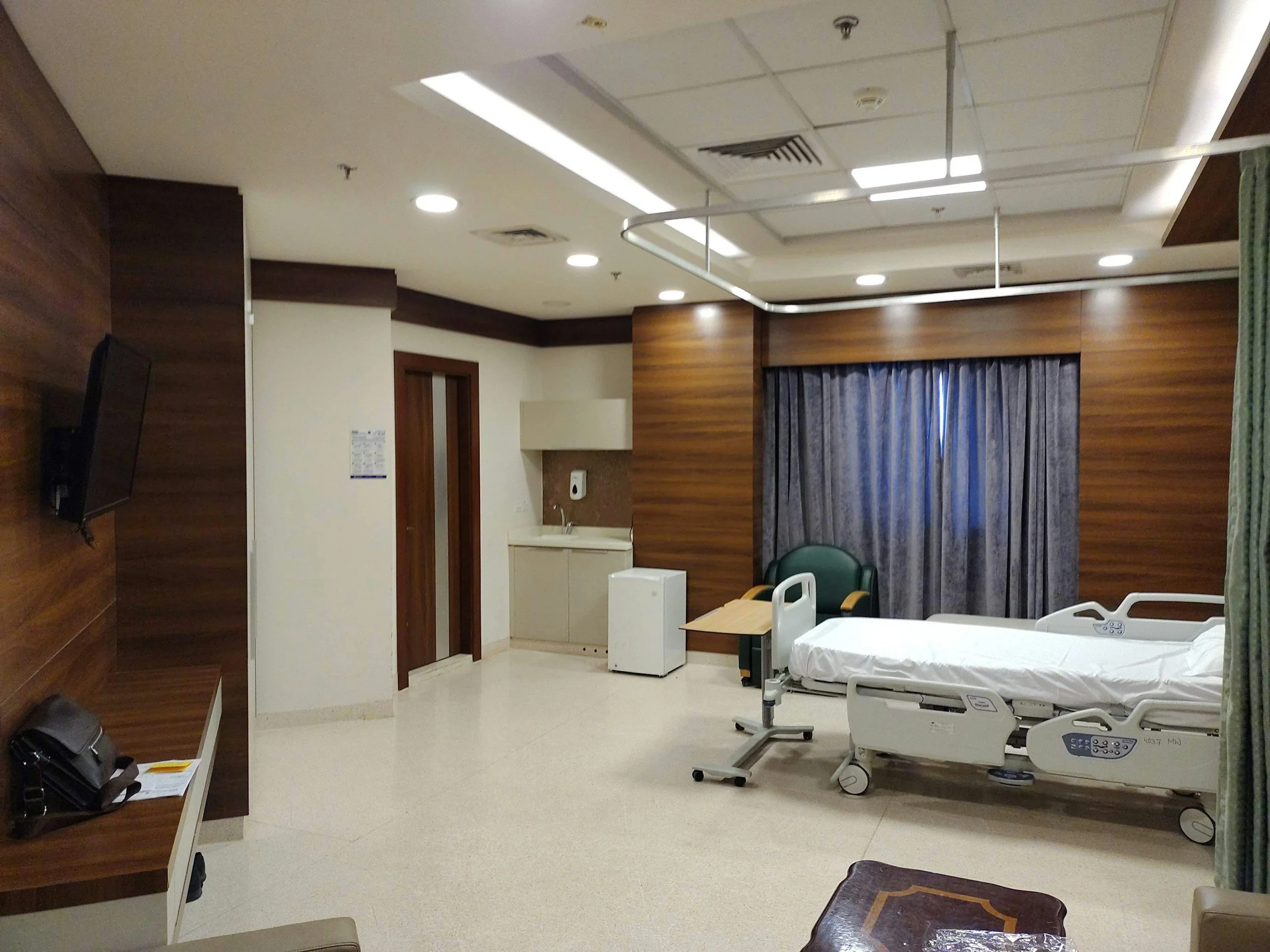
The genuine photography of the hospital's actual premium private rooms, its restaurant-quality dining facilities, its clinical equipment, and the specific quality moments of patient care and consultant interaction that characterise the private experience, is the most commercially effective visual replacement for the institutional stock photography that undermines the premium impression of most private hospital websites. The self-pay patient who sees the actual room they will occupy during their inpatient stay, with the specific furnishings, the natural light, and the hotel-quality amenities visible, is forming a specific and visceral impression of the quality of the private experience that the premium price implies. This specific visual impression, formed before any copy has been read, is the foundation of the premium quality conviction that the copy and the clinical evidence then sustain and develop through the patient's more detailed evaluation of the hospital's treatment capabilities and consultant expertise.
The design system of the redesigned private hospital website should communicate premium quality through every visual element, from the colour palette and typography to the spacing and layout decisions that determine how content is presented and how the patient navigates through the site. A design that is clean, considered, and confident, that uses whitespace deliberately and that presents information in a format that respects the patient's time and intelligence, communicates the specific quality of attention to detail and client experience that the private hospital's pricing implies. A design that is cluttered, inconsistent, or visually complex in a way that makes the site difficult to navigate or the content difficult to read, communicates the opposite: that the hospital's attention to the patient's experience does not extend to the digital touchpoints that are the patient's first direct impression of the quality they can expect from the facility itself.
The visual differentiation from competing private hospitals is a specific commercial objective for the redesign that most hospital marketing briefs do not explicitly address. When the visual identity of competing private hospitals in the same geographic and specialty market is broadly similar, the hospital that chooses a visually distinctive approach, one that is immediately recognisable as different from the visual conventions of the sector while still communicating clinical quality and premium service, will be more memorable and more differentiating in the patient's evaluation of their options. This visual distinctiveness is not an aesthetic preference. It is a commercial strategy for creating the first-impression differentiation that ensures the hospital's website stands out in the patient's memory from the four or five other private hospital websites they are likely to have visited during the same research session, and that makes it more likely that the hospital's name will be the one the patient returns to when they are ready to make a specific treatment enquiry.
What the properly briefed private hospital website redesign should actually achieve
The private hospital website redesign that is worth the significant investment it requires is one that produces a genuinely more commercially effective patient acquisition system alongside the visual quality improvement that is the most visible output of the redesign project. This outcome requires a redesign brief that begins with a commercial audit of the specific failures of the current site, that defines the specific commercial improvements the redesign must produce alongside the visual improvements, and that holds every design and content decision in the project to the question of whether it serves the commercial goal of generating more high-value treatment enquiries. The redesign briefed from this commercial understanding will produce a site that is both more impressive and fundamentally more commercially effective. The redesign briefed only from visual and aesthetic objectives will produce a more impressive version of a commercially underperforming site.
The specific commercial improvements that the private hospital website redesign should produce include: procedure pages developed to the depth and specificity that allows them to rank for high-value procedure searches and to convert the patients who arrive through those rankings; consultant profiles developed to the standard that makes confident consultant selection possible for the self-pay patient who is making the most commercially decisive evaluation available on the entire website; a trust signal architecture that deploys CQC ratings, PHIN data, independent review scores, and patient testimonials at the highest-impact positions throughout the patient evaluation journey; financial transparency that removes the uncertainty preventing motivated patients from committing to the enquiry process; a mobile experience that serves the professional patient researching between meetings as effectively as the desktop patient researching at home; and a long-research patient capture and nurture system that builds a compounding pipeline of future high-value treatment enquiries from the patients who are not yet ready to enquire but who represent the most commercially significant prospective patient population in the hospital's addressable market.
The post-launch measurement and improvement discipline that the best private hospital redesign projects establish from the outset, defining the specific metrics against which the success of the redesign will be assessed and building the analytics infrastructure that allows those metrics to be tracked accurately from the day the redesigned site launches, is the governance practice that ensures the redesign investment produces its intended commercial return rather than remaining a visual improvement whose commercial effect is assumed rather than measured. The treatment enquiry conversion rate from high-value organic procedure search traffic. The average time on site and the depth of page engagement for self-pay patients arriving through procedure-specific searches. The consultant profile page enquiry initiation rate. The mobile enquiry conversion rate. The email capture rate from early-stage research content offers. Each of these specific metrics provides a precise commercial assessment of a specific dimension of the redesign's commercial effectiveness, and monitoring them monthly from the launch of the redesigned site provides the specific diagnostic intelligence needed to direct the ongoing post-launch improvement investment toward the changes that will produce the greatest additional commercial return from the same patient traffic the redesigned site is now receiving.
For private hospitals whose current website is generating some traffic without generating high-value treatment enquiries at the rate the hospital's clinical quality and consultant expertise warrant, the improvement available from a properly briefed and properly executed website redesign is typically significant and can begin producing measurable commercial returns within weeks of the redesigned site launching, in the form of improved procedure search rankings, higher enquiry conversion rates from existing traffic, and the beginning of the email nurture pipeline that will produce its most significant commercial returns in the months and years following the redesign rather than immediately after it. The investment in a properly briefed private hospital website redesign is an investment in the hospital's patient acquisition capability for the years ahead, not merely in a more attractive digital presence for the present.
A redesign briefed for commercial improvement produces outcomes that a visual-only brief cannot generate.
We approach private hospital website redesigns with a full commercial audit before any design decision is made.
What the private hospital website redesign should actually produce
A private hospital website redesign worth the investment is one whose commercial brief is as specific and as ambitious as its visual brief, and whose success is measured not merely by how impressive the redesigned site looks but by how materially it improves the hospital's ability to convert high-value patient traffic into treatment enquiries. The mistakes identified in this article are individually correctable and collectively significant in their commercial cost. The thin procedure pages that are failing to rank for high-value searches and failing to convert the patients who arrive through other channels. The consultant profiles that are failing to support confident consultant selection decisions. The trust signal architecture that is failing to deploy the specific quality evidence that self-pay patients most need at the moments of highest commercial impact. The financial information gap that is preventing motivated patients from committing to the enquiry process. The mobile experience that is losing the professional patient who is researching between meetings. And the absence of a long-research patient strategy that leaves the largest and most commercially valuable prospective patient segment consistently uncaptured.
Each of these specific failures is costing the hospital high-value treatment enquiries every month that they remain unaddressed. The cumulative commercial cost of these combined failures, measured in the high-value treatment pathways that were never initiated because the patients who needed them were lost to a competitor whose website communicated more specifically, provided better clinical quality evidence, and made the investment case for private treatment more convincingly, is significantly greater than the cost of the redesign that would address them. The properly briefed and properly executed private hospital website redesign is not a cost. It is a commercial investment in the hospital's patient acquisition capability whose return is measured in the high-value treatment relationships it generates over the months and years following its launch.
For private hospitals that are currently investing in paid advertising while neglecting the organic search and conversion architecture improvements that would make their advertising investment more productive, and that are generating some traffic through paid channels but converting very little of it into the high-value treatment enquiries that the hospital's clinical capabilities and consultant expertise should be producing, the properly briefed website redesign is the foundational investment that makes every other marketing activity more effective. Better procedure pages produce better organic rankings and better paid search quality scores. Better consultant profiles reduce the post-click abandonment rate from consultant-specific paid search. Better trust signals improve the conversion rate from every traffic source. And the financial transparency and nurture infrastructure improve the conversion rate from both paid and organic traffic at every stage of the patient evaluation journey.
If you want a private hospital website redesign that is briefed and executed for commercial improvement in high-value patient enquiry generation rather than visual improvement alone, we can help. Take a look at our approach to private hospital website design and book a free call to discuss what a commercially focused redesign could produce for your hospital's patient acquisition pipeline.
Written by
Mikkel Calmann
See how we redesign private hospital websites for enquiry generation, not just visual improvement.
Every redesign we do starts with a commercial brief, not a visual one.
More web design insights for private hospitals