The trust signals every website for dentist practices needs to convert anxious visitors
When a patient searches for a website for dentist practices nearby, the surgeries that lead with the right trust signals capture almost all of the new patient enquiries. The decision is rarely about price. It is about whether the site quietly answers the questions an anxious patient is afraid to ask. This article explains which trust signals matter most, where they should appear, and how to combine them so a hesitant visitor becomes a booked appointment.
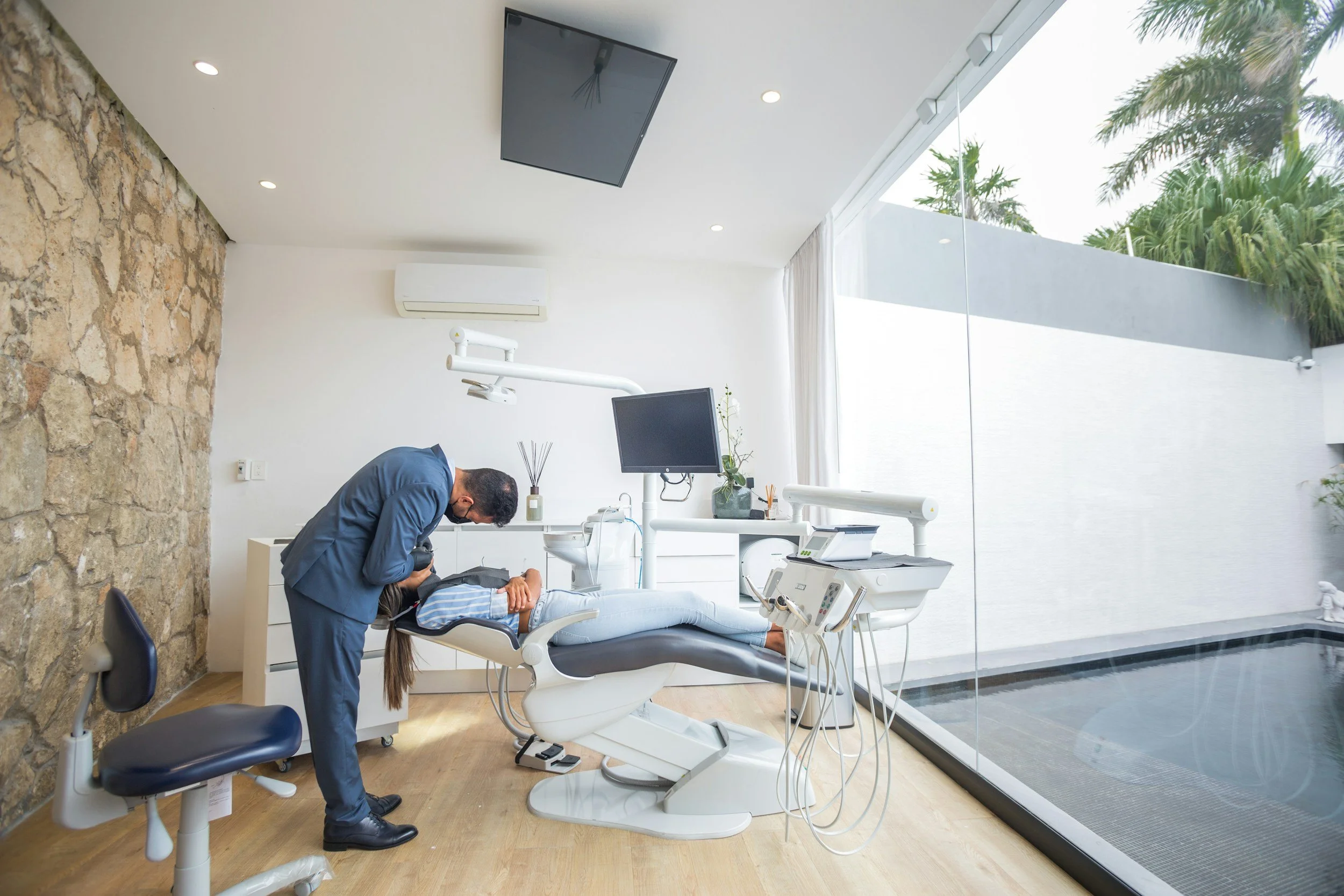
Why a website for dentist must earn trust before it earns a booking
A website for dentist that consistently converts visitors into booked patients is one that has earned enough trust to overcome two distinct barriers. The first is the practical barrier of choosing between practices: does this practice have the right treatments, location, and availability? The second is the emotional barrier specific to dental care: is this a practice where I will feel safe, comfortable, and treated with care? Both barriers need to be addressed, but the second is the one that most dental websites handle least effectively. Many practices communicate their treatments and location clearly while doing almost nothing to address the anxiety that prevents a significant proportion of their potential patients from ever booking.
The trust signals on a dental website are the specific elements that provide evidence relevant to both barriers: patient reviews that speak to both the quality of the treatment and the kindness of the team, professional accreditations that confirm clinical standards, before-and-after photography that demonstrates the quality of results, team profiles that create a personal connection before the first appointment, and process transparency that reduces the fear of the unknown. Each of these signals contributes to a cumulative impression that makes a nervous visitor feel safe enough to take the step of booking.
The placement of trust signals on a dental website is as important as their presence. A trust signal that exists but appears only on a page that most visitors never reach is doing almost no commercial work. The most effective placement puts the most relevant trust signals in the positions where visitor anxiety is highest and where a reduction in that anxiety is most likely to produce a booking. Understanding which moments in the website visit are moments of maximum anxiety for a dental patient, and placing specific trust signals at those moments, is what distinguishes a dental website that converts from one that merely presents.
Patient reviews: the trust signal that speaks louder than any claim
Patient reviews are the most powerful trust signal available on a dental website because they provide evidence from people who have already been through the experience the prospective patient is contemplating. For a nervous patient who is trying to decide whether to trust a dental practice with their care, reading that another patient, whose nervousness they recognise in the words used, had a genuinely positive experience with a specific dentist at this specific practice provides the kind of reassurance that no amount of professional copy can replicate. It is not the practice telling the prospective patient they will be fine. It is a previous patient telling them they were fine.
The reviews that carry the most weight with anxious dental patients are those that specifically address the anxiety dimension of the patient experience. A review that says "I hadn't been to the dentist in six years because of my fear and the team here made me feel so comfortable that I actually relaxed in the chair" is speaking directly to the internal experience of the anxious patient who is reading it. That specific testimony, from someone who is recognisably in the same position as the reader, reduces the emotional barrier to booking in a way that a generic positive review about clean facilities and efficient service cannot.
The placement of patient reviews on the dental website should be strategic rather than aggregated. A reviews page that visitors must navigate to separately is significantly less effective than reviews distributed throughout the site at the moments of highest decision-making anxiety. A review from a nervous patient placed directly above the booking button on the homepage creates a sequence of reassurance followed immediately by opportunity that converts at a higher rate than either element alone. Reviews on treatment pages, placed after the description of the treatment and before the booking call to action, provide practice-specific social proof at the moment the patient is evaluating whether to pursue the treatment at this practice.
The volume and recency of reviews matters for both search performance and patient confidence. A practice with sixty recent reviews signals active patient care to both Google's algorithm and to prospective patients who are evaluating multiple practices simultaneously. A practice with five reviews from two years ago signals very little about the current state of the practice's patient experience. Building a systematic review acquisition process, requesting reviews from patients after positive appointments as part of a standard communication workflow, creates the review volume and recency that make this trust signal maximally effective for both purposes.
Team photography and profiles that create connection before the appointment
For anxious dental patients, knowing who they will be treated by before they arrive at the practice is a significant source of reassurance. A patient who has already seen a warm, professional photograph of their dentist, read something genuine about that person's approach to nervous patients and their professional background, and perhaps watched a short video introduction, arrives at their first appointment with a degree of pre-formed familiarity that meaningfully reduces the anxiety of meeting a stranger who is about to work in their mouth. The website is doing therapeutic work before the patient has set foot in the practice, and the quality of that work depends on the quality of the team content on the site.
High-quality, authentic photography of the actual dental team is one of the most impactful visual trust signals on a dental website. Not generic stock photography of anonymous dental professionals, but genuine photographs of the specific dentists, hygienists, and support staff who will be involved in the patient's care. A patient who can see the real faces behind the practice, presented warmly and professionally, feels a degree of personal connection that stock photography can never create. The investment in professional photography for the dental team is consistently one of the highest-return photographic investments a dental practice can make in its website.
Dentist profiles that go beyond qualifications and years of experience to communicate something genuine about the individual's approach to patient care create a personal dimension that is particularly valuable for attracting nervous patients. A profile that mentions the dentist's specific experience working with anxious patients, their approach to ensuring patients feel in control throughout the appointment, and their genuine interest in making the dental experience as comfortable as possible, speaks directly to the concerns of the nervous patient who is evaluating whether this particular dentist feels like someone they could trust. This personal dimension is what distinguishes a profile that builds trust from one that merely presents credentials.
Video introductions from dentists and senior team members represent the highest-quality personal connection available through a website. A thirty-second video of a dentist speaking directly to camera, acknowledging that many patients feel nervous and explaining how they approach these appointments, creates an immediacy and authenticity that no written profile can match. For nervous patients who are on the fence about booking, encountering a dentist who seems warm, genuine, and understanding through a video introduction can be the specific reassurance that tips the decision from hesitation to booking. Even simple, well-lit videos recorded without expensive production equipment can be highly effective if the content is genuine and the tone is appropriate.
The right team content can turn a nervous visitor into a booked patient
We design dental websites where team content, reviews, and trust signals work together to convert anxious visitors — book a free call to talk through yours.
Before-and-after galleries that demonstrate clinical quality
Before-and-after patient photography is the most direct demonstration of clinical quality available on a dental website, and it is particularly persuasive for prospective patients who are considering cosmetic or restorative treatments. A patient who is thinking about veneers and who sees an authentic before-and-after gallery showing patients whose starting point is similar to their own can visualise what the treatment might achieve in a way that no written description or clinical explanation can produce. The gallery is doing the most important sales work on the treatment page: it shows rather than tells.
The quality and authenticity of before-and-after photography matters significantly. Highly retouched images or photography taken under conditions designed to exaggerate the before-after contrast undermine the trust they are supposed to build if patients sense the manipulation. Authentic, consistently photographed images taken under standard clinical conditions, showing genuine patient outcomes without exaggeration, build the kind of credibility that converts prospective patients with realistic expectations into confident bookings. The goal is not to show the most dramatic transformations but to show the real quality and consistency of the practice's clinical outcomes.
Patient consent and compliance with professional regulations around the display of patient photography are non-negotiable requirements that must be addressed before any before-and-after content is published on the website. This is not just an ethical requirement. It is a trust signal in itself. A practice that handles patient imagery with evident care for privacy and consent is communicating something important about its general approach to patient dignity and professional standards. Including a brief note on the website about the practice's approach to patient photography and consent reinforces this positive signal.
Before-and-after galleries placed specifically on the relevant treatment pages are more effective than a general gallery page. A prospective implant patient who is reading the dental implants page needs to see implant results, not a mixed gallery of all the practice's cosmetic work. A prospective Invisalign patient needs to see orthodontic results on the Invisalign page. Placing the specific evidence directly in the context where it is most relevant to the decision being made produces a higher conversion impact than requiring the patient to navigate to a separate gallery page to find relevant examples.
Accreditations and professional registrations that confirm standards
Professional accreditations and regulatory registrations are trust signals that provide external, independent confirmation of the practice's clinical standards. For a prospective patient who is choosing a dental practice without a personal recommendation, the presence of recognised professional affiliations and registrations provides the assurance that the practice operates to a standard that has been assessed by a credible external body. These signals are particularly important for patients who are evaluating practices they have found through search rather than through a trusted referral.
The specific accreditations that matter most to dental patients vary by the type of care they are seeking. General patients placing emphasis on NHS registration or equivalent national health system approval. Private patients seeking cosmetic or restorative work will look for specialist training, membership of cosmetic dentistry associations, and any specific qualifications in the treatments they are pursuing. Specialist clinics should display the relevant specialist registration prominently. Each accreditation should be placed in the context where it is most relevant: NHS registration on the general dentistry and check-up pages, cosmetic qualifications on the cosmetic treatment pages, specialist registration on the specialist treatment pages.
Displaying accreditation logos prominently rather than listing them in small text adds visual credibility that is processed quickly and reinforces the professional impression of the website before the patient has engaged with any substantive content. A bar of recognisable professional body logos near the top of the homepage communicates in seconds that this practice operates to recognised standards, which primes the visitor to engage with the practice's content from a position of established credibility rather than having to earn that credibility through the copy alone.
Awards and recognition from professional organisations or media represent an additional category of third-party validation that most dental practices earn but few communicate effectively on their websites. A regional award for patient care, recognition as a preferred provider by a particular dental product manufacturer, or a feature in a respected health or lifestyle publication are all forms of external recognition that demonstrate professional standing beyond the minimum regulatory requirements. These signals belong on the homepage and on the relevant treatment pages where they will be encountered by the patients for whom they are most relevant.
Process transparency as anxiety reduction
For anxious dental patients, the fear of the unknown is often as significant a barrier as the fear of pain. Not knowing what to expect at a first appointment, not understanding how a particular treatment will feel, not knowing whether the dentist will judge them for not having attended regularly, all of these uncertainties add to the anxiety that prevents nervous patients from booking. A dental website that addresses these uncertainties directly and honestly, before the patient has to ask, reduces the specific anxieties that are preventing them from booking without requiring any change in the actual clinical experience the practice provides.
A dedicated "what to expect at your first appointment" page or section that walks through the first visit in plain, reassuring language reduces the anxiety of the unknown for patients who have not visited a dentist recently. Knowing that the first appointment involves a gentle examination and conversation about dental history, that there will be no pressure to commit to any treatment plan immediately, and that the dentist will explain everything before proceeding removes specific anxieties that are preventing some patients from booking. This kind of process transparency is a trust signal because it demonstrates that the practice understands and takes seriously the concerns of nervous patients.
Treatment process explanations on individual treatment pages serve the same function for patients who are specifically considering a procedure. A patient who is anxious about dental implant surgery and who reads a clear, stage-by-stage description of the implant process, what each stage involves, how long it takes, what the recovery experience is typically like, and what discomfort to expect, arrives at their consultation with a much lower level of anxiety than one who has had to construct their understanding of the process from vague descriptions and online forums. That lower anxiety makes the consultation more productive and the decision to proceed more confident.
A FAQ section specifically addressing the concerns of nervous or anxious patients is a high-value addition to any dental website that serves a significant proportion of anxious patients. Questions about whether treatment will hurt, what happens if a patient needs to stop during treatment, whether the dentist will be judgemental about dental neglect, and what sedation options are available if the patient cannot manage without them, represent real anxieties that a significant proportion of the practice's potential patients have. Answering these questions clearly and empathetically on the website addresses the anxiety at the moment when it is preventing a booking, which is the most commercially valuable moment for that address to occur.
Reducing anxiety at every stage of the website visit produces more bookings
We build dental websites where every trust signal and every piece of content is designed with the anxious patient in mind — book a free call to see how.
The online booking process as the final trust signal
The online booking process is the final trust signal on a dental website because it communicates something important about the practice's relationship with the patient's time and convenience. A booking process that is seamless, quick, and available at any hour signals that the practice is organised, patient-focused, and up to date with the expectations of a modern healthcare consumer. A booking process that is clunky, that requires multiple steps, that forces the patient to call during office hours, or that fails to provide immediate confirmation signals the opposite. The booking experience is the final impression before the patient commits, and it matters.
The specific design of the online booking flow should be as simple as possible while collecting the information needed to prepare for the appointment. Treatment type selection, available appointment slots, and basic contact details should be the extent of what is required before the booking is confirmed. Each additional field or step beyond this baseline adds friction that will cost a proportion of the patients who start the process but do not complete it. The completion rate of the booking flow is a direct measure of how much friction the current process contains, and improving it improves the conversion rate of all the traffic that reaches the booking stage.
Immediate booking confirmation, delivered by email and ideally also by text message, completes the trust signal by confirming that the booking has been registered, providing the appointment details clearly, and setting expectations for any pre-appointment communication the practice typically sends. A patient who books online and immediately receives a professional, warm confirmation message feels that the practice is competent and attentive from the first interaction. A patient who books and receives no immediate confirmation has uncertainty about whether the booking was registered, which may lead to a follow-up call that takes up staff time or, worse, a patient who assumes something went wrong and books elsewhere.
Pre-appointment communication that continues the trust-building process after the booking is confirmed extends the practice's relationship with the patient through the period between booking and attendance. A friendly reminder message that includes the appointment details, directions to the practice, a note about what to bring, and perhaps a brief, warm message from the dentist who will be seeing them, reduces the no-show rate while simultaneously continuing the process of building the patient's comfort and confidence before they arrive. This kind of thoughtful pre-appointment communication is a trust signal that distinguishes practices that genuinely understand patient care from those that treat the booking as the end of the patient acquisition process rather than the beginning of the patient relationship.
A seamless booking process is the final step in converting trust into a patient
We design dental websites where the booking experience is as carefully considered as everything that leads to it — book a free call to talk through yours.
Building a trust architecture that converts across the entire website
A website for dentist that consistently converts anxious visitors into booked patients is one where trust signals are not aggregated in one place and assumed to do their work from there, but where they are distributed thoughtfully throughout the site at the specific moments when a prospective patient's anxiety is highest and when a reduction in that anxiety is most likely to produce a booking. Patient reviews placed before booking calls to action. Before-and-after galleries on treatment pages. Dentist profiles that communicate warmth and experience with nervous patients. Process transparency that addresses the fears of the unknown. Accreditation logos that confirm professional standards. Each of these signals is most effective in context, and the design of the website should place each one where it will do the most commercial work.
The cumulative effect of building this trust architecture throughout the website is a visit experience that takes an anxious, uncertain prospective patient through a consistent process of reassurance: the first impression communicates warmth rather than clinical coldness, the reviews confirm that other nervous patients have had positive experiences, the team profiles create a personal connection before the first appointment, the treatment information addresses the fears of the unknown, and the booking process confirms that choosing this practice is as simple and commitment-free as any initial step needs to be. This architecture, sustained across every page of the site, produces consistent booking rates from exactly the patients who most need the reassurance it provides.
For practices that have some of these trust signals in place but have not deployed them strategically, the improvement available from repositioning and supplementing existing content is often substantial without requiring a complete redesign. Moving a testimonials section from a dedicated page to adjacent positions on the homepage and treatment pages, adding before-and-after galleries directly to relevant treatment pages, supplementing dentist professional biographies with genuine personal statements about their approach to nervous patients — these are content and design interventions that can be made incrementally and that produce immediate improvements in the booking conversion rate of pages they touch.
If you want a dental website that is designed around the trust signals that convert anxious visitors into booked patients, we can help. Take a look at our approach to web design for dental practices and book a free call to talk through how better trust architecture could change the commercial performance of your practice's website.
Written by
Mikkel Calmann
Web design for dental practices
Most dental practice websites were never built to generate leads. We design Squarespace websites that change that. See exactly how we approach it.
More web design insights for dental practices