What the best dental clinic website design does to win cosmetic patients
The dental clinic website design that wins the most high-value cosmetic patients is rarely the most beautiful one. It is the design built around how cosmetic patients actually evaluate practices, weigh outcomes, and decide who to trust with their face. Most clinic websites lead with the practice; the best lead with the patient. This article explains what the top practices do differently, and why those choices compound into more booked consultations.
What the best website design for dental clinics is actually built to achieve
The best website design for dental clinics is not simply a matter of visual quality, although visual quality is a necessary foundation. Many dental practice websites are visually impressive without being commercially effective. They attract visitors who appreciate the design and then leave without booking, because the site that looked excellent on the surface failed to do the specific commercial work that turns a prospective patient's interest in cosmetic treatment into a booked consultation. The practices that consistently win high-value cosmetic patients have websites that go further than visual excellence, into the specific strategic and content decisions that address how cosmetic patients actually make decisions.
A cosmetic dental patient making a significant investment in their smile, one that might cost several thousand pounds or euros, is making a more careful decision than a patient booking a routine check-up. They are comparing multiple practices, reading patient stories, studying before-and-after results, researching the specific treatments they are considering, and evaluating whether the practice's aesthetic sensibility and clinical approach align with what they are looking for. The website that wins this patient is the one that best addresses each stage of this more extended evaluation process, not just the one that makes the strongest first impression.
Understanding the specific characteristics that distinguish the highest-performing dental practice websites from the ones that look good but convert poorly is the starting point for any practice that wants to attract more high-value cosmetic patients through its website. These characteristics are consistent across the practices that perform best, and they represent deliberate decisions about who the site is for, what those patients need to experience, and how every element of the site serves the goal of building enough trust and providing enough relevant information to motivate a consultation booking.
They lead with outcomes the patient wants, not treatments the practice offers
The best dental clinic websites frame their cosmetic offer around the outcomes patients desire rather than the treatments the practice provides. This distinction is subtle but commercially significant. A patient who is considering cosmetic treatment is not thinking "I want veneers." They are thinking "I want to feel confident smiling in photographs" or "I want my teeth to look as good as I feel the rest of me does" or "I want to stop hiding my smile in social situations." The practice that leads its cosmetic messaging with these desired outcomes, and then introduces the specific treatments that can produce them, creates a much more immediate sense of relevance with the patient whose desire is real but whose knowledge of the specific treatment path is limited.
Outcome-led copy works differently from treatment-led copy because it starts from a place the patient recognises. "Help you feel genuinely confident about your smile, whatever that takes" is a statement that resonates with any patient who has ever felt self-conscious about their teeth. "We offer veneers, composite bonding, teeth whitening, and orthodontic treatments" is a statement that only resonates with a patient who already knows which of these treatments they are interested in. The first creates an invitation. The second requires the patient to do the work of matching their desire to the practice's offerings. Most hesitant patients will not do this work when a practice that does it for them is available.
The before-and-after gallery is where the outcome-led approach reaches its most direct expression. A gallery that is organised by the type of transformation patients wanted, rather than by treatment type, serves the prospective patient who knows what they want to achieve but not necessarily how. A section for "closing gaps and reshaping," a section for "whitening and brightening," and a section for "straightening without braces" speaks to the patient's desired outcome more directly than galleries organised by treatment name. The prospective patient finds examples most relevant to their own situation more quickly, and the emotional impact of seeing their desired outcome achieved in someone who started where they are currently starting, is more immediate and more motivating.
Patient stories that describe the journey from self-consciousness to confidence, rather than the clinical journey from initial assessment to treatment completion, speak to the emotional dimension of cosmetic dental treatment in a way that resonates with patients who are primarily motivated by the emotional outcome. A patient who reads "I had been hiding my smile for fifteen years and spent two years researching before I finally made an appointment here. The process was so much more manageable than I had imagined, and the result has genuinely changed how I feel about myself" is reading a story whose emotional arc they recognise and with which they can identify. That identification creates the motivation to act that no clinical description can produce.
They invest in photography that demonstrates aesthetic judgment
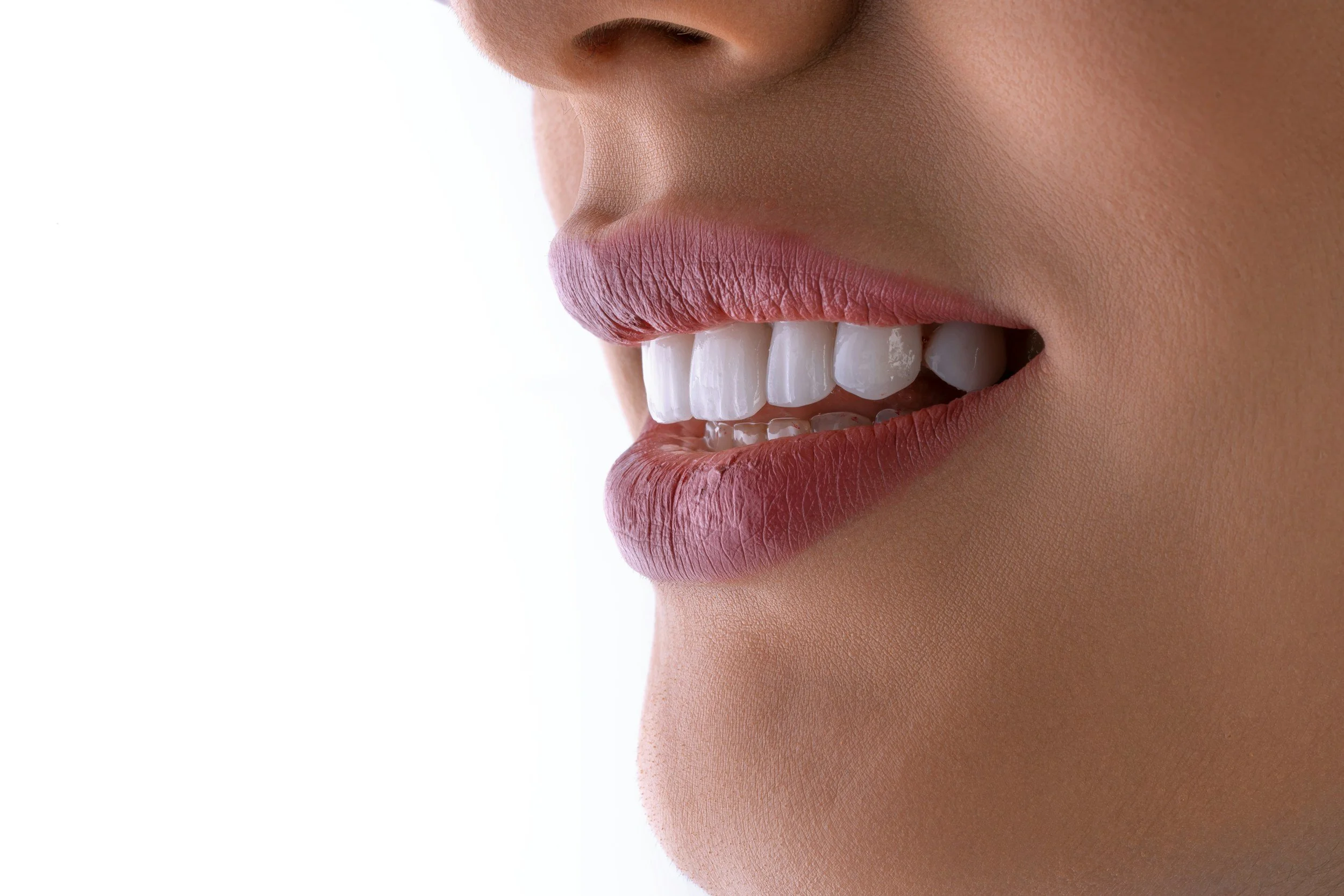
The best dental clinic websites treat their photography not as documentation of their work but as a demonstration of their aesthetic judgment. A practice that produces cosmetic dental work and presents it through photography that is poorly lit, inconsistently styled, or that fails to make the treatment outcomes look as good as they are, is undermining its own case for aesthetic competence. A practice that invests in genuinely high-quality clinical photography, with consistent lighting, appropriate magnification, and professional presentation, is making an implicit argument through the quality of its visual documentation that extends to the quality of its clinical work.
The specific characteristics of high-quality dental clinical photography include consistent background and lighting conditions that make before-and-after comparisons directly meaningful, appropriate magnification that shows the detail of the work without distortion, colour accuracy that represents the true shade outcomes of whitening and ceramic work, and a patient presentation that is natural and dignified rather than clinical and detached. These characteristics distinguish photography that genuinely communicates clinical quality from photography that merely records it, and the difference is consistently perceptible to prospective patients who are evaluating multiple practices' work simultaneously.
Lifestyle photography that shows patients in natural settings, smiling naturally and unselfconsciously in the kind of social contexts that motivated their treatment, communicates the aspirational outcome of cosmetic treatment in a way that clinical photography alone cannot. A before-and-after series that concludes with a photograph of the patient genuinely smiling in a social setting tells the complete story of the treatment: not just what the teeth look like, but what the patient's life looks like after the transformation. This is the outcome the prospective patient is actually seeking, and seeing it represented authentically is among the most motivating visual content a cosmetic dental website can display.
Team photography on the best dental clinic websites goes further than professional headshots to communicate the character of the practice and the people within it. Photographs of the dentist interacting with a patient, of the team in their working environment, of the practice space in use rather than empty, create an impression of the lived reality of the practice that helps the prospective patient imagine themselves in that environment. This imaginative connection, facilitated by photography that represents the practice authentically rather than idealistically, is a specific trust mechanism that the best cosmetic dental websites consistently exploit more effectively than their competitors.
The best dental clinic website is the one that wins the patient who did the most research
We build dental practice websites with the visual quality and strategic content to win high-value cosmetic patients — book a free call to see what that looks like.
They build trust with the specific evidence high-value patients need
High-value cosmetic dental patients are more discerning in their evaluation of trust signals than patients making lower-investment healthcare decisions. A patient considering a full smile makeover that might cost ten thousand pounds is not going to be reassured by a handful of generic positive reviews and a general claim of excellence. They will look for the volume and specificity of reviews, the specific qualifications and training of the dentist who will treat them, the specific accreditations and professional affiliations that signal recognised standards of cosmetic dental practice, and the specific evidence of the practice's experience with treatments of the type and scale they are considering. The best dental clinic websites provide all of this evidence in formats that are easy to find and evaluate.
Specialist cosmetic qualifications and training are trust signals that matter specifically to patients who are considering significant cosmetic investment, and they are signals that most dental practice websites fail to present with the prominence they deserve. A dentist who has completed post-graduate training with a recognised cosmetic dental institution, who is a member of the British Academy of Cosmetic Dentistry or an equivalent professional body, or who has specific training in the treatments the patient is considering, is communicating something specific and valuable about the level of cosmetic expertise being offered. These qualifications should be prominent on the dentist profile pages and on the relevant treatment pages, not aggregated on a general credentials page that few patients will find.
The volume and specificity of cosmetic patient testimonials on the best dental clinic websites is consistently higher than on average practice sites. A cosmetic patient who is considering a significant financial commitment will read more reviews more carefully than a patient booking a routine appointment, and the reviews they find most persuasive are those that are specific about the treatment received, the cost involved, the experience of the process, and the satisfaction with the outcome. A dental website with twenty specific, attributed, recent cosmetic patient testimonials provides substantially more reassurance to a high-value prospective patient than one with five generic positive reviews, and the difference in the subsequent booking rate reflects this difference in social proof quality and volume.
Transparent information about cosmetic treatment costs, financing options, and the consultation process is a trust signal that the best cosmetic dental websites use more consistently than average practices. The high-value cosmetic patient who cannot find any cost orientation on a practice website may move on to a competitor who provides this information, not because the first practice is necessarily more expensive but because the absence of cost information creates an uncertainty that feels inconsistent with the kind of open, respectful client relationship the patient is looking for. Even approximate cost ranges, combined with a clear explanation of the factors that affect the final cost and an honest description of the financing options available, provide the orientation these patients need to assess whether the practice is a realistic option for them.
They make the path from discovery to consultation as frictionless as possible
The best dental clinic websites remove friction from the patient journey at every stage, but they apply particular care to the final stage: the transition from research to booked consultation. A cosmetic dental patient who has spent two weeks researching their treatment options, comparing multiple practices, and building confidence in the practice they have identified as their preferred choice, should encounter no obstacles between the decision to book and the completed booking. Any friction at this final stage risks losing a patient who has invested significant time and emotional energy in reaching the decision point.
A direct online booking option specifically for cosmetic consultations, separate from the general appointment booking flow, communicates that the practice understands the specific nature of the cosmetic patient journey and has designed its systems around it. A cosmetic consultation booking flow that allows the patient to specify the treatments they are interested in discussing, to choose a consultation length appropriate for a comprehensive discussion of their options, and to indicate any specific concerns or questions they want to address, provides the practice with useful pre-consultation information while giving the patient a sense that their appointment is being tailored to their specific situation rather than fitted into a generic clinical schedule.
For practices that offer a free initial cosmetic consultation, making the booking of this consultation the primary call to action throughout the cosmetic sections of the site removes the financial barrier that might otherwise prevent a hesitant patient from taking the first step. A free consultation framed as a "complimentary smile design consultation" or a "no-obligation cosmetic assessment" positions the first appointment as a discovery session with no commitment attached, which is the specific framing that hesitant high-investment patients find most accessible. The practice that wins the most from this approach is the one whose consultation experience is strong enough to convert a meaningful proportion of these initial enquiries into treatment commitments.
Post-consultation follow-up is a conversion element that happens after the website has done its initial work but that reflects back on the quality of the overall website experience. A prospective cosmetic patient who attends an initial consultation and then receives no follow-up communication from the practice, or who receives only a standard thank-you with no personalisation, is a patient who may continue evaluating alternatives rather than committing. The best cosmetic dental practices treat the post-consultation follow-up as an extension of the trust-building process, providing a personalised summary of the consultation discussion, the specific treatment options discussed, the associated costs, and a clear, easy path to booking the next step when the patient is ready.
The best dental clinic website is the one that keeps getting better
We build dental practice websites designed to win high-value cosmetic patients — and we help maintain and improve them over time — book a free call to get started.
They are technically excellent across every device and every speed
The best website design for dental clinics is not just visually and strategically excellent. It is technically excellent. The pages load quickly on mobile. The Core Web Vitals scores are strong. The booking system is fast and responsive. The before-and-after galleries are properly optimised for fast loading without quality loss. These technical qualities are not visible to the casual visitor, but their absence is felt immediately by anyone who encounters a slow page, a gallery that takes too long to load, or a booking flow that is unresponsive on a touchscreen. For a practice that is positioning itself at the premium end of the cosmetic dental market, technical performance is a credibility signal as much as it is a user experience consideration.
The mobile experience of a cosmetic dental website is particularly important because cosmetic research increasingly happens on mobile devices. A prospective cosmetic patient who discovers a practice on Instagram, follows a link to the practice website, and encounters a slow-loading, poorly optimised mobile site, may never return to review the practice on desktop. The mobile experience is the first impression for a growing proportion of cosmetic dental prospects, and the practices that invest in a genuinely excellent mobile experience, fast loading, high-quality image rendering, easy navigation, accessible booking, capture this audience at the first point of contact rather than losing them to a competitor whose mobile experience is better.
Image quality on cosmetic dental websites presents a specific technical challenge because the high-resolution images that best represent cosmetic work are also the images that most contribute to slow page load times. The solution is not to reduce image quality but to serve images at the highest quality that the visitor's device and connection can handle, using modern image formats such as WebP, responsive image markup that serves appropriately sized versions to different devices, and content delivery networks that reduce the latency between image storage and image delivery. These technical interventions preserve the visual quality that is commercially essential for a cosmetic dental practice while maintaining the page speed that is equally essential for patient acquisition.
Structured data markup specific to dental services, such as DentalClinic schema, provides search engines with specific information about the practice's cosmetic dental services, its location, and its contact details in a machine-readable format. This structured data supports the enhanced search result displays, such as star ratings, service listings, and local information cards, that improve the click-through rate from search results and give the practice a richer, more authoritative presence in the search results page. For a cosmetic dental practice competing for high-value patients who are evaluating multiple practices in search results simultaneously, the visual richness and authority signals provided by good structured data implementation can be a meaningful differentiator in the click decision.
They keep their websites current and improving as patient expectations evolve
The best dental clinic websites are not static products that were built once and left unchanged. They are actively maintained assets that evolve as the practice grows, as new treatments are added to the service offering, as new cosmetic patient testimonials are collected, and as the practice's understanding of its own patient acquisition data deepens. The practice that reviews its website's commercial performance monthly, adds new content and social proof regularly, and makes iterative improvements to the elements that are underperforming, will maintain a consistent competitive advantage over practices that treat their website as a completed project rather than a living commercial asset.
Patient expectations in cosmetic dental care evolve as treatments evolve and as broader consumer aesthetic trends change. A cosmetic dental website that was accurately reflecting current treatment capabilities and aesthetic standards three years ago may be presenting an outdated picture of what is available and what is achievable. Keeping the website's treatment content current with the practice's actual capabilities, updating before-and-after galleries to reflect the current standard of work, and revising any copy that references treatments or techniques that have been superseded, maintains the impression of a practice that is current and forward-looking in its clinical approach.
New treatment launches represent specific website update opportunities that the best practices capitalise on promptly. When a practice adds a new treatment to its offering, such as a new orthodontic system, a new implant technique, or a new whitening protocol, a dedicated page for that treatment launched concurrently with its clinical introduction creates immediate search visibility for the treatment-specific searches that the new offering is now capable of serving. Practices that wait months to add new treatments to their website miss the early-adopter search traffic that the new treatment can generate from patients who are specifically seeking it.
The measurement and improvement cycle that the best dental clinic websites maintain relies on a consistent set of metrics reviewed at regular intervals: monthly website traffic, monthly booking completions by appointment type, conversion rate by traffic source and landing page, and local search rankings for the most important practice and treatment searches. These metrics, reviewed together, reveal the specific opportunities and specific weaknesses in the website's current performance and provide the evidence base for the improvement decisions that maintain and extend the practice's competitive advantage in patient acquisition over time.
The best dental clinic website is the one that wins the patient who did the most research
We build dental practice websites with the visual quality and strategic content to win high-value cosmetic patients — book a free call to see what that looks like.
Building toward the best website design for dental clinics in your market
The best website design for dental clinics in any given market is not defined by budget or by visual sophistication alone. It is defined by the consistent quality of the strategic decisions that determine what the site is for, who it is built to serve, and how every element of its design and content serves the goal of attracting and converting the high-value cosmetic patients the practice most wants to reach. These decisions are available to any practice willing to approach its website as a commercial tool with a specific patient acquisition objective, rather than as a visual presentation with a vague goal of making the practice look good.
The gap between the website the majority of dental practices have and the website that consistently wins the most valuable cosmetic patients in their local market is not a gap of creative talent or technical resource. It is a gap of strategic intent and sustained attention. The practices that close this gap do so not through a single investment but through a combination of clear commercial goals, deliberate design and content decisions, consistent maintenance and improvement, and the discipline of measuring what matters and acting on what the data reveals. These practices build websites that become progressively more effective as patient acquisition assets over time, compounding the commercial return on each improvement they make.
For practices that are currently investing in a website that is not producing the cosmetic patient volumes they want, the improvement available from approaching the site with the strategic discipline of the best dental clinic websites is typically substantial. The work is not about changing what the practice offers or who the team is. It is about communicating what is already there more effectively to the specific patients who are most likely to value it and commit to it. That communication improvement, applied consistently and maintained over time, is what transforms a visually attractive website into the most productive commercial asset the practice owns.
If you want to build toward the best dental practice website in your local cosmetic market, we can help. Take a look at our approach to web design for dental practices and book a free call to talk through what a commercially excellent cosmetic dental website could do for your practice's patient acquisition.
Written by
Mikkel Calmann
Web design for dental practices
Most dental practice websites were never built to generate leads. We design Squarespace websites that change that. See exactly how we approach it.
More web design insights for dental practices