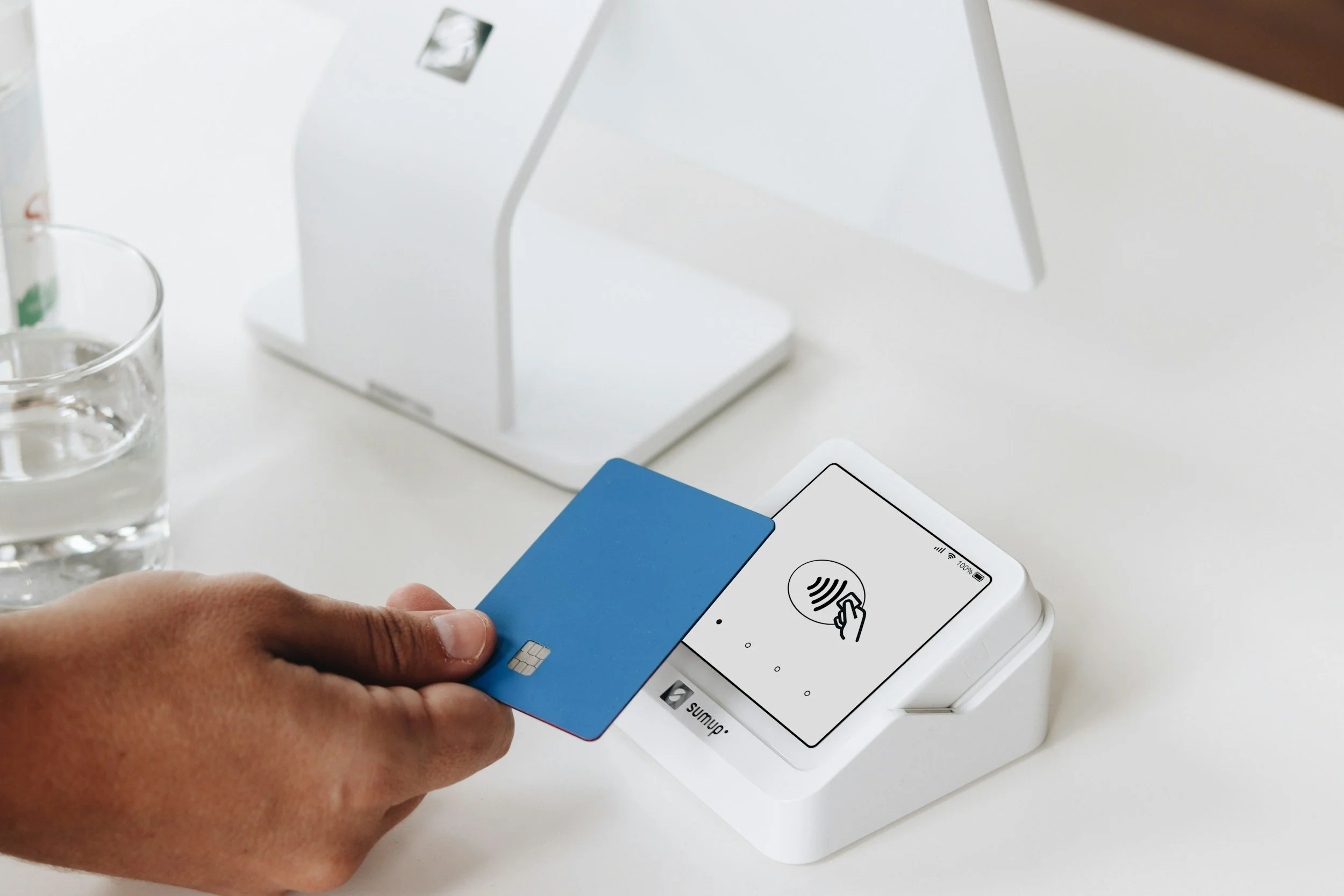
What a payments fintech website needs to do that a generic SaaS site does not
A payments fintech website is judged against a stricter brief than a typical SaaS site. The buyer is a head of payments, a treasury lead, or a platform CTO who needs to see settlement timelines, scheme coverage, FX detail, fraud controls, and uptime evidence before they care about the design. If those answers are not on the homepage and the relevant product page, the visitor leaves and benchmarks the next provider. The job of the site is to put that evidence in the buyer's eyeline early.

Why a payments fintech website carries a stricter commercial brief
A payments fintech website is judged against a stricter brief than a typical SaaS site. The buyer is a head of payments, a treasury lead, or a platform CTO who needs to see settlement timelines, scheme coverage, FX detail, fraud controls, and uptime evidence before they care about the design. If those answers are not on the homepage and the relevant product page, the visitor leaves and benchmarks the next provider. The job of the site is to put that evidence in the buyer's eyeline early.
The payments fintech website buyer is a specialist who evaluates payment providers against a specific and technical set of requirements that have direct financial consequences for their business. A one percent improvement in payment acceptance rates on a platform processing one hundred million pounds per year is worth a million pounds annually. A settlement delay of twenty-four hours rather than same-day creates a working capital requirement that has a measurable cost on the balance sheet. These are not abstract product preferences. They are commercial decisions with quantifiable impact, and the buyer approaches the website evaluation accordingly.
The generic SaaS website design pattern, features on the left, benefit statement on the right, with a large hero image and a single call to action, is not adequate for a payments fintech because it is designed to communicate simplicity and ease of adoption to a buyer who is evaluating a software tool. The payments buyer is not evaluating a software tool. They are evaluating a financial infrastructure partner whose operational performance will directly affect their own payment acceptance rates, their treasury position, and their regulatory compliance. The website that speaks to that buyer in those terms is the website that earns an evaluation. The website that speaks to them in generic SaaS terms is the website they dismiss as not understanding what a payments buyer needs to know.
The commercial implication of this distinction is that the payments fintech website needs to make payment-specific technical information available early in the visitor journey, in a format that the specialist buyer can quickly evaluate against their own requirements, without requiring them to navigate deep into the site or to request a sales call to obtain the information they need to determine whether the product is technically relevant to their situation.
Settlement architecture, scheme coverage, and the information payments buyers need first
Settlement architecture is the technical characteristic of a payment product that most directly affects the buyer's treasury and cash flow management. The settlement timeline, whether T+0, T+1, or T+2, the settlement currency options, the cut-off times for each settlement cycle, and the minimum transaction volume for same-day settlement eligibility, are the specific parameters that a treasury lead or head of payments will look for on the product page before any other information.
Presenting this information clearly and specifically on the relevant product page, rather than making it available only through a sales call or a technical integration guide, does two commercial things simultaneously. It addresses the buyer's most specific and most immediately evaluable technical requirement without friction. And it signals that the company understands the buyer's decision criteria at a level of technical depth that communicates genuine domain expertise in payment operations.
Scheme coverage is the second category of technical information that payments buyers evaluate early. The specific card schemes supported, the real-time payment rails available in each market, the SWIFT and SEPA coverage for international transfers, and the local payment method support in each target geography, are the parameters against which a payments platform evaluates whether a payment provider can serve their full geographic and payment method requirement. A coverage page that lists every supported scheme, rail, and geography in a scannable format, with clear indication of live versus roadmap status, is a page that saves the buyer the time and friction of a pre-sales technical call to determine basic coverage eligibility.
FX and multi-currency capability is the third category for international payments buyers. The available currency pairs, the markup applied to the interbank rate, the settlement currency options for each geography, and the hedging products available for FX risk management, are the parameters that a treasury lead at a cross-border platform evaluates when assessing a payment provider for international transaction handling. A fintech that presents this information transparently and specifically is a fintech that eliminates the most common early-stage commercial question from the buyer's evaluation checklist.
Uptime, reliability, and the operational performance evidence payments buyers require
Payment infrastructure buyers have a specific and quantifiable tolerance for downtime that is different in kind from the tolerance applied to most SaaS products. A project management tool that is unavailable for two hours on a Wednesday afternoon creates inconvenience. A payment gateway that is unavailable for two hours during peak transaction volume creates a direct revenue loss, a customer experience failure, and a potential regulatory incident that must be reported to the relevant payment scheme and financial authority.
The operational performance evidence that payments buyers require before committing to a new payment infrastructure provider includes historical uptime data across a meaningful period, ideally twelve months or more, measured against the ninety-ninth percentile rather than the average. The transaction success rate across all payment methods and geographies during that period, with specific breakdowns for the payment methods and geographies most relevant to the buyer's use case. The incident history, including the duration, frequency, and resolution time of any service interruptions. And the redundancy architecture that determines whether and how the system recovers from infrastructure failures, provider outages, or network interruptions.
A public status page that shows real-time and historical operational metrics is the infrastructure credibility signal that payments buyers look for on the initial visit and that most payments fintechs either do not have or do not link to prominently from the main website. A fintech whose website links directly from the homepage navigation to a public status page showing twelve months of uptime history, transaction success rates, and incident logs is communicating an operational transparency that a competitor who asks buyers to request this information through a sales call is not providing.
The SLA documentation that specifies the guaranteed uptime commitment, the measurement methodology, the credit or compensation structure for downtime events, and the escalation process for incident management, is the contractual performance evidence that enterprise payment buyers present to their procurement and legal teams as the contractual baseline for the vendor relationship. Making the SLA framework available on the website, even in an indicative rather than contractual format, eliminates a due diligence step from the enterprise procurement process and provides the commercial champion with the specific evidence their legal team needs to progress the contract review.
Technical buyers evaluate settlement data, not design.
We build payments fintech websites that surface scheme coverage, settlement timelines, and uptime data where buyers look first.
Fraud controls, security architecture, and regulatory compliance for payment buyers
Fraud and financial crime controls are a specific and non-negotiable evaluation criterion for any buyer purchasing a payment product that handles their end customers' financial transactions. A retail platform choosing a payment gateway, a marketplace selecting a payout provider, or a BNPL operator evaluating a credit facility provider each faces a specific regulatory and reputational exposure if the payment product they adopt does not meet the fraud prevention and financial crime compliance standards appropriate to their business.
The fraud controls information that payment buyers need before progressing a vendor evaluation includes the specific fraud detection methodology and whether it uses machine learning, rules-based screening, or a hybrid approach. The specific anti-money laundering and know-your-customer processes applied to transactions and merchants. The chargeback rate benchmarks and the dispute management support available to buyers. The 3D Secure implementation and its specific coverage across card schemes and geographies. And the specific fraud liability model that determines which party bears the financial risk of fraud losses under different transaction and dispute scenarios.
This information is commercially sensitive, and the appropriate level of detail for a public website differs from the detail provided in a due diligence document or a contractual negotiation. But the absence of any substantive fraud and financial crime controls communication on the website, beyond a general statement about taking security seriously, creates a specific gap in the evaluation process that a payment buyer will fill by requesting the information through a sales call, adding a sales interaction to a stage of the evaluation that the buyer would prefer to conduct independently.
For payments fintechs serving regulated financial institutions, the website's regulatory compliance communication is held to the highest standard in the evaluation. The Payment Card Industry Data Security Standard level and scope, the relevant financial regulatory authorisations, the AML and CTF policy framework, and the relationship with the relevant payment schemes, must all be clearly documented and easily accessible on the website to enable the regulatory due diligence that a bank, insurance company, or regulated financial intermediary must complete before entering any vendor relationship that touches financial transactions.
The developer and integration pathway for technical payment buyers
A significant proportion of payment infrastructure buying decisions are influenced or determined by a senior technical evaluator who is assessing the integration complexity, the API quality, and the operational reliability of the payment product from a technical architecture perspective. The payments fintech website that does not provide a compelling developer experience and a technically credible API narrative is the website that loses deals at the technical evaluation stage, regardless of how strong the commercial narrative is for the business decision-maker.
The API reference quality is the most immediately legible technical credibility signal for a payment API buyer. A well-structured, comprehensive, and regularly maintained API reference communicates that the engineering team understands technical documentation as a product quality dimension rather than an afterthought. The specific elements of API reference quality that technical evaluators assess are: completeness of endpoint documentation, quality and specificity of the request and response examples, clarity of the error code documentation, and recency of the changelog that shows the pace and direction of API development.
The sandbox access pathway is the conversion step that most payment fintechs handle suboptimally. A developer who wants to prototype a payment integration before their company has committed to any commercial relationship needs to be able to access a test environment that accurately reflects the production API, with pre-loaded test credentials and a set of simulation scenarios that cover the specific payment flows they are trying to evaluate. The sandbox that requires a sales call to access, or that is available through a form submission with a multi-day activation window, is a sandbox that loses the developer's evaluation momentum and increases the probability that they will evaluate a competitor whose sandbox is accessible in fifteen minutes.
The integration case study is a specific variant of the standard case study that addresses the technical buyer's evaluation criteria. A case study that describes the integration architecture, the specific API endpoints and data formats used, the development resource required to achieve a production-ready integration, and the performance characteristics of the integration under realistic transaction volumes, provides the technical evaluator with the specific comparative data they need to estimate the integration cost and timeline for their own organisation.
Public status pages close the operational gap.
We help payments fintechs design the infrastructure transparency that enterprise treasury teams require before evaluating.
Messaging for multiple payment buyer segments
The payments fintech market encompasses multiple distinct buyer segments whose evaluation criteria, decision-making timelines, and website behaviour differ substantially from each other. The payments fintech website that does not address this segmentation explicitly is a website that converts suboptimally across all segments simultaneously.
The enterprise treasury and payments team at a large corporate or financial institution evaluates payment products through a formal procurement process with multiple stakeholders and a timeline measured in months. They need regulatory credentials, operational performance data, named enterprise client references, and contract flexibility information. Their website journey is research-intensive and multi-visit, with different team members accessing different sections of the site at different stages of the procurement review.
The platform CTO or head of product at a marketplace, vertical SaaS, or consumer platform evaluates payment products primarily against integration complexity, time-to-live, developer experience quality, and the revenue share or commercial flexibility of the partner model. Their website journey prioritises the API documentation, the integration case studies, and the partner programme information over the regulatory credentials that dominate the enterprise buyer's evaluation.
The SME finance director or founder evaluating a payment solution for their growing business evaluates primarily against simplicity of onboarding, clarity of pricing, and the quality of the customer support experience during and after implementation. Their website journey is the shortest of the three, with the highest sensitivity to pricing transparency and the lowest tolerance for technical complexity in the product narrative.
A payments fintech website that has distinct content pathways for each of these buyer types, with a clear navigational entry point for each segment visible from the homepage, converts each buyer type at a substantially higher rate than a single undifferentiated narrative that attempts to address all three simultaneously.
Building the payments fintech website as a long-term commercial asset
The payments fintech that invests in building a website to the commercial standard described in this article is building more than a digital brochure. It is building a pipeline asset that produces qualified enterprise evaluations, developer integrations, and SME sign-ups continuously, without requiring a proportionate increase in sales and marketing headcount as the company grows.
The compounding value of the payments fintech website as an organic acquisition asset operates through the accumulation of search authority across the specific category terms, technical capability descriptions, and payment problem searches that its target buyer segments use when they begin their vendor evaluation. A fintech that publishes a structured settlement comparison page, a scheme coverage table, a detailed fraud controls documentation section, and a series of use-case-specific landing pages for each of its primary buyer segments, is building a search presence that captures buyers at the specific technical research moment that precedes the commercial evaluation stage.
The case study programme compounds the organic search value with direct commercial conversion. Each named case study page earns search traffic for the client name, the payment use case, the industry sector, and the outcome metric it describes. Each case study that is forwarded internally within a prospect organisation introduces the fintech brand to new stakeholders within that organisation who have not yet visited the website. And each case study that is cited in an analyst report, a press article, or an industry comparison creates a backlink that strengthens the overall domain authority of the site and improves the ranking position of every other page.
The payment buyer who arrives on a well-built payments fintech website through an organic search for a specific capability or use case, finds the technical information they need to complete their initial feasibility assessment, reads a named case study from a comparable client organisation, and follows a conversion pathway that is appropriate to their evaluation stage, is a buyer who has self-qualified and self-educated through the website before they have spoken to a single member of the sales team. That pre-qualified buyer converts at a substantially higher rate from first demo to closed revenue, and does so on a shorter sales cycle, than the buyer who arrived through a generic awareness campaign and has none of that product and proof context before the first conversation.
Developer sandbox access shortens the integration timeline.
We build payments fintech websites with the technical content and sandbox pathways that convert developer evaluations.
Building the payments fintech website as a long-term commercial asset
The payments fintech that invests in building a website to the commercial standard described in this article is building more than a digital brochure. It is building a pipeline asset that produces qualified enterprise evaluations, developer integrations, and SME sign-ups continuously, without requiring a proportionate increase in sales and marketing headcount as the company grows.
The compounding value of the payments fintech website as an organic acquisition asset operates through the accumulation of search authority across the specific category terms, technical capability descriptions, and payment problem searches that its target buyer segments use when they begin their vendor evaluation. A fintech that publishes a structured settlement comparison page, a scheme coverage table, a detailed fraud controls documentation section, and a series of use-case-specific landing pages for each of its primary buyer segments, is building a search presence that captures buyers at the specific technical research moment that precedes the commercial evaluation stage.
The case study programme compounds the organic search value with direct commercial conversion. Each named case study page earns search traffic for the client name, the payment use case, the industry sector, and the outcome metric it describes. Each case study that is forwarded internally within a prospect organisation introduces the fintech brand to new stakeholders within that organisation who have not yet visited the website. And each case study that is cited in an analyst report, a press article, or an industry comparison creates a backlink that strengthens the overall domain authority of the site and improves the ranking position of every other page.
The payment buyer who arrives on a well-built payments fintech website through an organic search for a specific capability or use case, finds the technical information they need to complete their initial feasibility assessment, reads a named case study from a comparable client organisation, and follows a conversion pathway that is appropriate to their evaluation stage, is a buyer who has self-qualified and self-educated through the website before they have spoken to a single member of the sales team. That pre-qualified buyer converts at a substantially higher rate from first demo to closed revenue, and does so on a shorter sales cycle, than the buyer who arrived through a generic awareness campaign and has none of that product and proof context before the first conversation.
Written by
Mikkel Calmann
A payments site built for the specialist buyer.
We design payments fintech websites that put the technical evidence enterprise buyers need where they need it first.
More web design insights for fintech startups