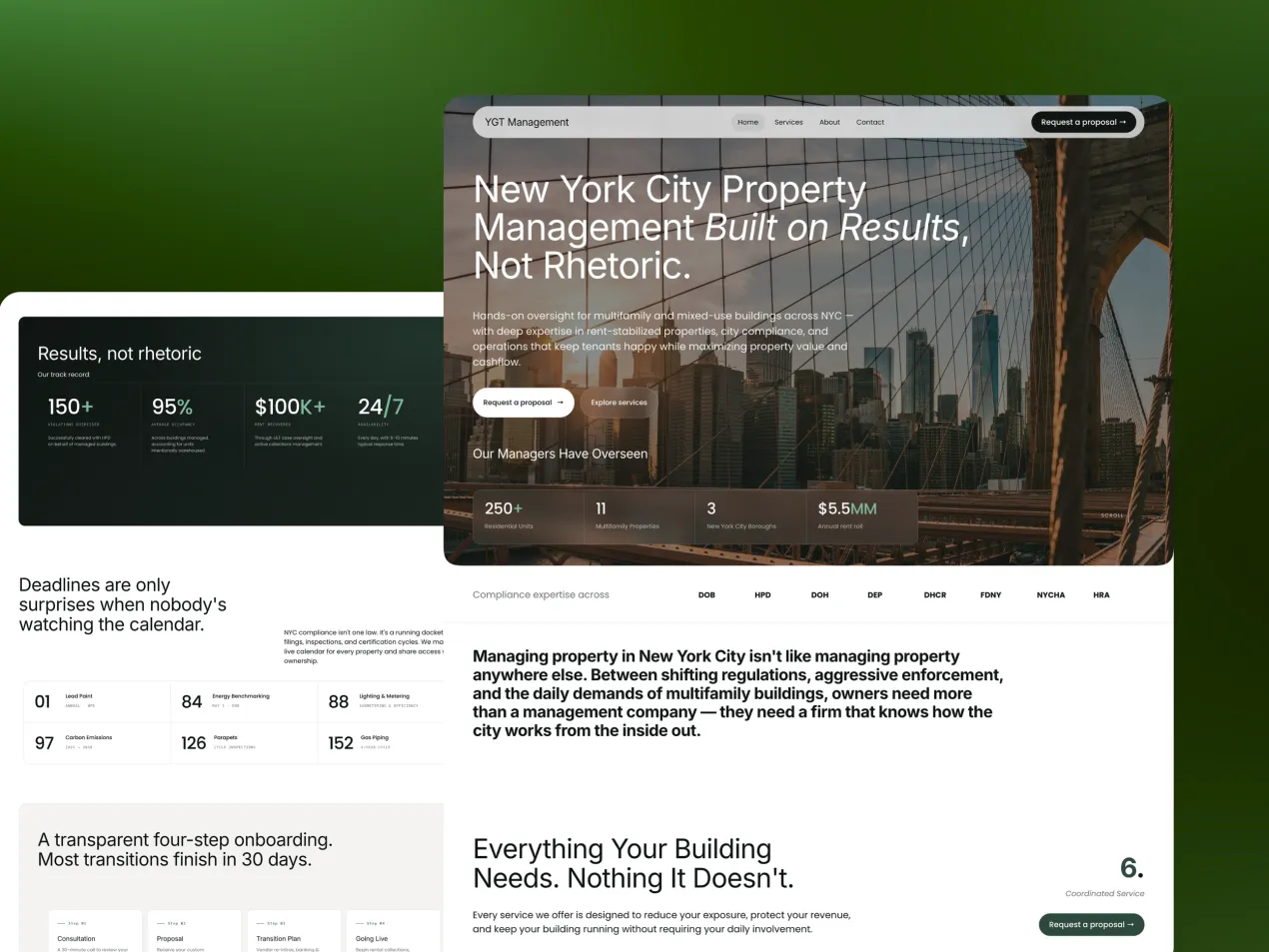
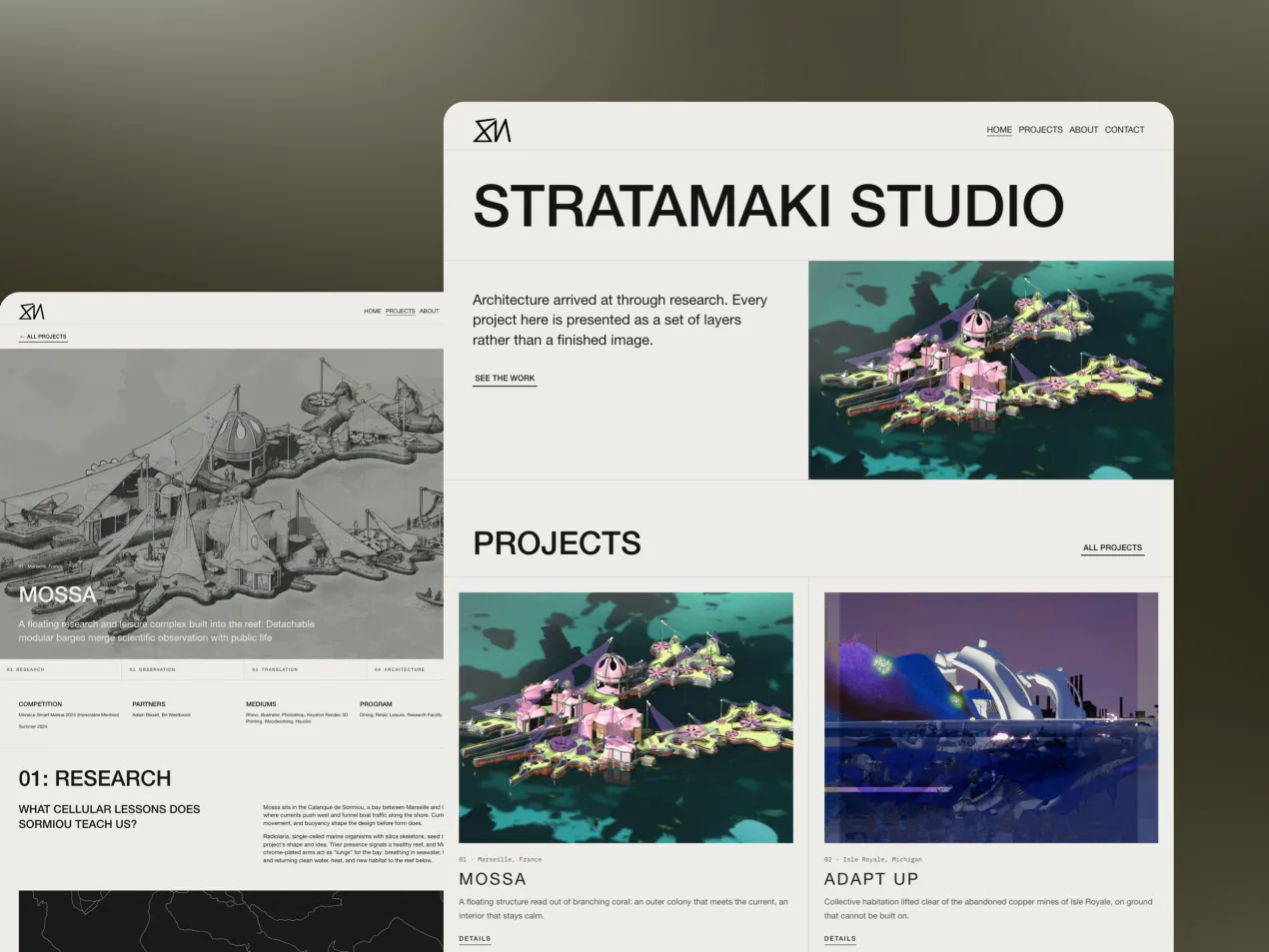
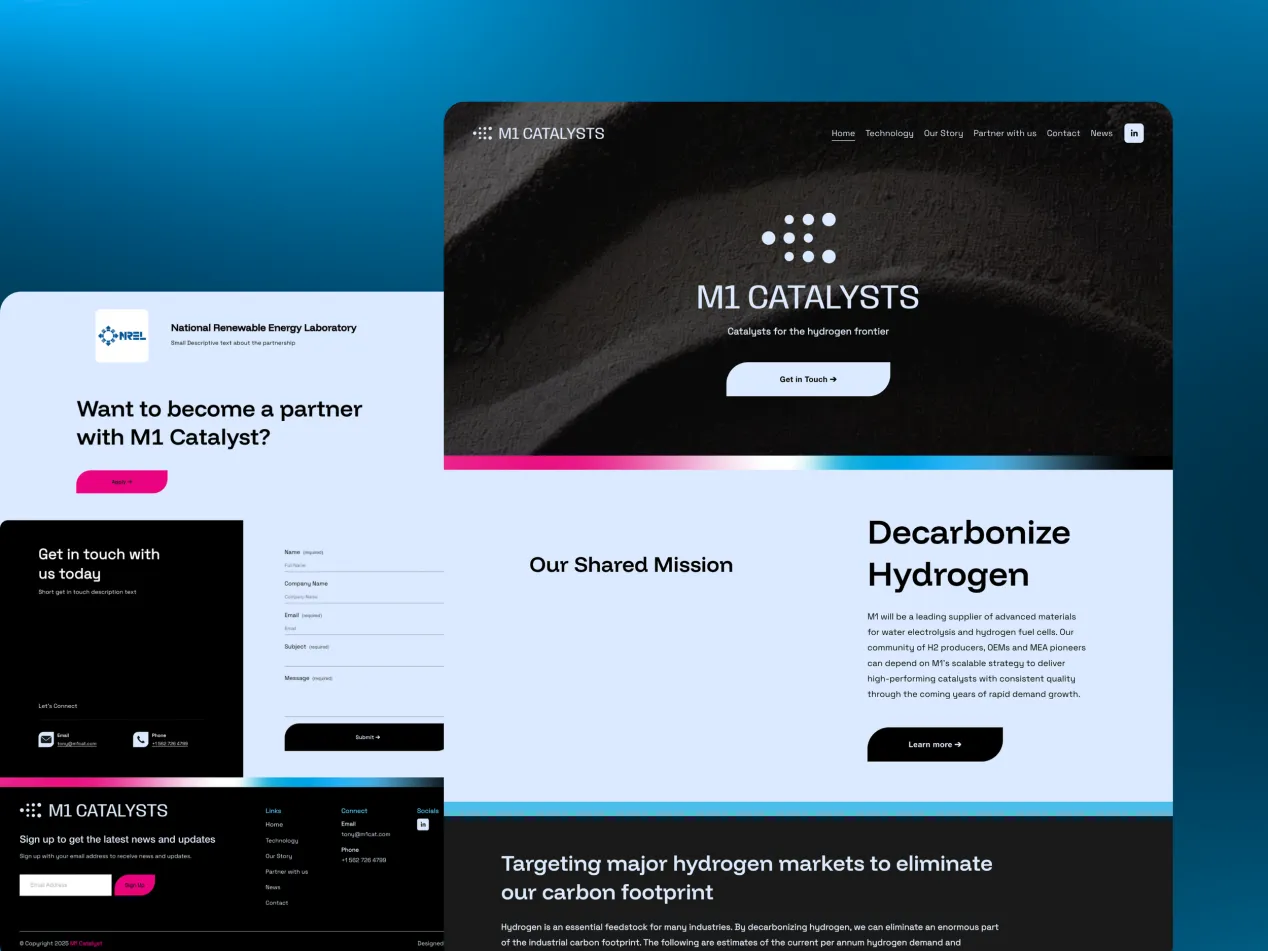




Property & constructionSites that prove the work before the first call, from planning to handover.
Every industry buys differently, so every industry gets its own page.All industries →

The Best Website Structure for Credibility and Trust

By Mikkel Calmann, Founder, TypzaUpdated 4 min read

On this page
  1. Why structure affects credibility
  2. A simple site structure that works
  3. How order shapes perception
  4. Clarity signals authority
  5. Predictable beats clever
  6. Connect your pages
  7. How structure filters your audience
  8. FAQ
  9. More insights

The best website structure makes it obvious where visitors are, what matters most and where to go next. That clarity builds trust before anyone reads your copy. For most service businesses, it means a simple set of main pages, navigation people recognize, and pages that move from the problem to the solution, then proof and a next step.
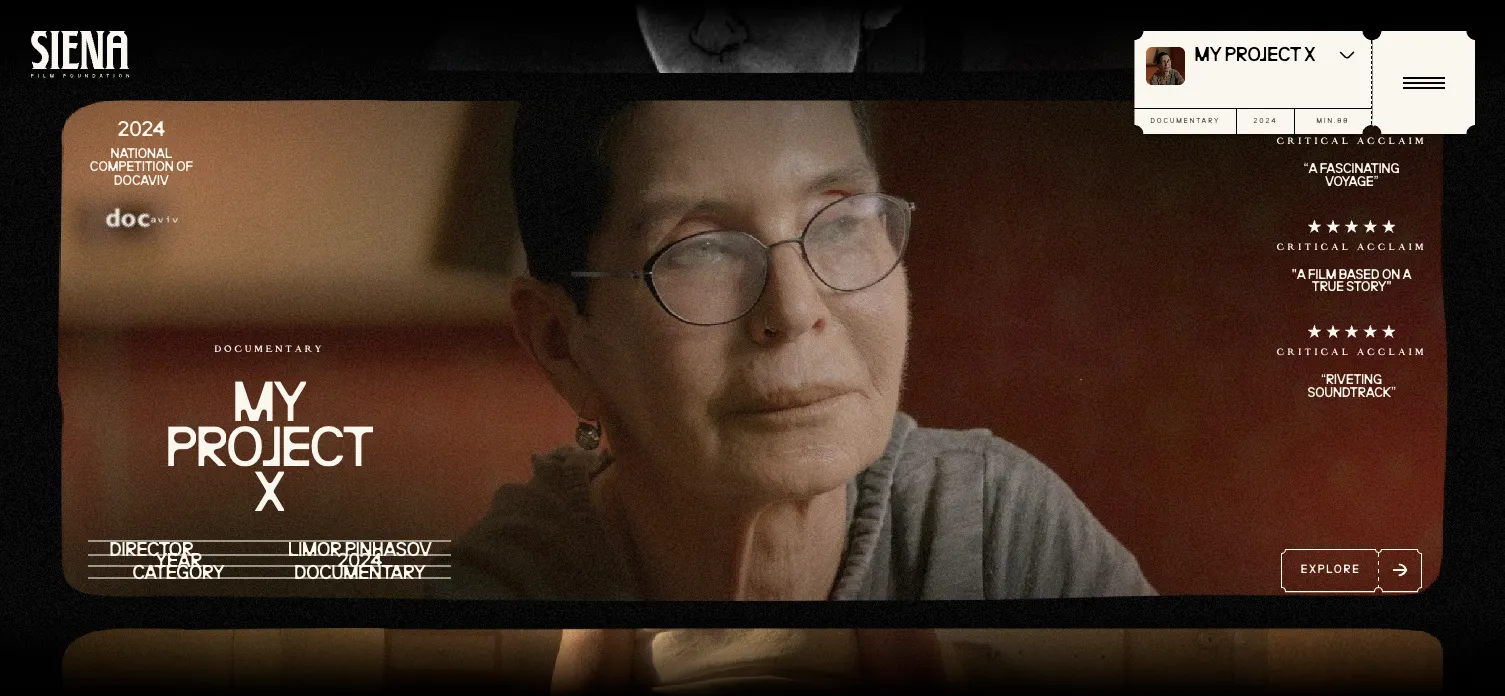
Siena Film website hero image

Why structure affects credibility

Visitors start judging a site the moment it loads. They can't yet assess your work, so they judge whether the site is easy to understand and seems to know where it's going.

When a site feels scattered, people don't blame the layout. They assume the business is disorganized too. Good structure removes that doubt and gives your message a fair chance to land.

A simple site structure that works

Most service businesses can do well with a small, clear set of pages:

  • Home, which orients people and sends them to the right place

  • Services, with a dedicated page for each main service

  • Work or case studies, your proof

  • About, the people behind the business

  • Insights, if you publish regularly

  • Contact or booking, with one clear way to get started

Keep your important pages within a click or two of the homepage. That helps visitors, and it helps search engines find and understand them. Giving each service its own page also lets each one target the searches that service's buyers use.

How order shapes perception

The order you present information in changes how people interpret it. In a good conversation, you don't open by listing your credentials. You find out what the other person needs, then show you can help. A good page works the same way.

What comes first feels most important, and what comes later feels supporting. Use that deliberately. Start with what you do and who it's for, follow with how you help, then show your proof. Save your company history and smaller details for later in the page.

Clarity signals authority

Authority comes across more through composure than big claims. Limit your main navigation to about five to seven items, and avoid deep menus inside menus. Give each page one main job and one main call to action.

That doesn't mean having little content. You can have a lot of content if everything has a clear place. A focused structure also suggests you've thought hard about your clients and what they need to know.

Predictable beats clever

People relax when a site behaves the way they expect. Put your navigation where people look for it, use plain labels such as "Services" and "Contact", and keep page templates consistent.

When the structure changes from page to page, visitors have to reorient themselves, and each small moment of confusion costs you some trust. Save your creativity for the visuals and the message, and keep the wayfinding familiar.

Connect your pages

Pages shouldn't be dead ends. A service page can link to a related case study. A blog post can link to the service it relates to. A case study can link to the booking page.

These links guide people to the next useful step, and they also show search engines how your pages relate. Use descriptive link text so people know where they're going. "See our layout guide" is more helpful than "click here", as with our website layout guide.

How structure filters your audience

A clear structure lets people qualify themselves. If your services, process and typical clients are easy to find, the right people gain confidence and the wrong ones move on before they fill out your form.

To test your own site, ask someone unfamiliar with your business to find what you offer, whether it's right for them and how to start. Don't help them. Wherever they hesitate is the next thing to fix.

FAQ

How many pages should a small business website have?

Enough to cover your main services, proof and contact details clearly. Many service businesses start with about five to ten pages and add service, location or article pages as needed. Give each service its own page, so it can target the searches that service's buyers use. Keep your important pages within a click or two of the homepage.

What is the best navigation structure?

The best navigation is a short top menu with plain labels and a clear button for your main action. Keep it to about five to seven items, and avoid menus nested inside menus. Put the most important items first, and move secondary links to the footer. Use labels people recognize, because a clear structure builds trust before anyone reads your copy.

Does website structure help SEO?

Yes. A logical website structure and good internal links help search engines find your pages and understand how they relate. It also makes it easier to give each topic a page of its own. Use descriptive link text, such as "See our layout guide" rather than "click here", so both people and search engines know where a link goes.

Should I change my structure if my URLs would change?

You can, but set up a 301 redirect from each old address to its new one, so you keep your traffic and don't send visitors to error pages. Restructuring can be worth it if it gives each page one clear job and brings important pages closer to the homepage. Update your internal links to the new addresses as well.


More insights

7 Ways to Get Your Business Recommended by AI

8 min

ChatGPT just recommended your competitor, and it probably wasn't because they're better. Their website was just easier for AI to read. Here are 7 fixes that change that.

10 Minimalist Luxury Websites for Design Inspiration

11 min

From The Row to Aman Resorts, these 10 minimalist luxury websites prove that restraint, not decoration, is what makes a brand feel expensive.

Your Website Might Be Pushing Visitors Away

11 min

A website can look attractive and still be quietly driving visitors to your competitors. Here's how to spot the functional issues hiding behind good design.

The Hardest Lesson We Learned in Web Design

12 min

Skipping clear expectations with clients almost sank our early web design projects. Here's the process we built after learning that lesson the hard way.

Website Features That Are Killing Your Sales

11 min

Flashy features like auto-play video and stacked pop-ups feel modern, but they're often the exact thing driving your visitors away before they convert.

The Trick That Made Our Websites Convert Better

12 min

One of the simplest conversion fixes is also the most overlooked: make your call-to-action actually look and read like a button, not a suggestion.

The Website Feature We Used to Love (But Don't)

11 min

Animations once felt like the mark of a modern website, until we noticed they were slowing sites down and pulling attention away from what actually converts.

The One Page Every Website Needs to Convert

10 min

Homepages and service pages get all the attention, but the page most businesses are missing entirely is the one that actually builds trust: a case studies page.

The One Website Investment Every Business Needs

9 min

With a limited budget, skip the flashy extras, the highest-return investment for any website is clear UX and high-quality visuals.

A Quick Fix That Instantly Improves Your Website

11 min

You don't need a redesign to see real improvement, these four small, fast fixes can noticeably boost how your website performs today.

The Detail That Makes a Website Look High-End

12 min

Flashy effects don't make a website feel premium, consistent color, clean typography, and generous whitespace do. Here's why that small discipline matters so much.

The Biggest Misconception About Web Design

11 min

A gorgeous website that loads slowly and confuses visitors will always lose to a plainer one that performs. Here's why looks are the wrong priority.

How to Add a Video Background in Squarespace

7 min

A video background can make your Squarespace site feel dynamic and premium, if it's set up right. Here's the step-by-step process and the pitfalls to avoid.

How to Create a Squarespace Duplicate Website

8 min

Squarespace has no one-click "duplicate site" button, but there are safe, reliable ways to clone your site for testing, backups, or new projects.

Is Squarespace Better Than WordPress?

9 min

Squarespace and WordPress solve very different problems. Here's an honest, side-by-side breakdown to help you pick the platform that actually fits your goals.

WordPress to Squarespace Migration Guide

8 min

Moving off WordPress doesn't have to risk your rankings or your content, follow this step-by-step migration plan to switch platforms cleanly.

How to Add HTML to Squarespace (3 Methods)

8 min

Need more control than Squarespace's blocks allow? Here are the three safe ways to add custom HTML to your site, and the mistakes that break pages.

How to Download Images From Squarespace

8 min

Squarespace has no built-in "download all" button for your images. Here's the safe workaround to recover full-quality files whenever you need them.

10 SEO Squarespace Tips to Boost Visibility

12 min

A beautiful Squarespace site won't rank on its own, these 10 practical SEO tips help turn your design into organic traffic.

How to Become a Web Designer: Beginner Guide

9 min

Thinking about a career in web design? Here's the realistic, step-by-step path from design fundamentals to a portfolio that actually gets you hired.

Squarespace Website Not Working? Full Fix Guide

8 min

When your Squarespace site goes down or starts acting strange, the cause is almost always one of a handful of predictable culprits. Here's how to find and fix it fast.

How Long Does It Take to Build a Website? 2026

9 min

A simple site typically takes about three weeks and a bigger one about five, but that estimate only holds if feedback comes back fast. Here's the real timeline, stage by stage.

Why Photos on Your Business Website Matter

8 min

Photos on your business website aren't decoration, they're often what decides whether a visitor keeps reading or leaves. Here are six real reasons they matter.

Mobile-First Website Design: Beginner's Guide

9 min

Mobile-first website design just means building for a phone screen first, then working up to bigger screens. It sounds like a small technical detail, it isn't.

Why Website Visitors Leave Without Contacting You

9 min

Website visitors leave without contacting you for one boring reason far more often than any exciting one: you never gave them an obvious way to. Here are six fixable causes.

7 Things to Look for Hiring a Web Designer

10 min

It's hard to judge a web designer until after you've already paid them. Here are seven things to check beforehand so you don't find out the hard way.

7 Things to Prepare Before a Website Project

9 min

Most website project delays trace back to one thing: nobody prepared what the designer actually needed before the project began. Here are seven things to sort out first.

Custom Website vs Template: Which to Pick?

8 min

A template and a custom website can both technically get you online, the honest difference shows up later, once you're trying to stand out and convert, not just be found.

How to Match Your Website to Your Brand (2026)

8 min

Matching your website to your brand doesn't mean an exact copy of your logo file. Here's what genuinely needs to stay fixed, and where print-first brand guidelines have room to flex on screen.

Professional Website Cost: What to Budget in 2026

9 min

"It depends" isn't a dodge, a professional website's cost genuinely hinges on scope, copywriting, and features. Here's what actually drives the price, and what to budget beyond the initial quote.

Previous

Does Your Real Estate Website Need Full IDX, or Is It Actually Hurting You?

How does your website score?

Enter your address and email. You get scores for speed, search, accessibility and trust in about a minute, and the full report by email.