
Lessons from designing 100+ high end Squarespace sites
An in-depth founder’s narrative revealing the design philosophies, aesthetic choices, and strategic insights gained from creating more than 100 high end Squarespace design projects for premium brands worldwide.
Written by Mikkel Calmann
Dec 26, 2025

The hidden pattern behind every high-end website
After designing 100+ high end Squarespace sites across luxury services, wellness, consulting, e-commerce, and creative industries, one truth has become impossible to ignore: high-end websites don’t look expensive by accident. They feel expensive because every detail—spacing, typography, rhythm, narrative—operates with intention.
Brands come to me with the same core problem, regardless of industry: their website doesn’t match the caliber of their work. Their visuals feel amateur compared to their experience. Their structure feels cluttered compared to the clarity they deliver to clients. Their story feels compressed when it should feel cinematic.
The frustration behind these challenges is the same frustration that led me to create my studio. I wanted to build spaces that didn’t merely reflect brands, but elevated them. That required more than templates, or trends, or fast design. It required depth—an eye for aesthetic tension, narrative precision, and editorial restraint.
Those are the lessons I’ve learned building over a hundred high end Squarespace design experiences, and the lessons this piece will walk you through.
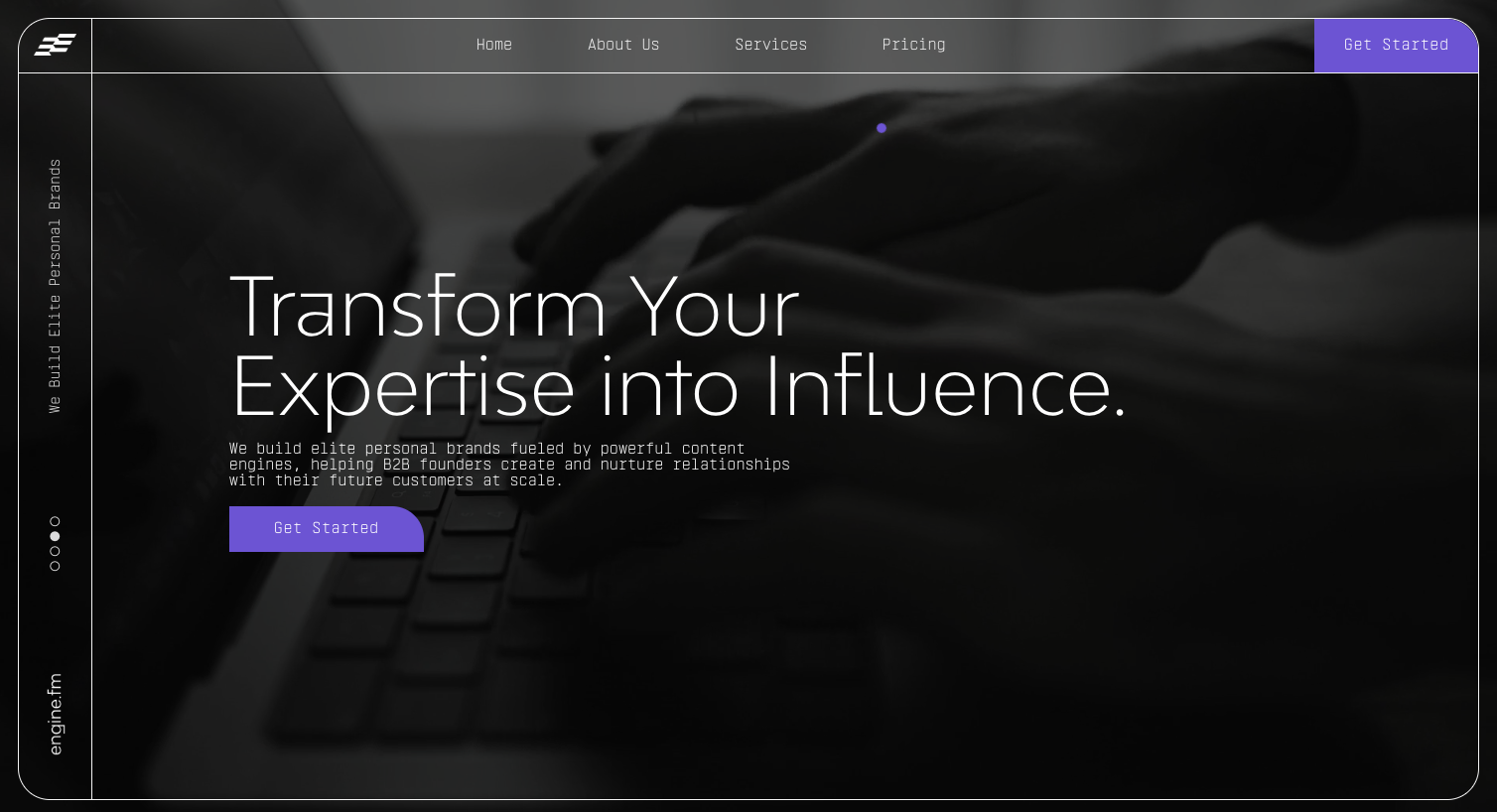
Why volume creates vision
When you cross a threshold—50 projects, 75 projects, eventually 100—you start to see patterns. Not just in what clients ask for, but in what high-end brands consistently need.
Designing a single premium site teaches you tools. Designing dozens teaches you taste. Designing hundreds teaches you discipline.
After 100+ sites, I’ve learned that premium design is less about complexity and more about clarity. The luxury market doesn’t chase novelty; it values refinement. The visual decisions that appear simple are often the ones that take the longest to perfect.
High-end Squarespace design becomes a craft—a slow, intentional understanding of how visual tone shapes brand perception and how digital experiences elevate authority.
Volume creates intuition, and intuition creates speed—not rushed decisions, but sharp, confident ones.
The lesson of visual discipline
One of the earliest lessons I learned was also one of the most transformative: most websites fail because of excess, not absence.
Brands assume they need more features, more elements, more images, more motion. But in the high-end world, discipline is the luxury. Visual noise dilutes trust. Over-explanation signals insecurity. Clutter suggests indecision.
The most premium brands embrace negative space boldly. They allow emptiness to create tension. They use restraint to communicate confidence.
After building 100+ projects, I realized how often I remove more than I add. I strip away colors until only the essentials remain. I reduce font pairings until they feel intentional. I minimize options so the user has no choice but to move forward with clarity.
This isn’t minimalism as a trend. It’s minimalism as strategy—one of the most reliable markers of a luxury digital experience.
The narrative that high-end brands actually convert with
Building hundreds of high end Squarespace design experiences taught me something counterintuitive: premium brands don’t convert by explaining everything. They convert by clarifying the right things.
High-end clients want to understand the founder’s point of view. They want to feel a sense of narrative direction: belief, philosophy, approach, rationale. But they don’t want to scroll through pages of text written for algorithms rather than humans.
The strongest high-end websites don’t tell a longer story. They tell a sharper one.
The most effective narrative structure I’ve learned to build follows a consistent emotional arc:
Establish authority through clarity, not ego.
Demonstrate taste through design, not description.
Reveal process through curation, not overwhelm.
Invite inquiries through poise, not pressure.
This narrative structure consistently turns premium visitors into aligned inquiries, regardless of industry.
The narrative isn’t a script. It’s a rhythm.
Case insight: The power of an editorial pace
One project that made this lesson unmistakable involved a lifestyle consultancy transitioning into a more luxury-focused market. Their original site was content-heavy, visually scattered, and emotionally flat. But the founder was brilliant—precise, thoughtful, deeply experienced.
The disconnect was immediate: the website rushed what the founder naturally slowed down.
We rebuilt the digital experience as an editorial journey, controlling pace through spacing, image placement, and typography decisions. Instead of overwhelming visitors, we guided them.
This editorial pacing became the hinge point. Engagement doubled. Inquiry quality shifted upward. The founder reported receiving messages from prospects saying, “I felt like I understood your world before I even reached out.”
That is the value of treating design like narrative architecture rather than digital decoration.
The lesson of typographic authority
Typography carries more psychological weight than most brands realize. After designing 100+ high end Squarespace design projects, typography is one of the areas where I became the most uncompromising.
Typography decides:
How premium your brand feels
How trustworthy your content seems
How much attention your user gives
How spacious or cramped your site appears
How well your narrative structure is absorbed
In luxury environments, typography is rarely expressive. It is controlled. It doesn’t shout; it whispers with confidence. It guides the eye with poise. Headlines feel editorial. Body text feels modern. Kerning is intentional. Scale is generous without becoming dramatic.
The brands that invest in strong type systems gain something priceless: an immediate perception of authority.
Typography is the unspoken tone of your digital presence.
Why high-end clients read differently
A recurring pattern across premium audiences is that they read websites like curated magazines. They skim, pause, absorb, and continue. They are not looking for everything—they are looking for alignment.
This changed the way I built content structures. It changed how I composed visuals. It changed how I designed interactions.
After 100+ builds, I’ve learned that premium audiences:
Don’t want to scroll endlessly
Don’t want to decipher dense paragraphs
Don’t want loud interactions
Don’t want overly literal explanations
What they want is confidence. They want to feel like the brand can lead. And a high-end Squarespace site becomes the stage for that leadership.
Case insight: When restraint becomes a sales advantage
One creative consultant I worked with had a site filled with excellent ideas—but too many of them. The site apologized for itself. It hedged. It tried to please everyone.
We restructured the site with a lean, editorial approach. We used fewer words, larger visuals, and more curated messaging. We aligned every element with her core expertise.
The result wasn’t just more inquiries—it was fewer unqualified inquiries. Her calendar became lighter, but more profitable. Clients who reached out already understood her value.
Restraint doesn’t cost opportunities. It filters for the ones that matter.
The behind-the-scenes process that clients never see
After 100+ high end Squarespace design builds, my process has become something clients rarely expect. It is less about templating and more about creative direction. Less about layouts and more about emotional architecture.
Behind every polished site is a process built on:
Intuition developed over hundreds of brand narratives
Aesthetic instinct refined by analyzing thousands of visual references
Sensitivity to nuance that clients often struggle to articulate
Editorial decision-making that shapes the story behind every frame
Premium design is less about building a website, and more about capturing a point of view.
Clients come to me for more than execution—they come for alignment. They want their digital presence to feel like them at their best.
That requires craftsmanship, not speed. It requires listening, not just designing. It requires an understanding of identity that comes only from experience.
Why Squarespace is the perfect canvas for this level of precision
A lesson I learned early in my career—and one that deepened after each project—is that high-end design thrives within constraint. Squarespace became the perfect canvas because the limitations sharpen the work.
The platform gives structure, predictability, and stability. It removes unnecessary technical decisions. It lets the design and narrative take center stage.
People often assume “premium” means “custom coded.” But in reality, premium means “considered.” There is nothing inherently luxurious about code. Luxury comes from the finish, not the framework.
Squarespace enables the same precision I bring to every project: clarity, discipline, and editorial coherence.
The signature elements I refine in every project
After more than 100 builds, certain elements have become my creative signatures—not because I force them, but because premium projects benefit from them.
These include:
Large, confident type scales
Cinematic spacing
Image-driven storytelling
Structured, elegant navigation
Minimalist interaction patterns
A strong, intentional narrative arc
A visual rhythm that feels high-fashion, not corporate
These are not trends. They are principles of premium presentation.
When refined consistently, they elevate brands effortlessly.
What clients don’t realize until after the redesign
A pattern I see often: clients don’t realize how much their old site was holding them back until they experience their new one.
A founder once told me, “I didn’t know how small my brand looked until I saw it through your eyes.” Another said, “I didn’t realize my website was shrinking my authority.” These are common reactions—not because their old sites were bad, but because they were not built with premium positioning in mind.
A high-end Squarespace design doesn’t just make a brand look better. It makes the brand feel like the version of itself it has been growing toward.
After 100+ builds, I’ve learned that design isn’t cosmetic. It’s transformational.
Conclusion
Designing over 100 high end Squarespace sites has shaped my philosophy, my eye, and the way I approach every new project. It has taught me that premium audiences respond to clarity, editorial flow, and emotional precision. It has shown me that design isn’t about decoration—it’s about direction. It has proven that luxury is created through restraint, not volume.
Most importantly, these projects have shown me that when design aligns with identity, brands expand into their next chapter with confidence.
If you’re standing at that threshold—ready for a website that finally reflects your standards, your craft, and the clients you’re here to serve—this is where that next chapter begins.
Flexible custom packages.
Three tiers scoped for where you are and where you're going. Not sure which fits? Book a call — we'll go over your project together and make sure you land on the right one.
Launch build
Look credible, fast.
$2,500starting from
A focused, conversion-aware website that gives you confidence sharing your link anywhere.
- Up to 4 structured pages
- 1 focused revision round
- Fully mobile-optimised
- SEO foundations included
- Launch-ready in 3 weeks
- 30 days email support
Best for businesses launching or replacing an outdated site.
Start your projectAuthority build — Most popular
Elevate your brand.
$4,000starting from
A refined, strategically designed website that positions your business as established and credible.
- Everything in Launch, plus:
- Up to 7 pages
- Custom styling & layouts
- 2 revision rounds
- Blog integration
- 5-week build timeline
- Training walkthrough
Best for growing businesses that want their site to reflect their expertise.
Start your projectScale build
No limits. Full depth.
$8,000starting from
A fully bespoke build with advanced functionality, custom code, and no artificial constraints.
- Everything in Authority, plus:
- Unlimited pages
- Unlimited custom code
- Unlimited revisions
- Plugin costs covered
- Priority support
- Complete SEO setup included
Best for established businesses investing in a long-term digital foundation.
Start your project
Mikkel Calmann
I’m Mikkel Calmann, a certified Squarespace designer and Circle Member. We’ve worked with businesses of all sizes, crafting strategic websites that look great and perform even better. If you’d like to discuss a project, feel free to email us at mikkel@typza.com or reach out to us here. You can also book a free 15-minute consultation here.