




Website redesign services are sold under one name but cover very different jobs. One provider means a new template and new colours. Another means rethinking who the site is for, rewriting every page, designing from a blank canvas and moving the whole thing to a new platform without losing a single search ranking. Both are called a redesign, and the price, the risk and the result are nothing alike.
This guide is for business owners who know their site needs replacing and want to hire well. We explain what the work involves, what good work looks like, what drives the cost, how to find a team you can trust and the mistakes that cost businesses their traffic. We run redesign projects ourselves, so where we describe how we do something, it is our own terms.
Why a redesign matters more than it looks
Your website is usually the first thing a buyer judges you by, and often the only thing before they decide whether to get in touch. A site that is aimed at the wrong buyer, looks dated or is hard to use on a phone loses work quietly. You never see the enquiries that didn't happen.
A redesign is also one of the few times your site is at real risk. The traffic you have built over years lives in your existing pages, their addresses and the links pointing at them. Handled carelessly, a new site can lose much of that in a few weeks. Handled well, it keeps what works and builds on it.
That is why the choice of provider matters more than the choice of colours. The design is the visible part. The planning, the copy and the migration are what decide whether the new site earns more than the old one.
What the work involves
A complete redesign has five parts. Cheaper offers usually skip some of them, so it helps to know what each one is.
Discovery. Before anything is designed, someone has to work out who the site is for, what those buyers search for, what competitors say and what already works on your current site. This is where pages are kept, merged or retired on purpose rather than by accident.
Message. Most sites that need a redesign have a message problem, not a design problem. The words describe the business the way the owner sees it, not the way a buyer decides. A good redesign agrees the positioning and writes the copy before the design starts, so the design is built around what the site needs to say.
Design. A custom design built for your buyers and your content, with a separate layout for phones. Template work can be fine for a small site, but it should be presented honestly as template work.
Build. The site is built on the platform that suits you, with forms, booking, analytics and any other tools connected and tested.
Migration and launch. Every page moves across, every old address is redirected to its new one, and the switchover happens without downtime. This is the part most likely to be rushed, and the part that does the most damage when it is.
What good work looks like
Good redesign work is easy to recognise once you know where to look.
The provider asks about your buyers before they ask about your colours. They want to see your analytics or at least ask what pages bring in enquiries. They can explain in plain words what will happen to every existing page.
The copy is written or reworked before design, and you see it in place on a mockup before anyone designs the rest. This saves weeks of revisions later, because most design disagreements are really disagreements about what the page should say.
The migration is planned in writing. Every old URL is listed with its new address, and a permanent (301) redirect is set up for each one. Google's own guidance on site moves with URL changes starts with exactly this: list your old URLs, map them to the new ones and redirect them on the server.
Finally, the result is measured. Rankings and traffic are checked before the project starts and again after launch, so success is shown rather than claimed.
The money and the risk
What drives cost and the outcome
Redesign prices vary for good reasons. These are the things that move the number most.
Page count. A ten-page site and a forty-page site with a blog archive are different jobs. A good provider agrees the new sitemap before pricing, so you are quoted for the site you will actually get.
Copy written versus copy moved. Writing every page from nothing takes far longer than tidying existing text. If your current words are the problem, budget for new ones.
Migration complexity. The platform, the size of the archive and how cleanly the old addresses map across all matter. A WordPress site with ten years of posts takes longer than a five-page Wix site.
Functionality. Booking systems, member areas, online stores, several languages or CRM connections all add build and testing time.
For reference, our own Rebuild projects start from $9,500 and typically take eight to sixteen weeks. Every one includes strategy, copywriting, custom design and a mapped migration, and the exact price is agreed in writing before work starts. If your design direction and content are already settled and you only need the site built and moved properly, our Launch projects start from $5,000 and take four to eight weeks.
The outcome depends on the same things. A cheap redesign that skips discovery and copy gives you a better-looking version of the same problem. A redesign that skips the migration plan can cost you more in lost enquiries than you saved on the fee.
How to find someone trustworthy
Start with sites they have redesigned, not sites they have designed from scratch. Ask what happened to the client's traffic afterwards. A provider who has done this well will be glad to tell you, and one who hasn't will change the subject.
Look at how they talk about the work. If the first conversation is about trends, colours and animation, the copy and the migration may be an afterthought. If it is about your buyers, your best pages and your search traffic, you are talking to someone who sees the whole job.
Check what is in writing. A trustworthy proposal lists what is included, how many rounds of revisions you get at each stage, who writes the copy, how redirects are handled and what support you get after launch. Vague proposals lead to surprise invoices.
Finally, make sure one team is accountable for the design and the migration. Splitting them between two providers is a common way for redirects, page titles and blog posts to fall through the gap.
Choosing and avoiding the usual mistakes
Questions to ask before you commit
Ask these before you sign anything. Clear answers are a good sign. Hesitation on the migration questions is a warning.
What happens to each of my existing pages, and will you show me the redirect map?
Who writes the copy, and will I see it before the design starts?
How many rounds of revisions are included at each stage?
How do you measure rankings before and after launch?
What is the timeline, and what do you need from me at each step?
What is the exact price, and what would change it?
What support do I get after launch, and for how long?
Who owns the finished site, the domain and the content?
Common mistakes and how to avoid them
Redesigning the look but not the message. If buyers don't understand why they should choose you, a prettier version of the same words won't help. Fix the message first.
Forgetting the redirects. New page addresses without redirects send visitors and search engines to error pages. Insist on a written redirect map for every old URL.
Dropping content that ranks. Old blog posts and service pages often bring in more traffic than owners realise. Check which pages earn visits before deleting anything.
Launching at the busiest time. Google's site move guidance suggests moving during a natural dip in traffic. Pick a quiet week, not the start of your peak season.
Panicking in the first fortnight. Some movement is normal while Google recrawls. The same guidance says to "expect temporary fluctuation in site ranking during the move." A permanent drop is the sign that something was missed.
Skipping the content inventory. Before anything is deleted or rewritten, list every page, what it is for and how many visits it gets. This takes a day or two and prevents most of the losses businesses blame on "the redesign". It also shows you which pages nobody reads, which makes the new sitemap easier to agree.
Leaving training for later. If nobody on your team knows how to update the new site, it starts going out of date the day it launches. Training should be part of the project.
Judging success too early. Search results take time to settle after any change. Google's SEO starter guide notes that some changes take effect in hours and others take several months, and suggests waiting a few weeks before judging whether a change helped. Agree with your provider when you will review the results, and what you will compare them against.
Refresh, redesign or rebuild: which do you need?
Not every tired website needs the full treatment. It helps to know which of three jobs you are buying before you compare quotes.
A refresh
A refresh keeps the structure and the words and updates the look: new fonts, colours, photos and some layout changes. It suits a site whose message still works and whose pages still bring in enquiries, but which has started to look its age. It is the quickest and cheapest option, and it carries little risk to rankings because page addresses usually stay the same.
A redesign
A redesign changes the design properly and usually some of the structure. Pages may be merged or added, and the copy is improved. It suits a site that is broadly aimed at the right buyers but is hard to use, slow or unconvincing. Because some addresses change, redirects matter here.
A rebuild
A rebuild reconsiders everything: who the site is for, what it says, how it is organised, how it looks and often the platform it runs on. It suits a business that has changed since the site was made, a site aimed at the wrong buyer, or one stuck on a platform that is holding it back. It is the biggest job and needs the most careful migration, but it is also the only option that fixes a message problem.
If you are not sure which you need, ask a provider to look at your analytics with you. The pages that bring in enquiries tell you what to protect, and the pages that don't tell you what to change.
How we run a redesign
Our Rebuild projects follow six stages, and you approve each one before the next starts. Discovery comes first: your buyer, competitors, search demand and a full audit of what already works. Then we agree positioning and the new sitemap, and show you the homepage copy on a mockup. Every other page is written and reviewed the same way, which removes most design revisions later. Design follows, homepage first, then the rest, with two rounds of revisions per stage. Once you approve the designs, we build the site on desktop and mobile.
Migration is done by hand. Every page is moved and checked, every old URL gets a 301 redirect, and the switchover happens at a quiet hour with no downtime. You get a training walkthrough, 30 days of support, a ranking report after two weeks and a check-in at 90 days.
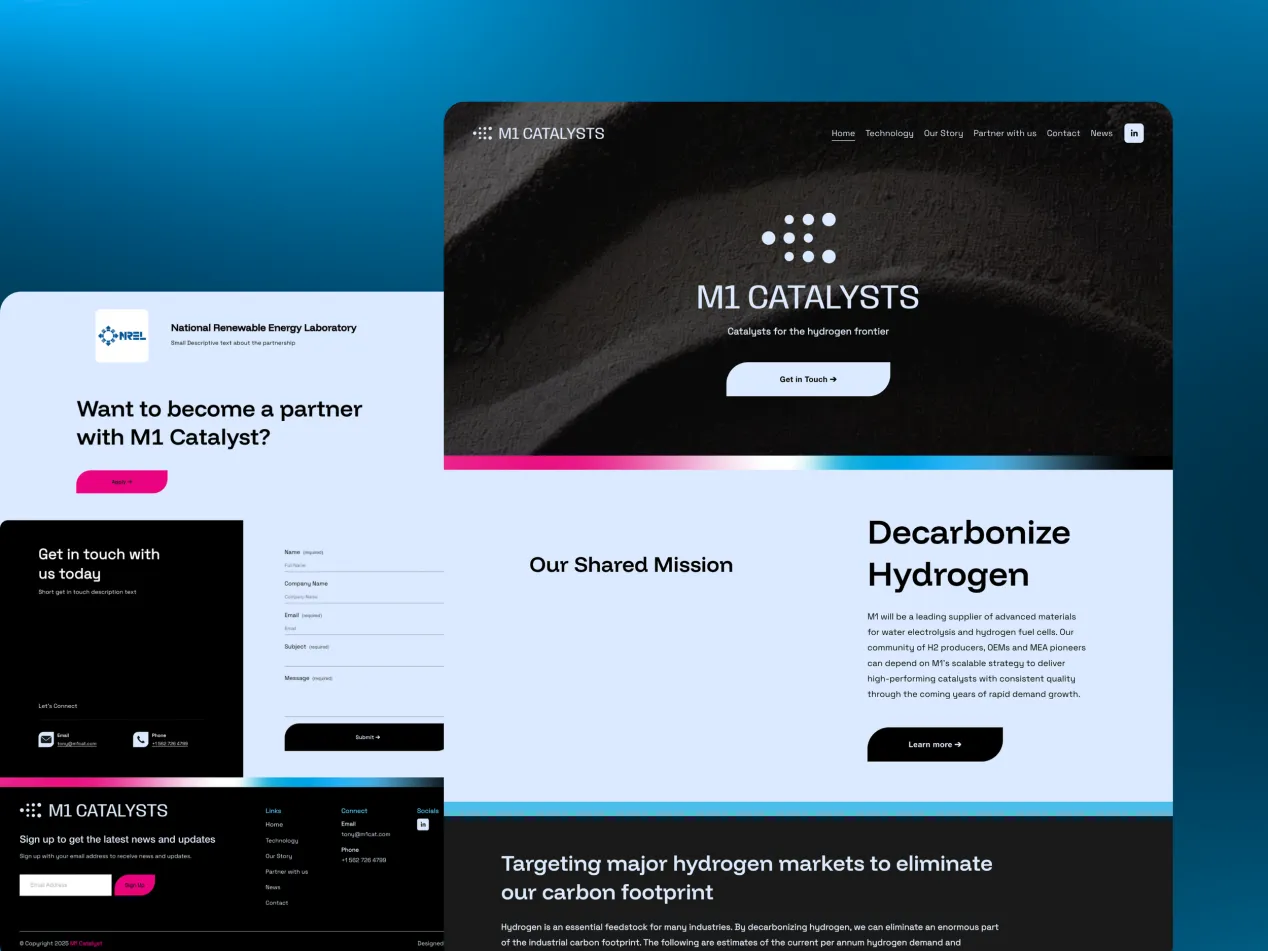
For an example, see our work for M1 Catalysts, an industrial catalyst supplier. Their technical buyers wanted specifications, not marketing language, so we rewrote the site for engineers, structured it so search engines and AI answers could cite it, and migrated the full technical archive with every URL redirected. It went from kick-off to live in five weeks.
The short version
Website redesign services differ far more than their names suggest. The ones worth paying for start with your buyers and your message, design around them, and move your site across with every page and ranking accounted for. Compare providers on what is included and what happens to your existing pages, not on the look of their portfolio alone. If you are unsure whether you need a redesign at all, our guide to when to redesign your website covers the signs.
FAQ
What do website redesign services include?
A complete redesign includes discovery, positioning and copy, custom design, the build and a full migration with redirects. Cheaper offers often cover only design and build, so check what is listed in writing.
How much does a website redesign cost?
It depends on page count, how much copy is written from scratch, how complex the migration is and what features are needed. Our Rebuild projects start from $9,500, with the exact price agreed in writing before work starts.
How long does a redesign take?
Usually eight to sixteen weeks for a full Rebuild with us. A straight build and move, where the design and content are already settled, takes four to eight weeks on our Launch projects.
Will I lose my Google rankings after a redesign?
Not if the migration is mapped. Every old URL needs a permanent redirect to its new page, with titles, descriptions and headings moved across. Some movement in the first two weeks is normal while Google recrawls.
Should I redesign my site or start again on a new platform?
It depends on whether your platform still suits you. If it does, a redesign on the same platform is simpler. If it is holding you back, a redesign is the best time to move, as long as the move is planned with redirects.
How do I know if my website needs a redesign?
Common signs are a site aimed at the wrong buyer, a dated look, poor performance on phones, few enquiries despite traffic, or a site nobody on your team can update. If several apply, it is worth a conversation.