Most lists of therapist website examples rank sites by how calm they look: soft colours, a photo of leaves, a gentle font. That matters a little. What matters far more is whether a person who has never been to therapy, and is nervous about it, can work out in a minute whether this practice is for them, what it costs and how to take the first step. So for each site below we picked one decision that does exactly that, and that a solo therapist or a small group practice could copy.
Everything described here is visible on the live sites as of November 2026. Practices update their teams and services often, so we focus on structure and wording rather than who is on the team this month.
What a therapist website has to do
Someone looking for a therapist is often doing it late at night, on a phone, after putting it off for months. They are not comparing logos. They are asking four quiet questions: do you help people like me, will I feel comfortable with you, can I afford it and what happens if I get in touch?
The best therapy practice websites answer all four without making the visitor work for it. They name who they help in plain words, show the real people behind the practice, are open about fees and insurance and make the first step small: a short free call, a matching service or a simple form.
Here are seven therapist website examples, grouped by what they teach.
Therapist websites that say who they help
1. Beachfront Anxiety Specialists: a narrow focus, stated up front

Beachfront Anxiety Specialists puts its focus in the subheadline: "Treating Anxiety Disorders, OCD, and OCD-related concerns." The homepage explains why that focus matters, saying that "anxiety and OCD aren't responsive to general talk therapy", lists its specialities and methods such as exposure and response prevention and CBT, and names the Redondo Beach office and the communities it serves. A free consultation by phone is offered on the page.
A narrow focus does two jobs. The right client recognises their own problem immediately, and the practice gives a reason it is better placed than a generalist. It also includes people who have tried therapy before and felt stuck, which speaks directly to a common doubt.
Borrow this: name the specific problems you treat in your headline or subheadline, and say in one sentence why your approach suits them.
2. Kip: a clear audience and a clear voice
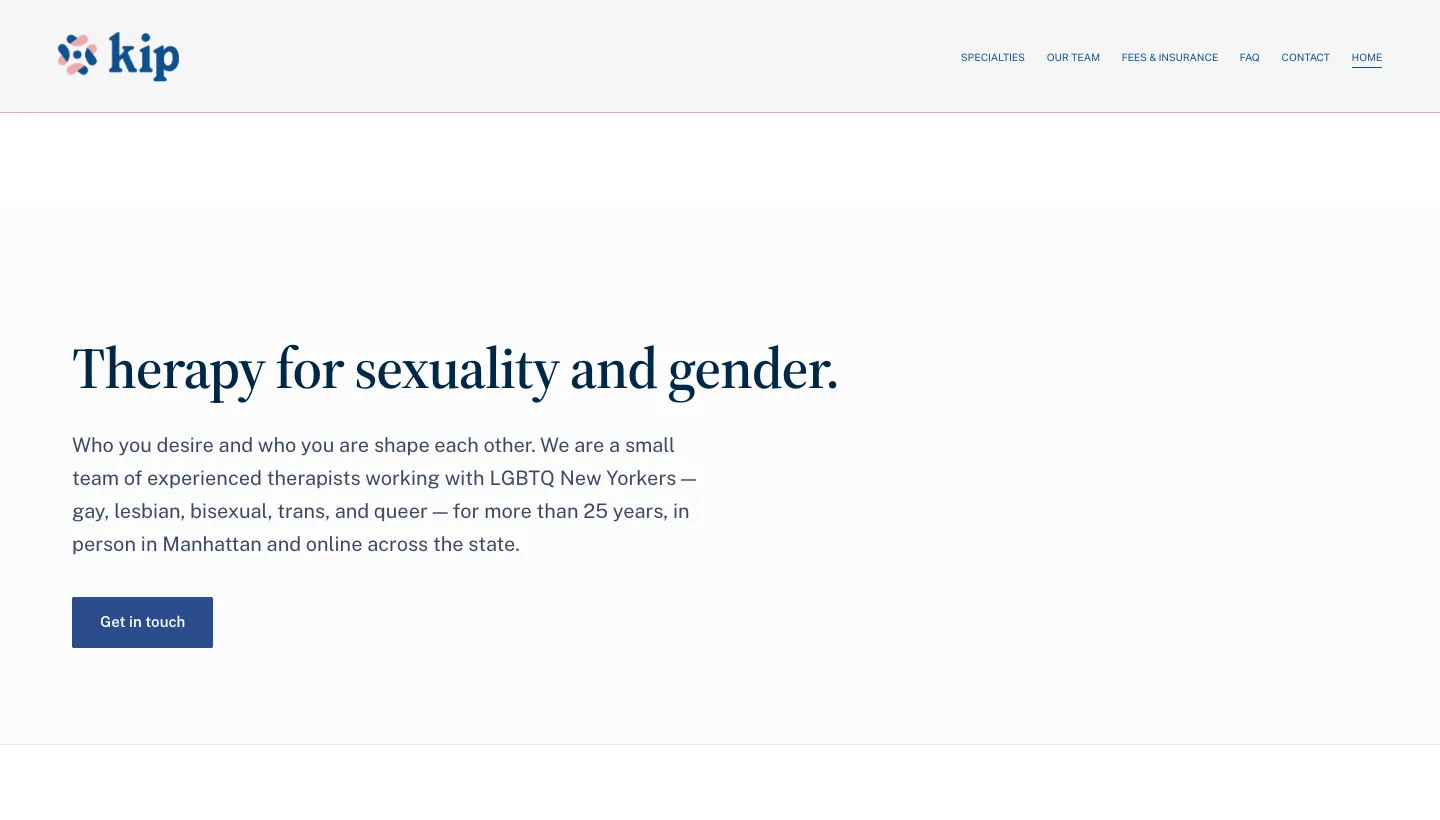
Kip opens with "Therapy for sexuality and gender." It names its audience as LGBTQ New Yorkers, organises its services into five areas, from couples and relationships to sex therapy, and introduces several therapists alongside their specialities. Contact starts with "a conversation first, then a therapist match."
Kip's homepage leaves no doubt about who it is for, and the writing has a point of view, as in "Who you desire and who you are shape each other." For a client who has felt misunderstood by therapists before, that clarity is reassuring before they have read a single bio.
Borrow this: if you specialise in a community or an issue, say so plainly on the homepage, in words that community would use.
Therapist websites that make the first step small
3. Orka Health and Wellness: the free consult, explained
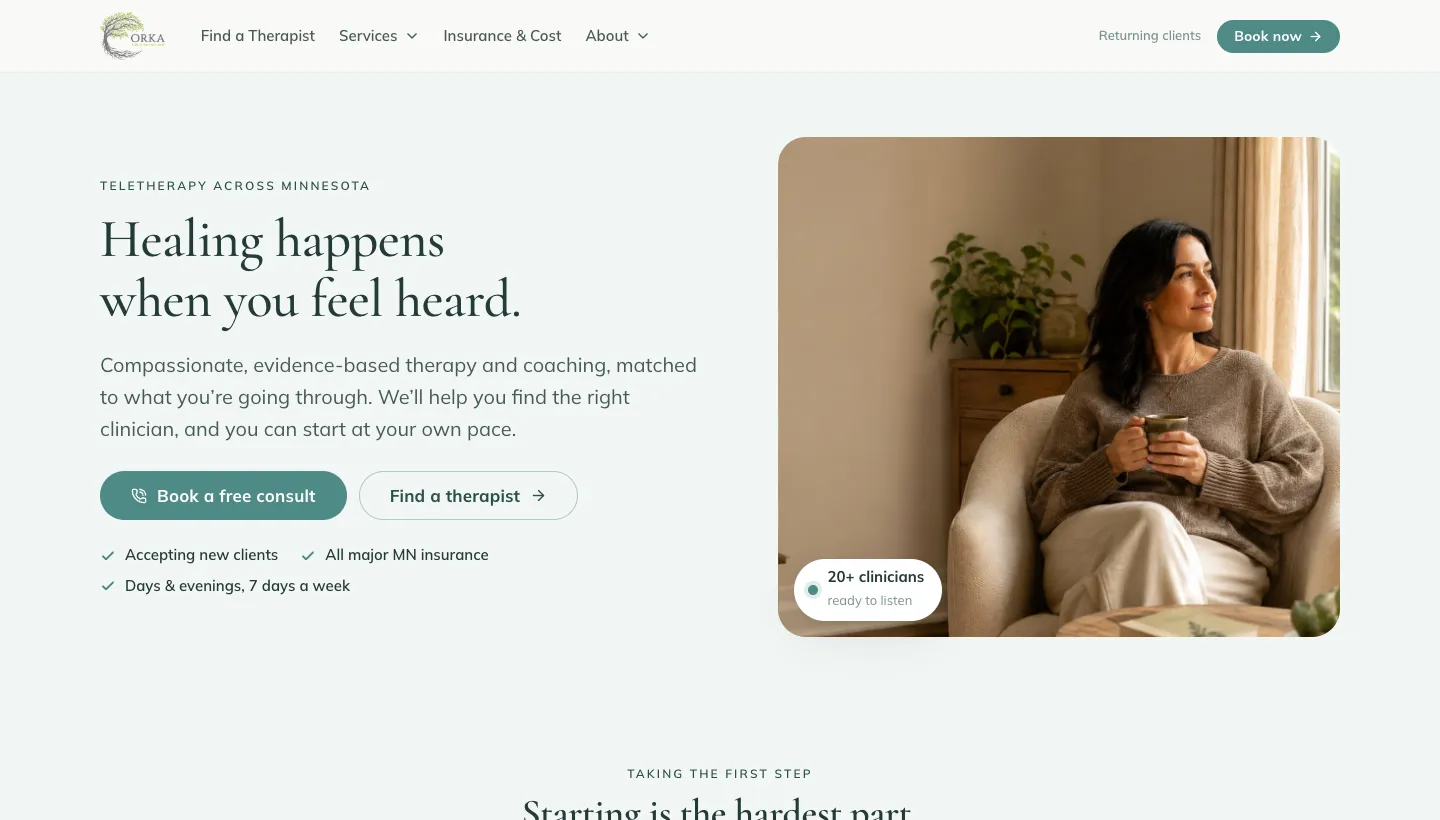
Orka Health and Wellness opens with "Healing happens when you feel heard." It offers a free 15 minute consultation and describes it as "A no-pressure call to make sure it feels right. No commitment, no cost, just a conversation." A "Match Me" tool asks four questions and suggests clinicians, and a section on fees says which Minnesota insurance it accepts and links to private pay rates and a Good Faith Estimate.
Many practices offer a free consultation. Few explain what it is. Orka's line tells the nervous visitor exactly what they are agreeing to, which is very little, and that lowers the bar to clicking.
Borrow this: describe your free consultation in one plain sentence: how long it is, what it costs and that there is no commitment.
4. Williamsburg Therapy Group: a person does the matching

Williamsburg Therapy Group is a practice of doctoral-level therapists in Brooklyn, Austin and Miami. Its homepage says "our patient coordinator will match you with the right therapist," lists its services from individual and couples therapy to psychiatry and neuropsychological evaluations, and gives a phone number for each location. It also states a value that clients rarely hear said out loud: "Prioritizing meaningful progress and improved quality of life over client retention."
For a group practice, choosing between a dozen profiles is a real barrier. Offering a person who does the matching takes the choice off the client's shoulders.
Borrow this: if you run a group practice, offer to match new clients with the right therapist, and say who does it.
Therapist websites that are open about the practical side
5. Manhattan Therapy Collective: insurance, explained
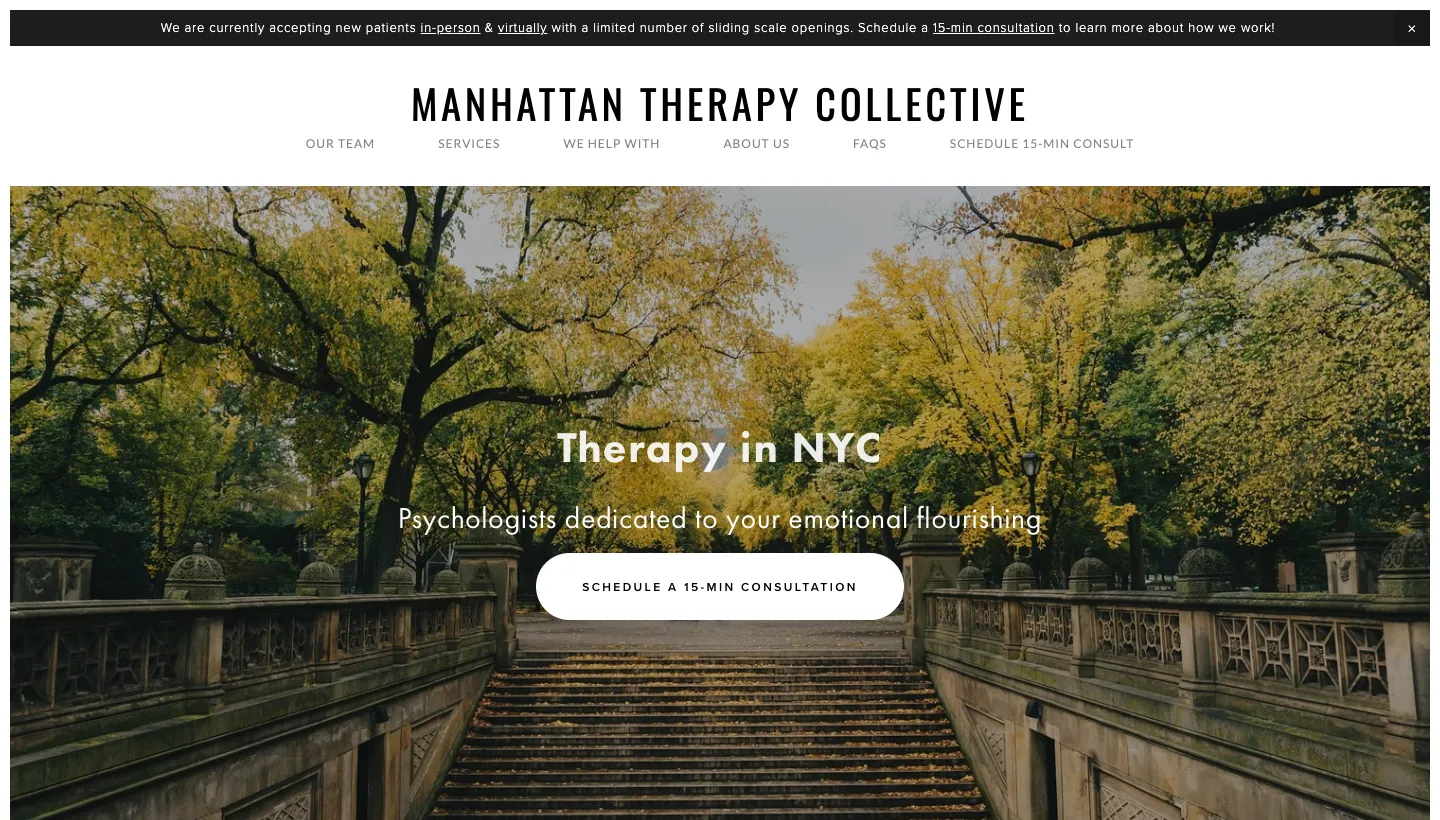
Manhattan Therapy Collective opens with "Therapy in NYC" and "Psychologists dedicated to your emotional flourishing." It offers in-person, hybrid and online sessions, links to a services and fees page, and explains how out-of-network insurance works, including a tool to "Get an estimate of insurance benefits for your sessions with us." A button to schedule a 15 minute consultation appears throughout the page, and the footer lists the office address and hours.
Cost is the question many people are too uncomfortable to ask on a first call. Out-of-network insurance is especially confusing, and a practice that explains it up front removes a reason to put off getting in touch.
Borrow this: give fees and insurance their own page, explain out-of-network benefits in plain words if they apply and link to it from the homepage.
6. Chicago Counseling Collective: browse by style and speciality
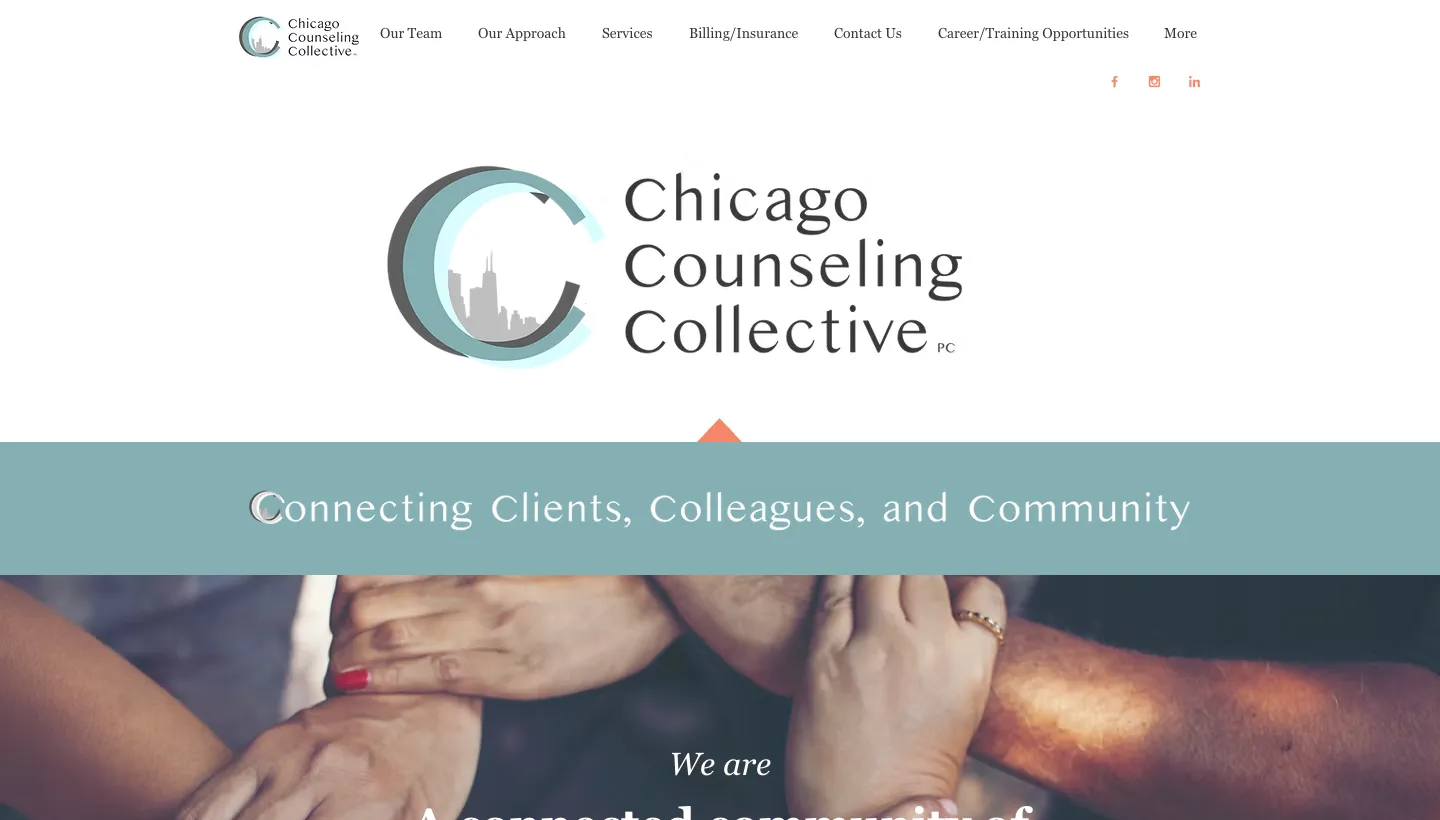
Chicago Counseling Collective describes itself as "A connected community of therapists established in the heart of downtown Chicago." Its homepage invites visitors to "Explore the profiles below to learn more about each therapist's style, specialties, and availability", and for anyone unsure, adds: "Not sure who might be the best fit? We're here to help." Two office locations are listed with addresses, and virtual appointments are offered.
Showing availability next to each therapist saves a client from falling for someone who is fully booked. And the line for the undecided gives everyone a route forward.
Borrow this: show each therapist's speciality and current availability on their profile, and offer help to anyone who can't decide.
7. Wyatt Okeefe: a solo practice that sounds like a person

Wyatt Okeefe's practice offers LGBTQIA+ affirming counselling online in several states. The homepage speaks in the first person ("I'm here to meet you, and help you, where you are"), lists the issues it helps with, from anxiety to ADHD and trauma, and repeats a "Schedule Your Free Consultation" button throughout.
For a solo therapist, the website is a first impression of the therapist. Writing to the reader directly, in a warm first person voice, gives a taste of what a session might feel like.
Borrow this: if you practise alone, write your homepage the way you would speak to a client in your first session.
A lesson from a wellness client of ours
8. Glow Haven: designing for the first-timer

Glow Haven is a wellness and beauty studio, not a therapy practice, but its website problem will be familiar to any therapist. Most enquiries came from people who had never booked that kind of treatment before and were quietly unsure what to ask for. A long list of services felt like a test, and a booking flow that assumed visitors already knew what they wanted lost exactly the people the studio wanted to reach.
So we reframed the menu around concerns and outcomes instead of clinical names, built booking for a phone in the evening, when most visits happen, and stated pricing and duration plainly, the two questions people are too polite to phone up about. We also described what actually happens in an appointment, because uncertainty is what delays the first booking. It went live three weeks after kick-off. The Glow Haven case study has the full story.
Borrow this: describe what happens in a first session, step by step. For someone new to therapy, the unknown is the biggest reason to wait.
What the best therapist websites have in common
Across all seven practices and our own client, the same habits show up.
They name who they help
Beachfront Anxiety Specialists and Kip say who they are for in the first lines. A visitor knows immediately whether they are in the right place.
The first step is small and explained
A free 15 minute call, a matching tool or a coordinator. Orka and Williamsburg Therapy Group make it clear what happens when you reach out.
Fees and insurance are not a secret
Orka and Manhattan Therapy Collective explain insurance and private pay rates before anyone has to ask.
The people are visible
Bios with specialities and availability, and a voice that sounds like a person, help a client imagine sitting in the room.
The short version
The best therapist websites aren't the calmest looking ones. They are the ones that say who they help, show the real therapists, are open about fees and insurance and make the first step small and clear. A solo therapist can do all of it: a specific headline, a warm bio, a fees page, a short description of the free consultation and of the first session, and a contact route that works on a phone.
Start with your headline. If someone who needs exactly what you offer can't tell from it, rewrite it first.
FAQ
What should a therapist website include?
Who you help and the issues you treat, your approach in plain words, bios for each therapist, your fees and insurance details, what happens in a first session, a free consultation or simple way to get in touch, and your location or the states you offer online sessions in.
Should therapists list their fees on their website?
Yes, where possible. Cost is one of the questions clients are least comfortable asking. Listing private pay rates and explaining insurance, including out-of-network benefits, removes a reason to delay getting in touch.
How do I make my therapy website feel welcoming?
Write to one reader in a warm, plain voice, show real photos of the therapists, describe what happens in a first session and make the first step small, such as a short free call with no commitment.
Should a group practice have a therapist matching service?
It helps. Choosing between many profiles is hard for someone new to therapy. A short questionnaire or a coordinator who suggests the right therapist, as Orka and Williamsburg Therapy Group offer, makes it easier to start.
What makes a good therapist bio?
The therapist's specialities, approach and who they enjoy working with, written in their own voice, with a real photo, credentials and current availability. A bio should help a client imagine talking to that person.
Do therapists need SEO for their website?
Yes, if you want clients from search. Name the issues you treat and the areas you serve on clear pages, keep your Google Business Profile up to date and make sure the site loads fast on a phone.