How to get more clients as an architect without relying on referrals and word of mouth

Most architecture practices get new commissions from the same two places: referrals and professional network contacts. Both are beyond their direct control. This article explains how to get more clients as an architect through channels you own and that compound in value over time.


Why getting more clients as an architect means owning your acquisition channels

How to get more clients as an architect is the practice development question that most principals address through the same channels: referrals from satisfied past clients, introductions through professional networks, and occasional press coverage or award recognition that generates a temporary spike in unsolicited enquiries. These channels have genuine value. Referrals arrive pre-qualified and pre-trusted. Professional network introductions carry a warm endorsement. But both share a specific commercial vulnerability: the practice does not fully control either of them. Referral volumes depend on how frequently satisfied past clients happen to encounter prospective clients with relevant projects. Network introductions depend on the level and the nature of the principal's current professional activity. Neither channel produces a reliably consistent volume of well-qualified project enquiries, and neither grows the practice's reach beyond its existing professional relationships. The architecture practice that wants to build a genuinely reliable and growing project pipeline needs to invest in the client acquisition channels that it directly owns and that compound in commercial value over time: the website that converts visitors into project enquiries, the organic search presence that delivers motivated prospective clients to that website, and the content strategy that builds long-term search authority and professional authority simultaneously.

The starting point for building these owned channels is always the same: the website. The most productive answer to how to get more clients as an architect, in terms of the commercial return on effort invested over a three-year time horizon, is the investment in a website that is specifically designed to convert the most motivated prospective clients from portfolio admirers into project enquiry submissions, combined with the local SEO and content programme that delivers those prospective clients to the website from the specific searches they are making at the moment of their highest architectural project motivation. This investment takes longer to produce its full commercial return than a successful press feature or an enthusiastic client referral. But its returns compound over time, growing with each piece of content that achieves a search ranking, with each client testimonial that builds the trust architecture of the website, and with each month of consistently managed Business Profile that strengthens the practice's local search authority.

A well-built architect website is the commercial foundation that makes every other client acquisition channel more productive. When referrals arrive and visit the website, a converting portfolio and strong trust signals turn their initial curiosity into a confident enquiry more reliably than a generic and unconvincing digital presence. When professional network contacts direct prospective clients to the practice's website, a curated and intellectually substantial portfolio converts a higher proportion of those visitors than the image gallery that most architecture practices use as their primary online presence. And when local searches deliver motivated prospective clients to the website, the combination of compelling portfolio presentation, specific trust signals, and a warm enquiry pathway converts a higher proportion of those visitors than the disconnected and unoptimised pages that most architecture practice websites present as their local search landing experience.

Converting the website visitors the practice is already attracting

For most architecture practices, the fastest available route to more project enquiries without additional marketing investment is improving the conversion rate of the website visitors they are already receiving from their existing referral and professional network activity. A practice that attracts four hundred website visitors per month and converts one percent of them into project enquiry submissions receives four new enquiries. The same practice, with a conversion rate improvement to three percent achieved through better portfolio curation and contextualisation, stronger trust signals, a warmer and more specific enquiry pathway, and a more compelling practice identity presence, receives twelve new enquiries from exactly the same traffic. This improvement requires no additional marketing investment and no additional network activity, only the specific website improvements that convert a higher proportion of the motivated visitors who are already arriving into the project conversations the practice needs to grow its commission pipeline.

The specific improvements that most directly increase the project enquiry conversion rate from existing architecture website traffic are the improvements that address the most common specific reasons that motivated prospective clients leave without enquiring. The portfolio that does not create specific professional recognition because it is too broad, too visual, or too poorly contextualised to communicate the practice's specific design thinking. The practice identity absence that leaves the visitor without the sense of architectural intelligence and professional character they would feel comfortable engaging in a significant creative commission. The trust signal deficiency that leaves the well-qualified prospective client without the specific external validation they need to feel confident committing to the first conversation. And the generic contact form that places the entire burden of initiation on the visitor without giving them any specific reason to believe that reaching out will result in a productive and specific conversation about their project. Each of these specific failures is addressable and addressing each produces a measurable improvement in the proportion of motivated visitors who take the step of making contact.

The analytics data that reveals how the practice's current website visitors are behaving within the website is the diagnostic resource that most accurately identifies which specific conversion failures are costing the most enquiries. The portfolio pages with the highest exit rates among visitors who have arrived from project-specific searches are the pages where the site is most immediately failing to hold the attention of the most commercially motivated visitors. The contact page that receives significant traffic but that generates a low proportion of actual enquiry submissions is the page where the enquiry pathway design is most directly preventing motivated visitors from making contact. Understanding which specific pages are failing in which specific ways, and making the targeted improvements that address each failure in order of its commercial impact, is the systematic process that produces the greatest improvement in project enquiry conversion rate from the existing traffic the website is already receiving.

The email capture mechanism that converts the interested visitor who is not yet ready to enquire into a relationship that can be nurtured through the practice's content over the weeks and months that typically elapse between initial architectural curiosity and the point of being ready to commission a specific practice, is the conversion infrastructure investment that most extends the commercial reach of the practice's existing website traffic. A prospective client who downloads a guide to the planning permission process for residential extensions, or who subscribes to the practice's newsletter after reading a genuinely useful article about the cost of a specific type of architectural commission, is a client who has made a low-commitment first contact that the practice can maintain through genuinely useful content until the client's project motivation matures to the point of wanting to commission a specific architect. This relationship is not as immediate in its commercial return as a direct project enquiry. But it is significantly more commercially productive over a three-to-six-month horizon than simply losing the visitor who was not yet ready to enquire directly.

Building the local search presence that delivers motivated new prospective clients

The local search presence that delivers motivated new prospective clients to the practice's portfolio on a consistent and growing basis is the client acquisition investment with the highest long-term commercial return available to an architecture practice whose portfolio and practice identity are strong enough to convert the traffic that good local rankings deliver. The investment required to build this local search presence, in the form of Google Business Profile optimisation, project-type-specific and location-specific content creation, and consistent technical performance management, produces compounding commercial returns as the practice's local search authority grows and its rankings for the most commercially valuable local architecture searches strengthen with each month of consistent management activity.

The practical starting point for building local search presence that answers the question of how to get more clients as an architect through organic search, is the Google Business Profile optimisation that produces the fastest and most immediately measurable improvement in local search visibility. A fully optimised Business Profile with specific categories, a comprehensive and keyword-relevant description of the practice's project specialisms and geographic service area, a growing library of high-quality project images, and a consistent cadence of review acquisition and profile posts, can produce measurably improved local pack visibility within weeks of the optimisation being completed. This makes the Business Profile optimisation the first local SEO investment that any architecture practice should make when it begins to build its organic client acquisition capability, because it produces commercial results quickly enough to sustain the motivation required for the longer-term content and authority-building investments that compound the Business Profile's initial improvements into the sustained local search authority that generates a growing stream of motivated direct project enquiries.

 
Start your project with Typza, who wrote this article about why we specialize in lead converting websites

Convert existing traffic before chasing for more.

We help architecture practices build organic client acquisition foundations that generate consistent project enquiries.


Building professional authority through content that attracts early-stage clients

The content strategy that most productively answers how to get more clients as an architect over a one-to-three-year horizon is the strategy that produces genuinely client-useful, architecturally expert content about the specific project situations, the specific planning challenges, and the specific design decisions that the practice's ideal prospective clients are most actively researching in the weeks and months before they are ready to commission a specific architect. This content is not primarily SEO content, although it builds significant SEO authority as a byproduct of its quality and its relevance. It is first and foremost a demonstration of the practice's genuine architectural expertise and its specific understanding of the challenges that its ideal clients face, and it is the content that converts the early-stage architectural research visitor from a casual browser into a warm prospective client who returns to the website with increasing frequency and increasing commission motivation as their own project aspirations develop.

The specific content types that most effectively build professional authority for an architecture practice in their specific project territory include the detailed planning guide that explains the specific regulatory considerations for a particular type of project in a particular type of location, drawing on the practice's genuine experience with the planning authority and the planning challenges of their specific geographic area. The cost guide that gives prospective clients a realistic and specific orientation to the cost of the type of commission they are considering, with honest guidance about the factors that affect cost and the trade-offs they may face between their aspirations and their budget. And the design insight article that takes the practice's specific and expert view on a particular architectural challenge, a design approach, or a material choice relevant to the type of project it specialises in, demonstrating the creative intelligence and the technical expertise that distinguishes a genuinely expert architectural practice from a competent one. Each of these content types generates a specific and commercially motivated search from a prospective client who is actively researching their potential project, and the practice whose content captures these searches is building a professional relationship with that prospective client at the stage when it is most formative.

The distribution of this professional authority content beyond the practice's own website, through the professional and community channels where the practice's ideal prospective clients most actively consume architectural advice and design inspiration, amplifies the authority-building and the client acquisition return on the content investment beyond what organic search alone can produce. A monthly email newsletter sent to a growing list of subscribers who have signed up through the practice's website maintains the practice's professional presence in the awareness of prospective clients who are in the extended pre-commission phase of their architectural project journey. A regular LinkedIn presence where the practice shares genuine architectural insight, project documentation, and design thinking content reaches the professional audience of potential commercial and developer clients who are not discovering the practice through Instagram or through residential design media but who are actively looking for the specific type of architectural expertise the practice offers in the professional social context they inhabit. And the professional community relationships with the planning consultants, the structural engineers, the quantity surveyors, and the property professionals who regularly encounter the type of clients the practice most wants to commission it, are the referral amplification channels that most productively extend the practice's professional reach beyond the direct referral network of its existing client base.

The measurement of the content strategy's commercial productivity requires a more patient and more attribution-thoughtful approach than the measurement of direct outreach or paid advertising performance, because the content that generates professional authority and early-stage architectural research relationships produces its full commercial return through the cumulative effect of multiple touchpoints over weeks and months rather than through the immediate response to a single promotional impulse. The practice that asks each new project enquiry client how they first encountered the practice's work will consistently find that a growing proportion of its most valuable project enquiries trace their origin to a piece of content, a specific article, a specific newsletter, or a specific search result that brought the client to the practice's website for the first time months before the formal project enquiry was submitted. This attribution data is the specific commercial evidence that makes the case for sustained content investment over the shorter-horizon impatience that most marketing activity is measured against.

Professional network development that amplifies owned channels

The professional network and the professional community relationships that most productive architecture practices cultivate alongside their owned digital channels are the specific client acquisition activities that, when combined with a genuinely converting website and a growing organic search presence, produce the most commercially resilient and the most mutually reinforcing client acquisition system available to an architectural practice. The referral that arrives from a past client or a professional contact and that the practice can direct to a specifically curated and intellectually substantive portfolio, a warm and specific enquiry pathway, and a rich library of professional trust evidence on its website, converts at a significantly higher rate than the referral that arrives to find a generic and unconvincing digital presence that undermines the endorsement of the referring party. And the professional community relationship with the planning consultants, the structural engineers, the estate agents, the property developers, and the home improvement specialists who regularly encounter prospective clients with significant architectural projects, produces the warm, pre-qualified introductions that are the most commercially efficient available source of well-aligned project opportunities for any architecture practice whose portfolio quality and professional reputation make them a genuinely credible recommendation.

The systematic approach to professional relationship development that produces the most consistent and the most commercially valuable referral stream for an architecture practice is the approach that treats every completed project as the beginning of a long-term professional relationship rather than the end of a commercial transaction. The personal acknowledgement of the project completion and handover with every project client and every professional collaborator who was involved in the commission. The occasional check-in with the planning consultants and the structural engineers whose work on the practice's projects reflects well on both parties and whose ongoing practice encounter prospective clients who would benefit from the kind of architectural service the practice provides. And the genuine and personal engagement with the professional communities, the RIBA regional networks, the conservation area advisory committees, the local heritage trusts, and the sustainable architecture professional groups, where the practice's specific expertise is most directly relevant and most specifically valued as a contribution to the professional conversation, are the professional relationship activities that sustain and deepen the human connections from which the most commercially productive and most creatively aligned project referrals naturally and consistently arise.


Owned channels and warm relationships build resilience.

We help architecture practices build the organic and referral systems that generate consistent project enquiries.


Measuring and improving the organic client acquisition system over time

The commercial performance of the architecture practice's organic client acquisition system is measurable through the specific data that reveals which channels are generating which types of project enquiries, which enquiries are converting to signed commissions, and which completed commissions are generating the testimonials and the referrals that sustain and strengthen the organic acquisition system over time. The attribution analysis that identifies what proportion of new project enquiries are arriving from organic local searches, what proportion from content engagement, what proportion from social media, and what proportion from direct professional referrals, provides the specific commercial intelligence needed to direct ongoing investment toward the channels generating the greatest commercial return rather than distributing effort uniformly across all channels regardless of their relative productivity.

The commission conversion rate from each acquisition channel, the proportion of enquiries from each source that convert to signed project agreements, is the metric that reveals the quality difference between the client relationships that each channel generates rather than simply the volume. The practice that discovers that organic search enquiries convert to signed commissions at a significantly higher rate than professional network enquiries has specific commercial evidence that the organic search channel is producing not only more volume but better quality relationships, which justifies directing a greater proportion of its content and optimisation investment toward the organic search capability that is generating these more productive relationships. This channel quality analysis is the specific commercial intelligence that optimises the mix of client acquisition activities over time and ensures the practice's limited business development time is consistently invested in the activities that generate the greatest long-term commercial return.

The compounding commercial return on a sustained organic client acquisition investment for an architecture practice reflects the specific cumulative effect of a growing content library, a strengthening local search authority, an expanding professional authority in the practice's specific architectural territory, and an improving portfolio of completed projects that each contributes new testimonials, new professional photography, and new evidence of the practice's creative capability and professional rigour to the acquisition system that generated the commission in the first place. Each new commission completed at a high standard generates the resources, the photographs, the client testimonial, and the professional reputation, that make the next equivalent commission more likely to be attracted and more likely to be converted into a signed agreement. This compounding is the specific quality of the organic client acquisition system that makes it the most commercially productive long-term investment available to any architecture practice that is committed to building a practice of genuine creative and commercial quality.

The annual review of the organic client acquisition system's commercial performance, comparing the proportion of total new project enquiries arriving through owned channels in the current year against the preceding year, provides the most comprehensive assessment of whether the sustained investment in the organic channels is producing the growing commercial independence from referral volume fluctuations and professional network activity cycles that a well-built organic acquisition system should generate over time. The architecture practice whose organic channel proportion is growing year on year, from a combination of improving local search rankings, growing content authority, and an expanding professional reputation in its specific architectural territory, is building the most commercially resilient and the most creatively satisfying practice model available to any architect who wants to fill their pipeline with the commissions and the clients that reflect the quality and the ambition of their creative vision.

Building the client acquisition system that grows without referral dependency

The most sustainable answer to how to get more clients as an architect is the organic client acquisition system that is built on owned channels whose commercial returns compound over time rather than on borrowed channels whose reach the practice does not control. The website that converts the most motivated prospective clients from portfolio admirers into project enquiry submissions. The local SEO presence that delivers those prospective clients from the specific geographic and project-type searches they make at the moment of their highest architectural project motivation. The content library that captures early-stage architectural researchers and builds professional authority that compounds with each new piece of genuinely expert content published. The email subscriber base that maintains the practice's professional presence with prospective clients throughout the extended architectural research period. And the professional network that generates warm introductions to the most commercially aligned and most project-specific commission opportunities available in the practice's geographic and project-type market.

The practical commitment required to build and maintain this organic client acquisition system is more manageable than it might appear when described in full. The website requires a specific initial investment in commercial architecture rather than just visual design, followed by regular maintenance rather than periodic complete rebuilds. The local SEO requires monthly Business Profile management and a steady content publication cadence of one new location or project-type page per month. The content library requires one genuinely excellent piece of client-useful architectural content per month, sustained consistently over eighteen to twenty-four months to reach the level of content authority that generates meaningful organic search traffic. The email list requires a genuinely valuable lead magnet and a monthly newsletter whose quality reflects the practice's genuine architectural expertise. And the professional network requires the ongoing personal engagement with past clients and professional contacts that every architect committed to building a genuinely excellent practice is already motivated to maintain as part of their professional identity and their creative community.

For architecture practices that are currently generating all or most of their project enquiries through referrals and professional network contacts, and that are becoming aware of the commercial vulnerability that this dependence creates when the network is quiet or when the principal is fully committed to current commissions and has no time for active business development, the improvement available from beginning to build the organic client acquisition system described in this article is both significant in its eventual commercial return and achievable within a realistic timeframe without disrupting the current project work that the practice depends on financially. The website improvement is the first and most immediately productive step because it changes what the existing traffic from referrals and professional contacts is converting into, without requiring any additional investment in traffic generation. The local SEO and content programme is the second step because it begins to extend the practice's client acquisition reach beyond the existing professional network into the broader population of motivated prospective clients who are searching for a practice of the practice's specific type and quality but who have not yet encountered it through referral or professional introduction.

If you want to build the organic client acquisition system that generates consistent project enquiries without depending on referrals and professional contacts for all of your new commission business, we can help. Take a look at our approach to website design for architects and book a free call to discuss how a properly built organic acquisition system could transform your practice's commercial trajectory.


Organic systems compound. Referral networks fluctuate.

We help architecture practices build the organic foundations that generate consistent project enquiries.


Building the architect client acquisition system that grows without you chasing

The most sustainable and most commercially rational answer to how to get more clients as an architect is the organic client acquisition system that builds compounding owned assets rather than generating temporary returns from channels the practice does not control. A website that converts the most motivated prospective clients who visit it into project enquiry submissions at a rate that reflects the genuine quality of the practice's architectural work and the intellectual depth of its design thinking. A local search presence that consistently delivers motivated prospective clients from the specific project-type and location searches they make at the moment of their highest commission motivation. A content strategy that captures early-stage architectural researchers and builds professional authority that compounds with each new piece of expert content published and each new search ranking achieved. An email subscriber base that maintains the practice's professional presence with prospective clients throughout the extended pre-commission research period. And a professional referral network that generates the warm, pre-qualified introductions that produce the most commercially aligned and the most creatively stimulating commission opportunities available to the practice.

The architecture practices that build this organic client acquisition system and maintain it consistently over the years of its compounding development find that the nature of their practice changes as profoundly as the volume of their project enquiries. They attract more of the commissions they most want to work on, from clients who have been specifically drawn to their design thinking and their architectural position rather than simply referred by mutual contacts without specific knowledge of the practice's particular strengths. They spend less time in unproductive initial consultations with misaligned prospective clients because the specificity of their digital positioning is filtering for the right client type before the conversation begins. And they experience the specific professional satisfaction of being sought out rather than seeking, of receiving enquiries from clients who have found them through their own architectural research rather than being directed to them by an intermediary who may know the practice's general qualities without knowing its specific creative territory.

For architecture practices that are ready to build the client acquisition system that reflects the quality of their creative work and the ambition of their professional practice, the starting point is the website: the owned digital presence that converts, the search foundation that delivers, and the content library that builds the authority that makes both progressively more effective with each month of consistent investment. Each of these investments is individually specific and independently achievable. Together they create the organic client acquisition infrastructure that every architecture practice deserves to have supporting the creative ambition and the professional quality that its best work represents.

If you want to build the organic architecture client acquisition system that generates a consistent and growing flow of well-qualified project enquiries without depending on referrals and professional contacts for all of your new commission business, we can help. Take a look at our approach to website design for architects and book a free call to discuss how a properly built organic acquisition system could transform your practice's commercial trajectory and its creative ambition.

Written by
Mikkel Calmann

Mikkel is the founder of Typza, a Squarespace web design agency based in Denmark. With over 100 Squarespace websites built, he works with businesses of all kinds on web design, e-commerce, SEO, and copywriting. You can find his portfolio work on Dribbble and Behance.

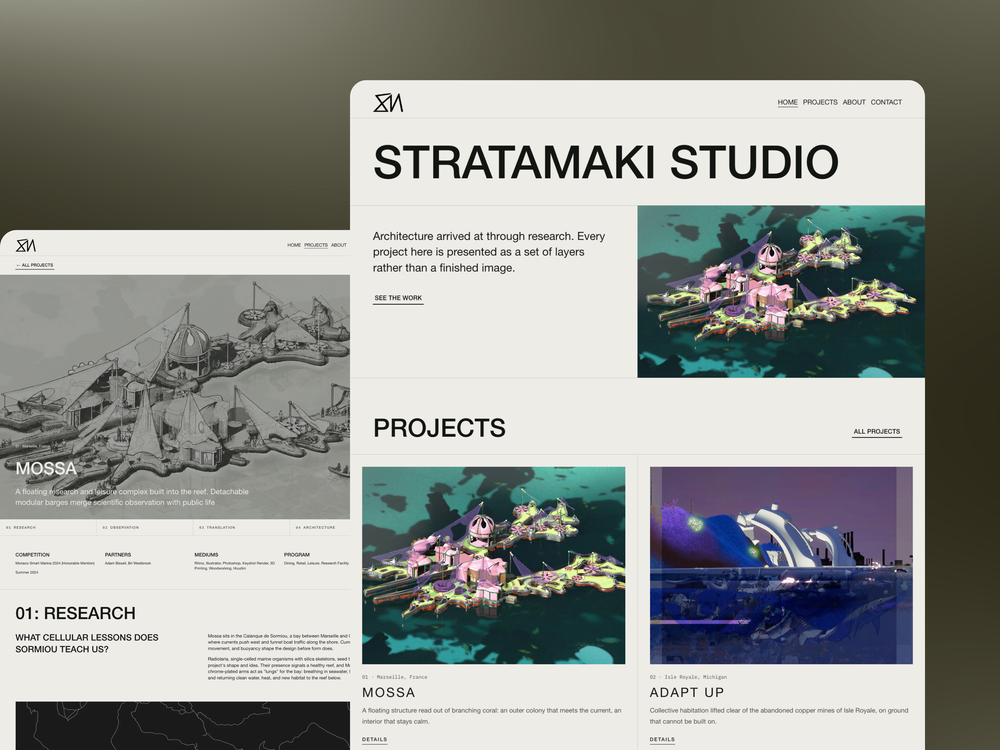
See how we build architect websites that grow.

Our approach shows what a commercially built, organically productive architect website looks like.


More web design insights for architects

 
Previous
Previous

How to turn your architecture firm website into a lead generation engine that works around the clock

Next
Next

The architect website mistakes that are costing your practice high-value residential and commercial commissions