Designing a contractor portfolio website that does the heavy convincing for you
A contractor portfolio website is doing the heaviest lifting on the entire site. A serious homeowner will scroll your past projects for a long time before they read a word of body copy, and what they decide in those minutes determines whether they enquire. The difference between a portfolio that converts and one that simply looks busy is not photo count. It is structure, sequencing, and the captioning that lets a client see their own project mirrored in your completed work.

Why the contractor portfolio website does more selling than any other page
A contractor portfolio website is doing the heaviest lifting on the entire site. A serious homeowner will scroll your past projects for a long time before they read a word of body copy, and what they decide in those minutes determines whether they enquire. The difference between a portfolio that converts and one that simply looks busy is not photo count. It is structure, sequencing, and the captioning that lets a client see their own project mirrored in your completed work.
The homeowner evaluating a contractor's portfolio is not looking at the projects objectively. They are looking for their own project in the portfolio. They are asking whether the contractor has done something close enough to what they are planning to make them confident the job is within range of the contractor's experience and quality standard. A kitchen extension homeowner scrolling a portfolio is specifically looking for kitchen extensions in properties with similar footprints, similar ages, or similar neighbourhood characteristics.
The portfolio that converts is therefore the portfolio that is organised to help that specific search rather than one that presents every project in reverse chronological order regardless of type. A contractor whose portfolio is categorised by project type, so that a homeowner researching a specific kind of work can immediately navigate to the relevant section, is making the research process easier and the decision process faster. That ease is itself a trust signal, because it demonstrates that the contractor understands the homeowner's perspective.
The contractor portfolio website that consistently generates the most enquiries from organic search is the one that combines visual quality, project specificity, and structural clarity in a way that gives a serious homeowner every reason to contact the contractor before they finish reviewing the portfolio.
Photography standards that make a contractor portfolio commercially productive
The photography standard of a contractor portfolio is the single biggest determinant of its commercial effectiveness. A portfolio of fifteen well-photographed projects will consistently outperform a portfolio of sixty poorly photographed ones, because the homeowner is not counting entries. They are forming an impression of quality from the visual evidence available, and poor photography consistently communicates a lower standard of work than the actual quality of the finish warrants.
Professional photography for a contractor portfolio is not complicated, but it is specific. The images need to be taken after the site has been thoroughly cleaned, with furnishings or fittings in place if the project type warrants it, in good natural light, from the angles that best represent the quality of the finish and the spatial quality of the finished space. Wide-angle shots that show the room or space in context are combined with close-up detail shots that demonstrate the quality of the joinery, the tiling, the plasterwork, or the structural elements that represent the most technically demanding aspects of the project.
Before photographs are commercially important because they provide the contrast that makes the quality of the finished work immediately apparent to the homeowner. A before-and-after pairing that shows a dark, low-ceilinged bedroom in a Victorian terrace and the same space after a hip-to-gable loft conversion, with natural light pouring through new dormers and a clean, well-detailed staircase rising into a properly floored and decorated room, communicates the transformation the contractor delivers in a way that no amount of written description can match.
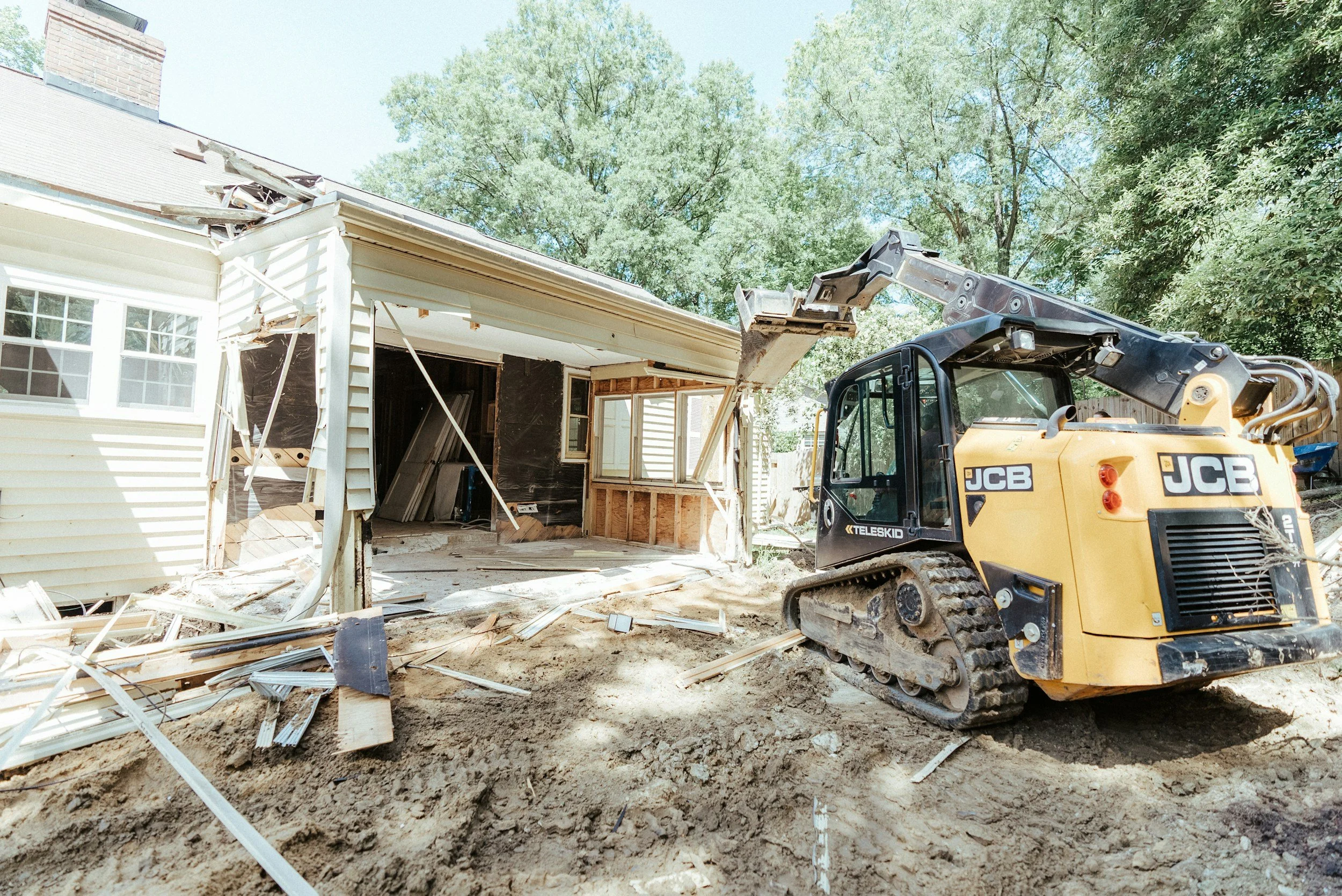
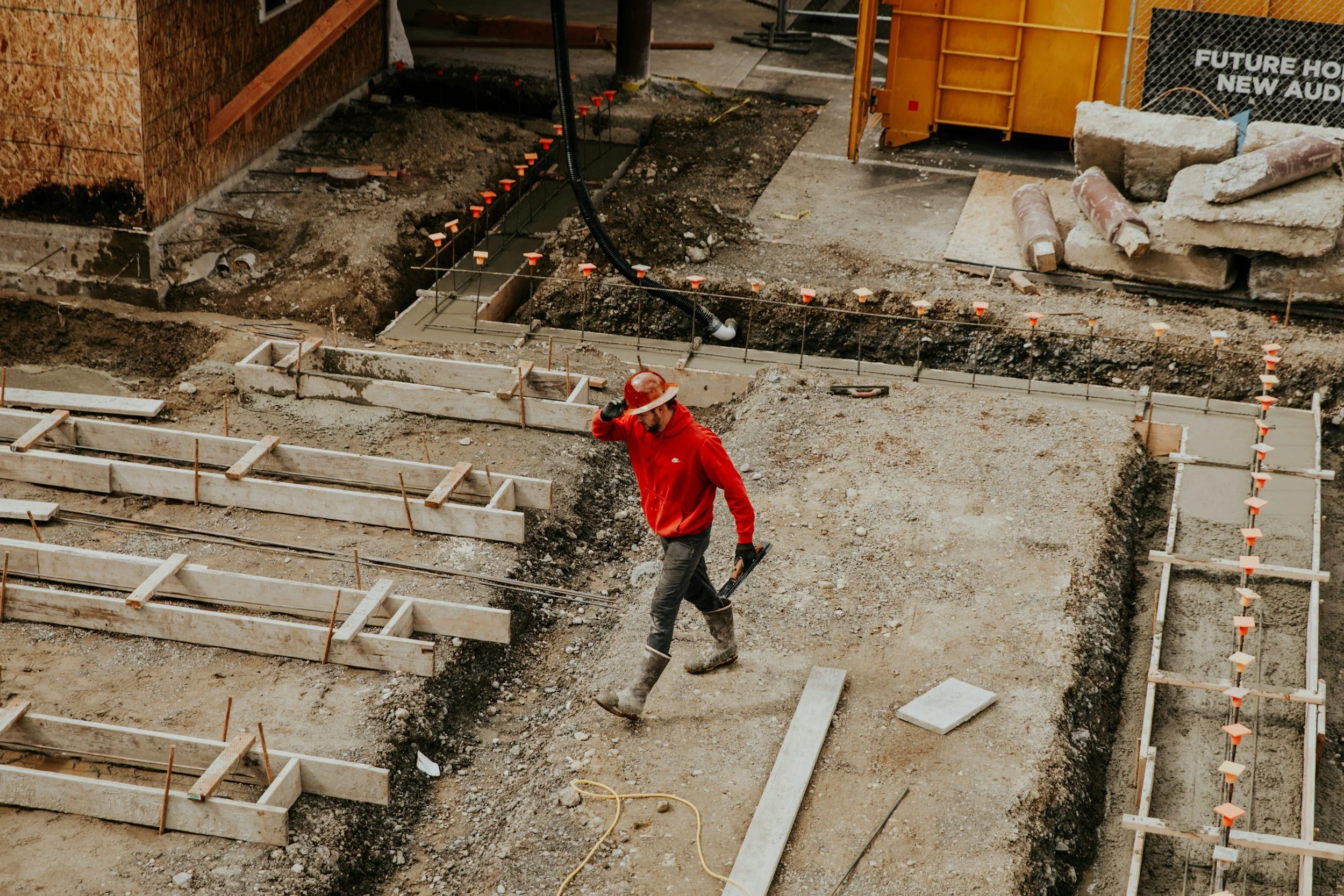
Mid-project photography serves a different but equally important commercial function. Images taken during the structural phase of a project, showing the quality of the foundation work, the precision of the steelwork connections, or the attention to detail in the insulation and weatherproofing, address the homeowner's concern about what is happening inside the walls and above the ceiling. These images are rarely shown on contractor portfolios, which means the contractor who includes them is providing a category of evidence that their competitors are not.
Project captions and descriptions that turn photographs into commercial evidence
The caption and description that accompany each project photograph are where the commercial work of the portfolio is either done or left undone. A photograph without a caption is a visual impression. A photograph with a specific caption is a piece of commercial evidence that answers the questions the homeowner is asking while they look at the image.
The most commercially effective project captions for a contractor portfolio include five elements: the project type, the location or postcode area, the approximate project value or scale, the completion timeline, and a brief client outcome note. Together, these five elements tell the homeowner whether the contractor has done the kind of work they are planning, in their area, at their scale, within a credible timeline, and to a standard that a specific client was prepared to describe in positive terms.
A caption that reads hip-to-gable loft conversion, Dorking, Surrey, three bedrooms, completed in twelve weeks, client: the finish is exactly as we specified and the project came in on time is doing every piece of commercial work the caption needs to do. It is specific enough to be credible, local enough to be relevant, and detailed enough to give the homeowner a benchmark against which to evaluate whether the contractor is the right fit for their project.
The written description that accompanies a portfolio project page, rather than just the image caption, is an opportunity to go further. A project description of three to five paragraphs that covers the initial brief, the planning or design considerations, the specific technical challenges of the project, the approach the contractor took to managing those challenges, and the final outcome including any specific elements the client particularly valued, creates a project narrative that is both commercially persuasive and search-engine-indexed.
Photo quality signals workmanship quality before copy does.
We help contractors build portfolio websites that make the quality of their work immediately apparent to serious homeowners.
Portfolio organisation that helps the right homeowner find the right project
A portfolio organised solely by chronological order, or presented as a single gallery of all projects regardless of type, is making the homeowner work harder than necessary to find the evidence that is most relevant to their project. The contractor who has completed residential extensions, commercial fit-outs, bathroom renovations, and structural repairs is not serving the kitchen extension homeowner well by presenting all of those project types in a single undifferentiated grid.
Organisation by project type is the most commercially productive portfolio structure for most contractors, because it allows the homeowner to navigate directly to the category of work that is relevant to their project and to evaluate the contractor's capability in that specific area without having to scroll through unrelated work. A homeowner researching a bathroom renovation who can navigate to a dedicated bathroom portfolio section and review fifteen specific bathroom renovation projects is a homeowner who has already confirmed the contractor's relevant capability before they make contact.
The navigation structure for a portfolio organised by project type should also reflect the contractor's commercial priorities. The project types that generate the most valuable jobs, or that the contractor most wants to attract in the coming year, should be the most prominent categories in the portfolio navigation, appearing first in the sequence rather than being buried among a long list of project types.
For contractors who have completed a large number of projects across many years, the question of which projects to include and which to retire from the portfolio is a regular maintenance decision. Projects that were completed with lower-quality photography, or that represent a market segment the contractor no longer wants to attract, or that were completed to a lower standard than the current quality of the contractor's work, should be removed from the live portfolio rather than retained out of a reluctance to appear to have less work than the archive contains.
How the portfolio supports SEO for specific project type searches
Every well-documented project page in a contractor's portfolio is a potential entry point for a specific organic search. A project page about a kitchen extension in Guildford, Surrey, with a full project description, before and after photography, and specific mentions of the planning process, the structural approach, and the finished outcome, is a page that can rank for kitchen extension Guildford, kitchen extension Surrey, and a range of related project-type and location searches.
The SEO value of the project page is a function of its specificity and its content quality. A project page with a paragraph of text and two photographs is not going to rank for anything competitive. A project page with eight hundred words of specific, well-structured project description, fifteen high-quality images with descriptive alt text, a client testimonial, and a clear connection to the service page for the relevant project type, has the content depth to rank for a range of specific local search queries.
The investment in creating that level of documentation for each completed project is significant but not disproportionate. A contractor who commits to writing a full project description and commissioning professional photography for one new project per month is building a portfolio that is simultaneously a commercial trust asset and an organic search asset, with each new project page contributing to both functions from the moment it is published and indexed.
The link between the portfolio and the service pages matters for the internal structure of the website's search authority. A portfolio page about a loft conversion in a specific area should link to the loft conversion service page, and the loft conversion service page should link back to relevant portfolio examples. That internal linking structure distributes the search authority accumulated by individual project pages across the most commercially important pages on the site.
Specific captions convert viewers into enquirers.
We design contractor portfolio websites that turn project photography into specific, search-indexed commercial evidence.
Video and walkthrough content that extends what photography cannot show
Photography shows the finished result. Video shows the experience of the finished result, which is a commercially distinct form of evidence for specific types of contractor work. A walkthrough video of a completed kitchen extension, panning from the original rear wall to the new bi-fold doors opening to a well-landscaped garden, communicates the spatial quality and the lived experience of the finished space in a way that static photography cannot replicate. A homeowner watching that video is experiencing the transformation from the inside, which is a more emotionally resonant and more commercially persuasive form of evidence than the most technically excellent still photograph.
The production requirement for effective contractor portfolio video is lower than many contractors assume. A well-lit walkthrough filmed on a recent smartphone model, edited to remove unnecessary footage, and accompanied by a brief voiceover narration that describes the project brief and the specific decisions made during the design and build process, is entirely adequate for commercial purposes.
Before and after video is even more immediately persuasive than before and after photography because the motion of moving through a space communicates scale and depth in a way that still images do not. A side-by-side video comparison of a basement before and after a conversion communicates the scope of the transformation and the scale of the contractor's capability in a way that resonates immediately with homeowners planning similar projects.
The placement of video content within the portfolio should be at the project page level rather than in a separate video gallery. A homeowner who is already reading a specific project description and viewing project photography is the ideal viewer for a project video, because they are already engaged with the content of that project and the video extends their understanding of the outcome rather than asking them to navigate to a different section of the site to see it.
Keeping the portfolio current and commercially relevant over time
The contractor who builds a portfolio systematically, one well-documented project at a time, is building a commercial asset that compounds in value with every new addition. Each project page adds to the body of evidence available to every homeowner who arrives on the site. Each new location adds a geographic signal that strengthens the local search authority for that area. Each new project type adds a capability demonstration that attracts a different category of serious homeowner.
The compounding effect of this accumulation means that the contractor's portfolio becomes progressively more persuasive as it grows, not just because there are more projects to see, but because the breadth and depth of the evidence covers an increasingly wide range of the project types and locations that homeowners in the service area are searching for.
The maintenance discipline that keeps the portfolio commercially productive over time is the same discipline that makes a contractor's physical work excellent. It requires attention to quality at every stage of the documentation process, from the timing and organisation of the photoshoot to the clarity and specificity of the project description to the relevance and currency of the client testimonial.
The contractors who build the most commercially productive portfolios are those who treat project documentation as part of the job rather than as an optional extra to be completed if time permits. They photograph projects at the right stage, commission professional photography for the most significant commissions, write or commission the project description while the details are fresh, and request the client testimonial within the week following practical completion.
Organised by type, the portfolio serves the homeowner.
We structure contractor portfolio websites so that every serious visitor finds the evidence most relevant to their project.
The portfolio as the contractor's most enduring commercial asset
A contractor who started with ten project pages five years ago and has added two new pages per month since then has one hundred and thirty project pages today, each ranking for a different combination of project type and location search queries, collectively generating an organic traffic volume and a portfolio credibility that a newer or less systematic competitor simply cannot match.
The maintenance discipline required to produce this result is not extraordinary. It is the consistent application of a straightforward process: photograph every significant project professionally, write a specific and detailed project description while the details are fresh, request a specific testimonial from the client within a week of practical completion, and publish the completed project page within a month of the project finishing. That process, applied consistently to every project that meets the quality threshold for portfolio inclusion, is what produces the compounding commercial result.
The contractors who neglect this discipline are not just missing the individual commercial return of each undocumented project. They are missing the cumulative effect of those undocumented projects on the portfolio's overall authority, depth, and search visibility. Every project that goes undocumented is a missed opportunity to extend the portfolio's geographic reach, deepen its coverage of specific project types, and add to the evidence base that converts the next homeowner researching a similar project.
The portfolio that does the heavy convincing for the contractor is the one built and maintained with the same professional rigour the contractor brings to their physical work. It is the most enduring commercial asset the website contains, and the investment required to build and maintain it is modest relative to the consistent and compounding commercial return it produces over the lifetime of the contractor's business.
Written by
Mikkel Calmann
A portfolio built to close the job.
We design contractor portfolio websites that compound in commercial value with every new project documented.
More web design insights for contractors