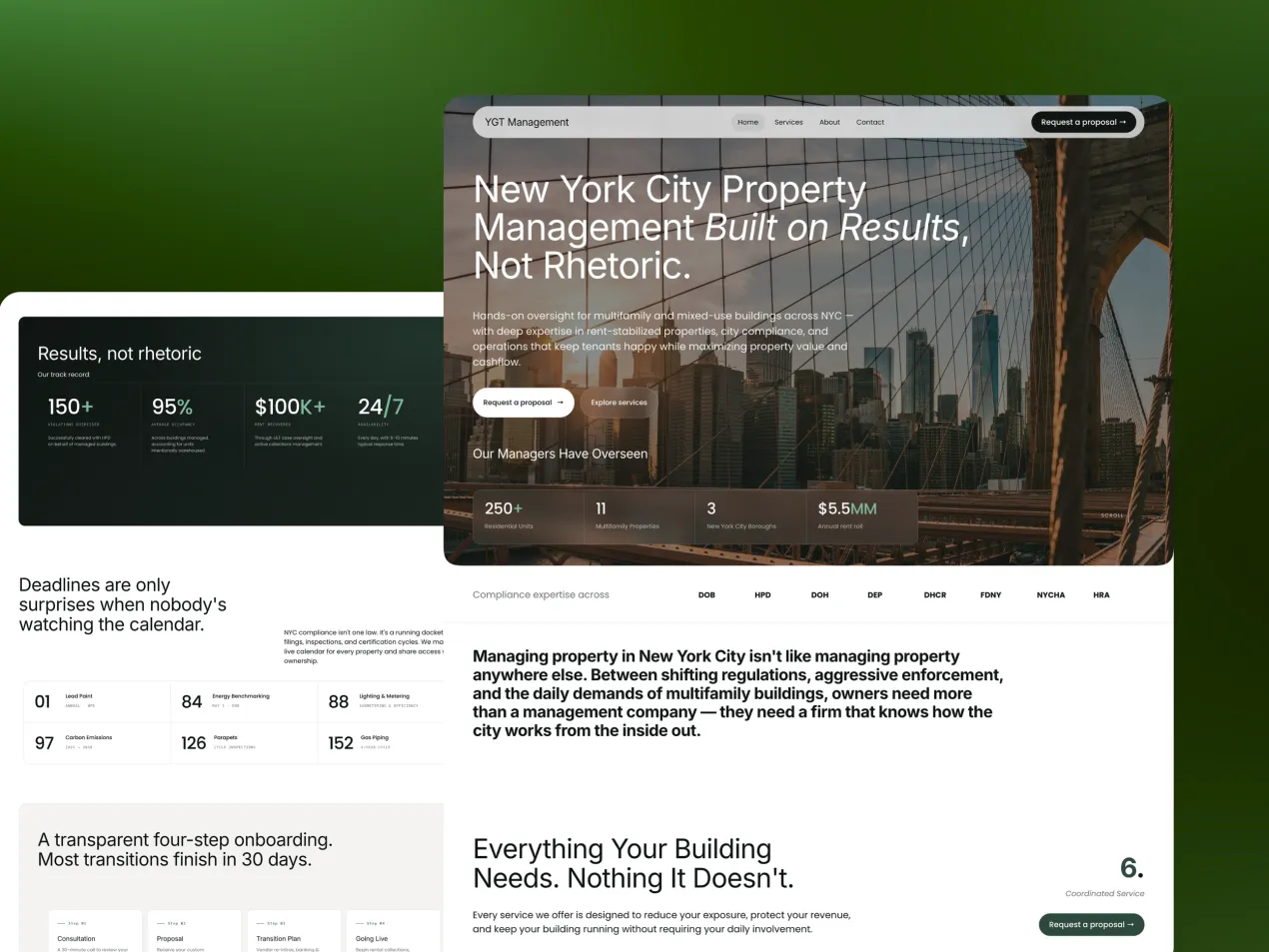
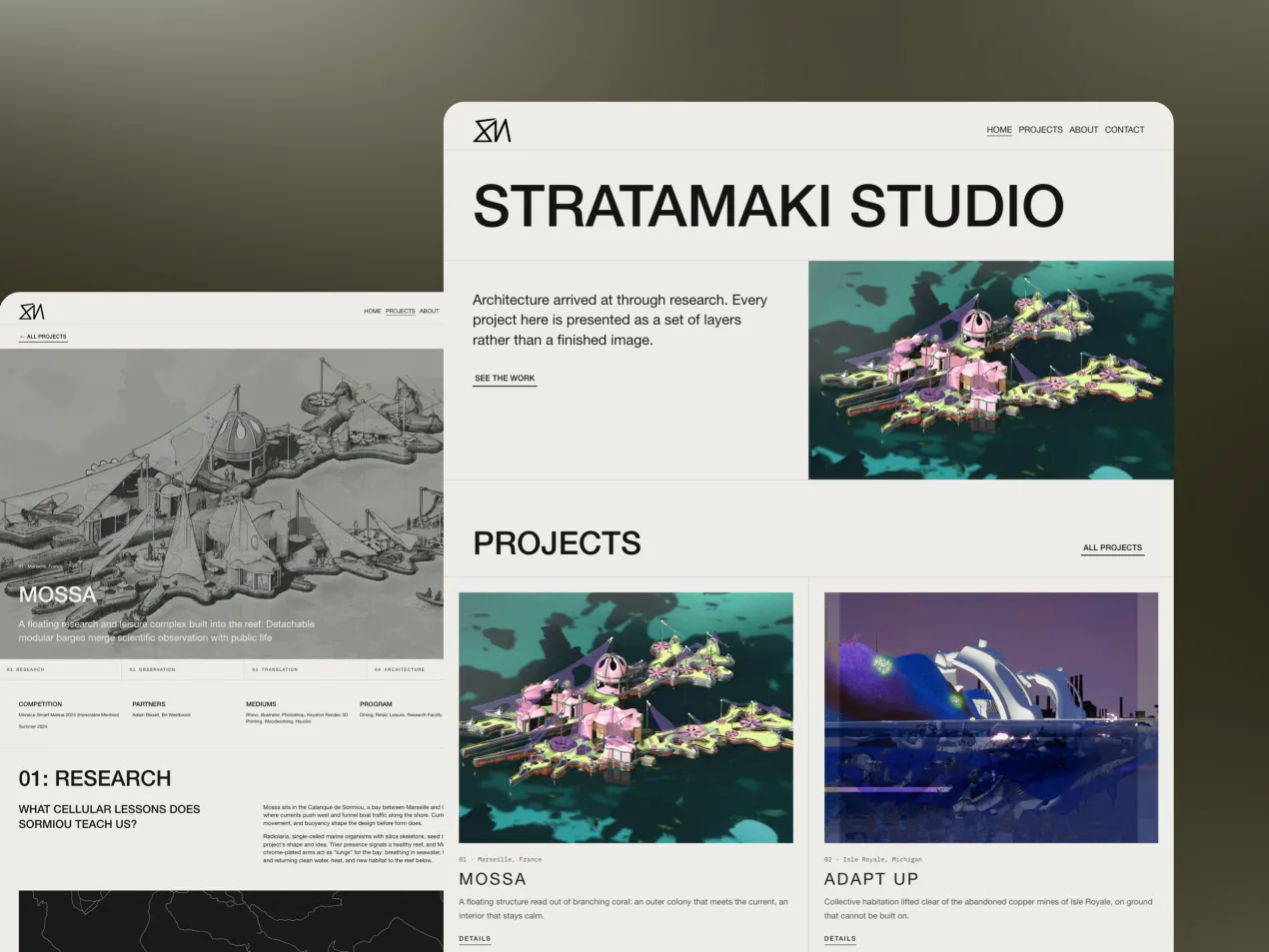
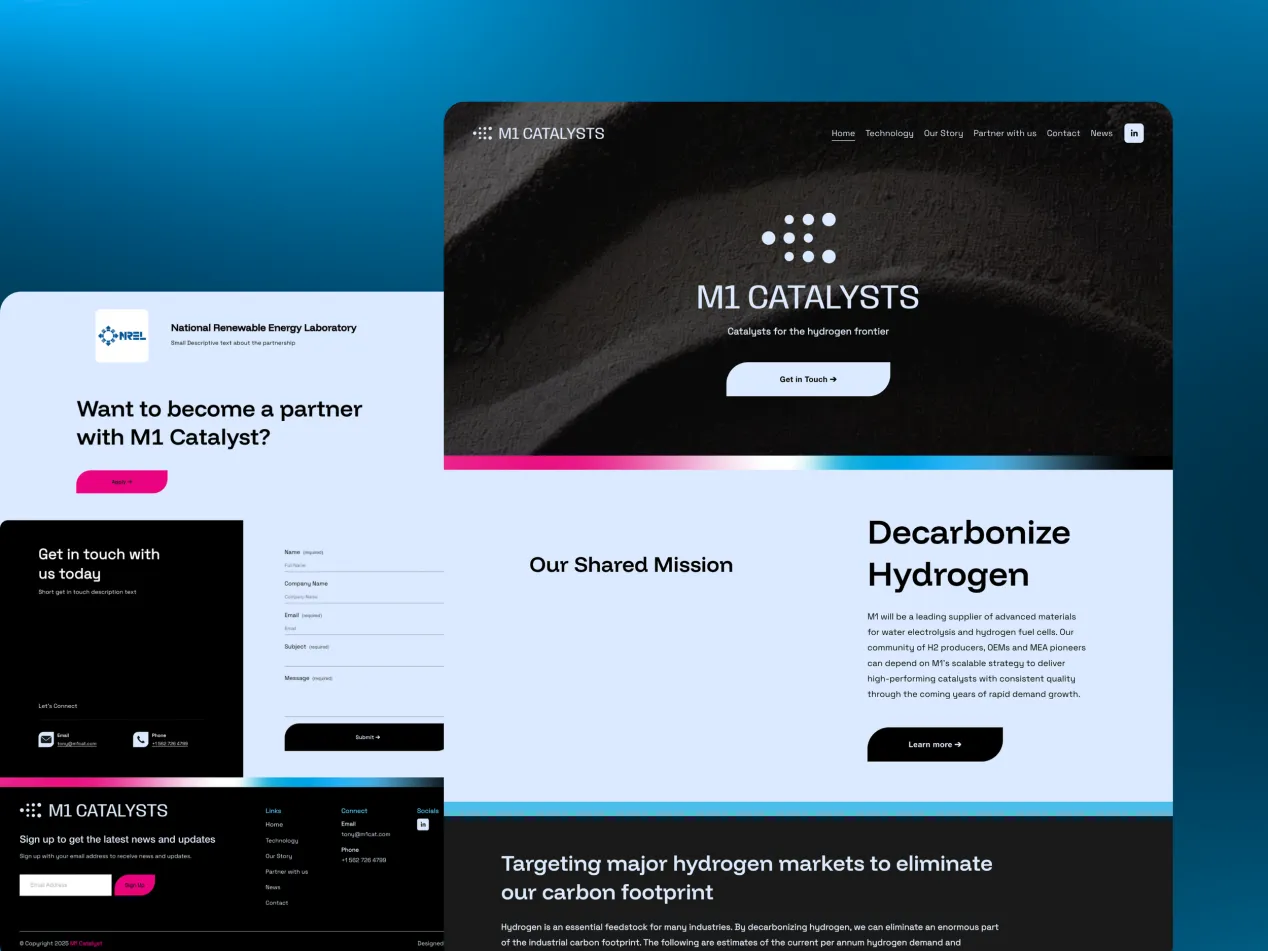




The number depends far less on the platform you choose and far more on how much strategic thinking, custom design, and copywriting goes into the final product.
1. What actually drives a consultant website's price
The biggest cost driver isn't the number of pages or the design software used. It's the amount of strategic work behind the scenes: figuring out your exact positioning, writing copy that answers a buyer's real objections, and designing a layout that guides a visitor toward booking a call instead of just reading passively. A site with five well-thought-out pages almost always outperforms a site with twelve generic ones, and the thinking behind those five pages is where most of the cost actually sits.
Custom design versus template use is the second biggest factor. A custom website or a template each come with real tradeoffs in cost, timeline, and flexibility, and the right choice depends on your stage and budget more than on which one is objectively "better."
Copywriting is the line item consultants most often underestimate. Writing that converts a skeptical executive is a specific skill, closer to direct response marketing than to general business writing, and it typically accounts for a meaningful share of the total project cost when done properly rather than treated as an afterthought filled in with generic placeholder language.
2. The four real pricing tiers for consultant websites
At the bottom, a DIY template build using Squarespace, Wix, or a similar platform runs $0 to $500 in direct cost, plus whatever time you spend building it yourself, which is often fifteen to forty hours for someone without design experience. This works as a placeholder but rarely converts well, because most consultants aren't trained copywriters or designers and it shows.
A freelancer-built site typically runs $2,000 to $6,000, depending on the freelancer's experience and whether copywriting is included. This tier can produce solid results, but quality varies enormously since "freelancer" covers everyone from a skilled independent designer to someone learning on your project.
A specialized boutique studio, the kind that works specifically with consultants and understands the sales psychology of a services business, typically runs $4,000 to $15,000, with most solo consultant projects landing in the middle of that range. This is where strategy, design, and copywriting are handled as one integrated process rather than three separate, disconnected deliverables.
A full-service agency, especially one that also handles ongoing marketing, SEO, and paid ads, typically runs $10,000 to $30,000 or more, often with the website as one piece of a larger retainer relationship rather than a standalone project.
3. Why the cheapest option often costs more long term
A $500 DIY site that fails to convert visitors into booked calls has a real cost, even though it never shows up on an invoice. If that site converts at half the rate of a properly built one, and you're losing even two or three qualified leads a month as a result, the lost revenue over a year dwarfs the few thousand dollars a better site would have cost upfront.
The same logic applies to a cheap freelancer site that needs a full rebuild within a year because it was never built with a clear strategy behind it. Many consultants end up paying twice: once for the first version, and again for the version that actually works, often within eighteen months of the first launch. Factoring in both the original cost and the eventual rebuild usually erases any savings the cheaper option seemed to offer at the start.
This doesn't mean the most expensive option is automatically the right one either. It means the real comparison isn't the sticker price of the project, it's the cost per booked call over the life of the website, which a cheap, unconverting site often loses badly.
4. What should be included at each price point
At the DIY and lower freelancer tiers, expect a template-based design, basic page structure, and copy you write yourself or that's lightly edited from a template's placeholder text. Strategy and conversion-focused copywriting are rarely part of this tier unless you add them separately.
At the boutique studio tier, expect a positioning strategy session, custom or heavily customized design, copywriting built around your specific niche and objections, and often technical extras like schema markup and a properly structured FAQ section. This is also typically where a site will include the kind of specific language around publishing your own pricing that lower tiers tend to skip entirely, since that requires real strategic thought rather than a generic template fill-in.
At the agency tier, expect everything in the boutique tier plus ongoing services like SEO management, content marketing, and paid advertising folded into a broader retainer. The website itself in this tier is often not meaningfully better designed than a boutique studio's work, the added cost is mostly paying for the ongoing services wrapped around it.
5. How platform choice affects the final number
Platform choice affects cost less than most consultants assume. Squarespace, Webflow, and WordPress all support both cheap template builds and expensive custom builds, so the platform itself isn't the primary cost driver. What changes the number is whether the platform is used as a shortcut, picking a template and swapping in your logo, or as a foundation for genuinely custom design work layered on top of it.
For most solo consultants, Squarespace tends to offer the best balance of cost and capability, since it removes a lot of the backend complexity and hosting cost that platforms like WordPress carry, while still allowing enough customization for a boutique studio to build something that doesn't look like every other site on the platform. This cost efficiency is one reason it's become the default recommendation we make to consulting clients, a topic we go deeper on elsewhere, alongside the full range of decisions covered in our complete guide to web design for consultants.
6. How to budget for your own website project
Start by deciding what the website actually needs to accomplish in the next twelve months, not what it would be nice to have eventually. A consultant trying to book ten discovery calls a month from a cold audience needs a very different, more persuasion-heavy site than one relying mostly on referrals who already trust them before they ever land on the page.
From there, set a realistic range based on your current revenue and growth stage rather than an arbitrary number. A consultant earning $150,000 a year investing $6,000 to $10,000 in a site built to convert is a reasonable, proportionate bet if that site meaningfully increases booked calls. The same number for someone just starting out with no track record yet is a bigger risk and might call for a leaner first version, built with room to upgrade once the business has more proof points to work with.
Whoever you choose, whether an agency, freelancer, or a solo studio, ask directly what's included in the quoted price. A number without a clear scope attached is the easiest way to end up paying for extras you assumed were included from the start.
Conclusion
Work out what your current site is costing you. Take the value of a typical client, and ask how many extra clients a year a better site would need to bring in to pay for itself. If the answer is one or two, the budget is easier to justify. If it's ten, start smaller.
FAQ
Is $500 ever enough for a good consultant website?
It can work as a temporary placeholder when you are starting out, but it rarely books calls from cold traffic. A DIY template build runs $0 to $500 in direct cost, plus the time you spend building it yourself, often fifteen to forty hours. It usually lacks the strategy and persuasive copy that turn visitors into calls. Many consultants pay twice: once for the first version, then again for one that works.
Why do some consultant websites cost over $15,000?
That tier is usually a full-service agency, where the website comes bundled with ongoing services like SEO management, content marketing and paid advertising. A specialised boutique studio typically runs $4,000 to $15,000, with strategy, design and copywriting handled as one process. The agency site itself is often not much better designed than a boutique studio's. Much of the extra cost pays for the wider retainer.
Does a more expensive website always convert better?
Not automatically. Price tracks quality on average, but conversion depends on whether the strategy and copy are built around your buyer's objections, which a high price doesn't guarantee. The biggest cost driver is the strategic work behind the scenes, not the number of pages. Check what you are paying for: positioning, copy that answers real objections and a layout designed to lead to a call.
Should I expect to redesign my website again soon after launch?
Not if it is built with solid positioning and a clear strategy from the start. The sites that need a full rebuild within a year are usually cheap builds made without a strategy behind them. To avoid that, decide what the site needs to achieve in the next twelve months. A consultant trying to book ten discovery calls a month from a cold audience needs a more persuasive site than one supporting referrals.
Is Squarespace cheaper than WordPress for a consultant website?
Often, once you count the hosting, plugin and maintenance costs a WordPress site can carry. Squarespace puts most of that into one subscription, so the cost is easier to predict. For most solo consultants, it offers the best balance of cost and capability. It removes much of the backend complexity while still allowing enough customisation for a boutique-quality design.