Most of the best musician websites belong to artists with labels, managers and design teams, and lists of them tend to celebrate the artwork and stop there. That doesn't help a working musician who needs the site to sell tickets, get bookings and grow a mailing list. So for each site below we picked one decision that does real work, and that an independent artist could copy without a label budget.
Everything described here is visible on the live sites as of November 2026. Artists change their homepages with every release and tour, so we focus on the structure behind the current campaign.
What a musician website is for
Streaming platforms and social media already host your music. So what is your own website for? Three things the platforms can't do for you. It is the one place you own: the algorithm can't bury it and the platform can't change the rules. It is where you collect fans' email addresses, which is the only audience you can reach without paying. And it is where bookers, promoters, venues and press go to check you out before they get in touch.
The best musician websites are built around those jobs. They put the newest release up front with a single way to listen, make the mailing list easy to join, keep tour dates current and give professionals what they need without a phone call.
Here are nine musician website examples, grouped by what they teach.
Musician websites built around one release
1. Norah Jones: the release, the proof and the sign up
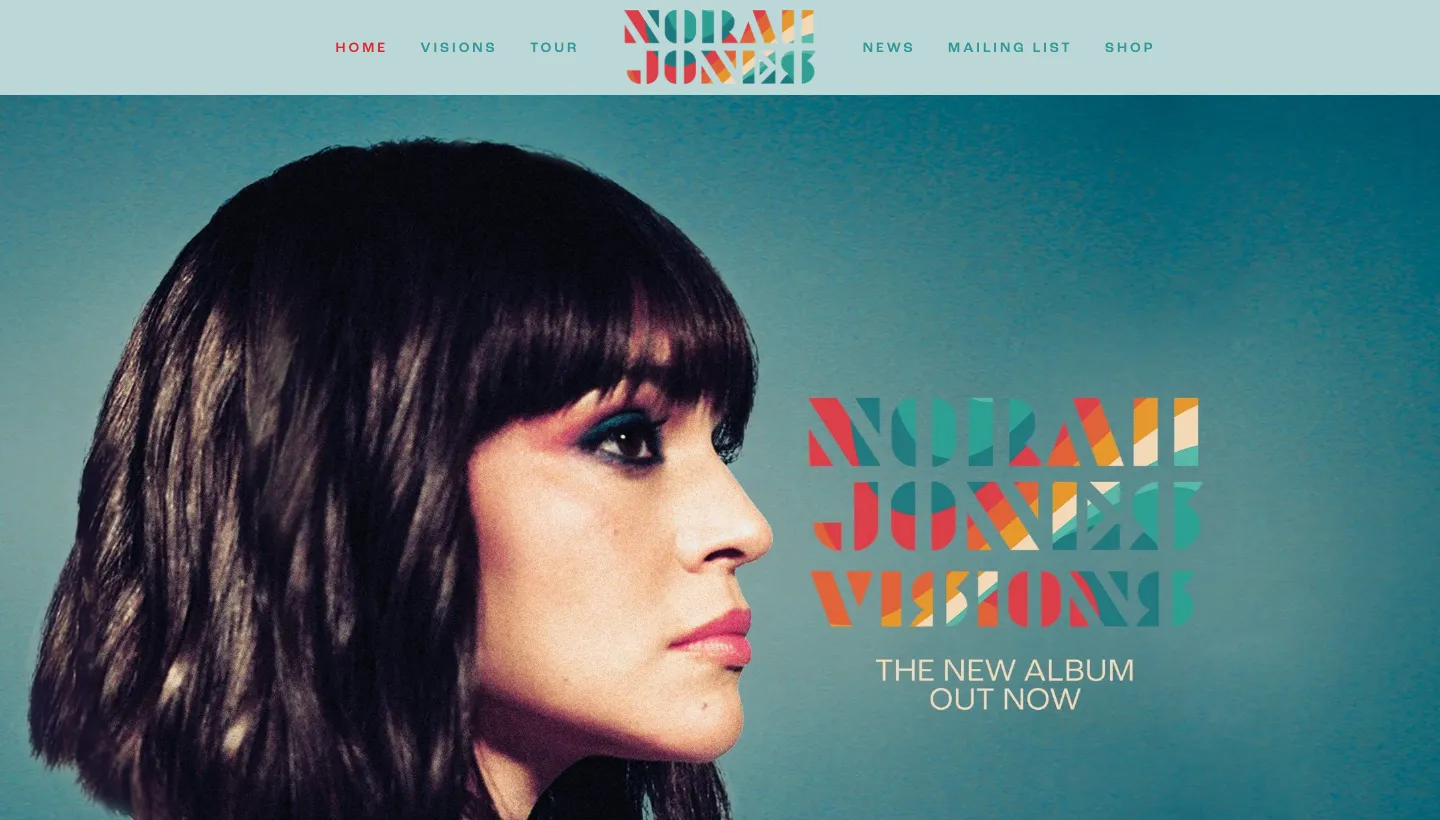
Norah Jones opens with "VISIONS | OUT NOW", a short note on the album and the video for its single, and a "listen to VISIONS" link. Two press quotes sit right under it, and further down a sign up form asks fans to subscribe for "the latest Norah Jones news and updates." The menu is short: the album, tour, news, mailing list and an external shop.
Everything on the homepage serves one release. A new visitor knows immediately what is new, has a reason to believe it is good and has an easy way to hear about the next one.
Borrow this: put your newest release at the top with one listen link, add a line or two of press or fan praise beneath it, and keep the mailing list form on the homepage.
2. Tycho: one album, two buttons
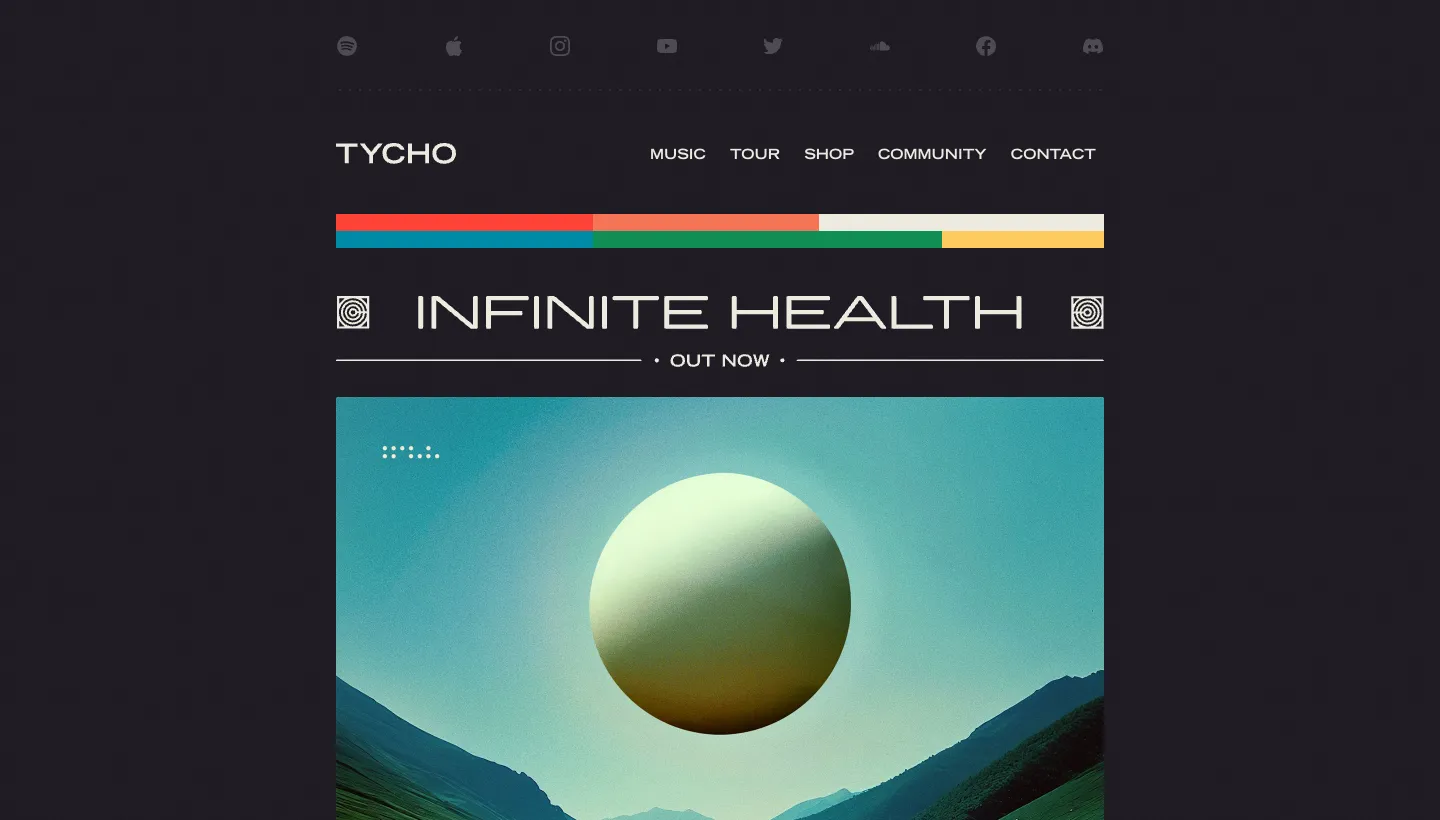
Tycho's site shows the album cover large at the top with two buttons under it: "Stream Here" and "Buy Vinyl / CD / Cassette." Videos from the album follow as thumbnails, and the menu covers music, tour, shop, community and contact.
Two clear buttons serve the two kinds of fan: the one who wants to listen now and the one who wants to own it. Nothing else competes for attention.
Borrow this: under your release, offer one button to listen and one to buy, and leave it at that.
3. Hania Rani: the credits tell the story
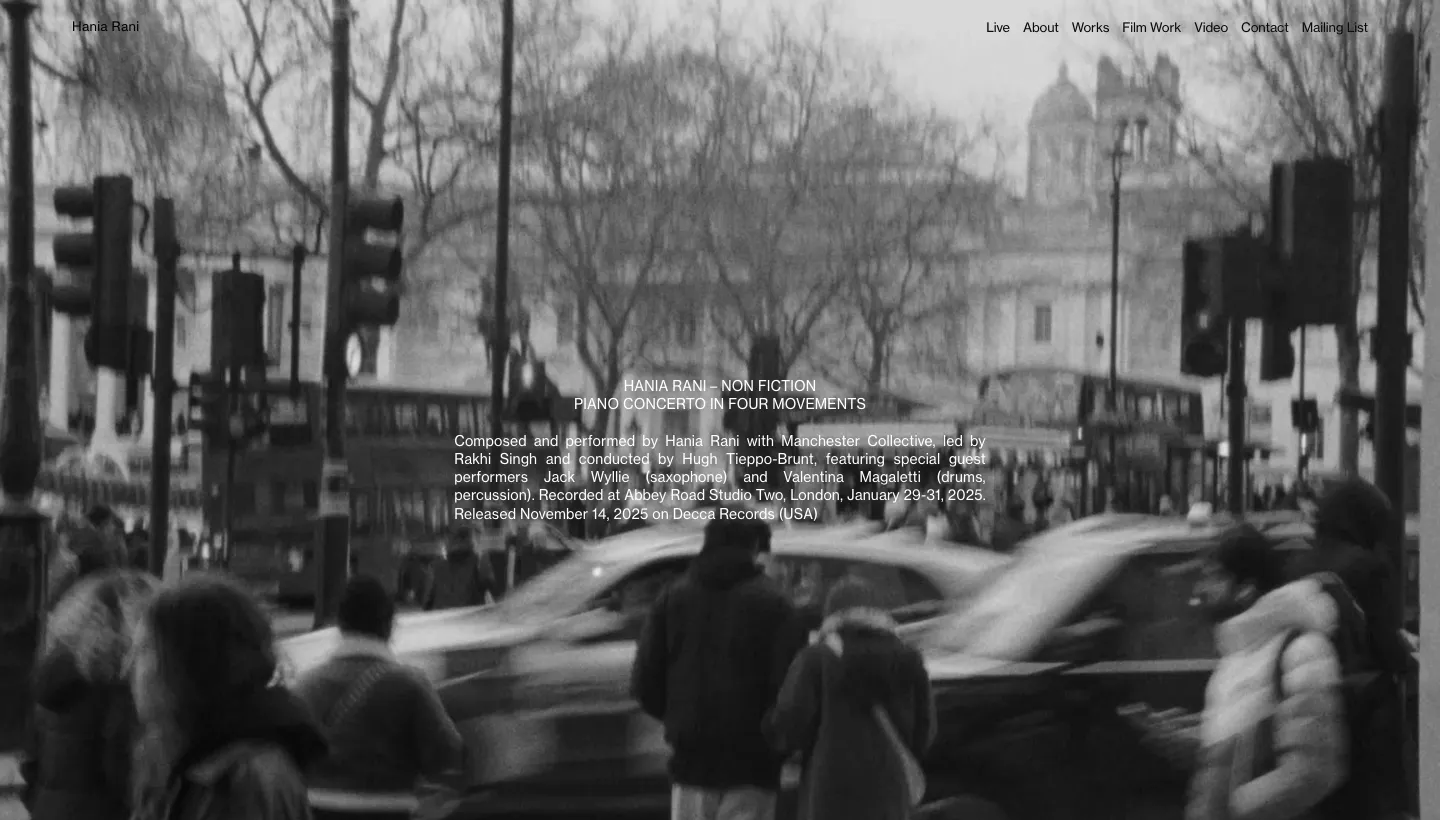
Hania Rani's site leads with the latest release, a piano concerto in four movements, and lists the credits in full: the ensemble, the conductor, guest players, the studio, the recording dates and the label. The menu separates live dates, works, film work, video and the mailing list.
For a composer, the credits are part of the work. Listing them shows the scale and seriousness of the project, and a separate film work section speaks directly to people who might commission new work.
Borrow this: if collaborators, studios or credits add weight to a release, list them. And if you write for film, theatre or brands, give that work its own page.
Musician websites that build a community
4. Jacob Collier: the mailing list as the main door
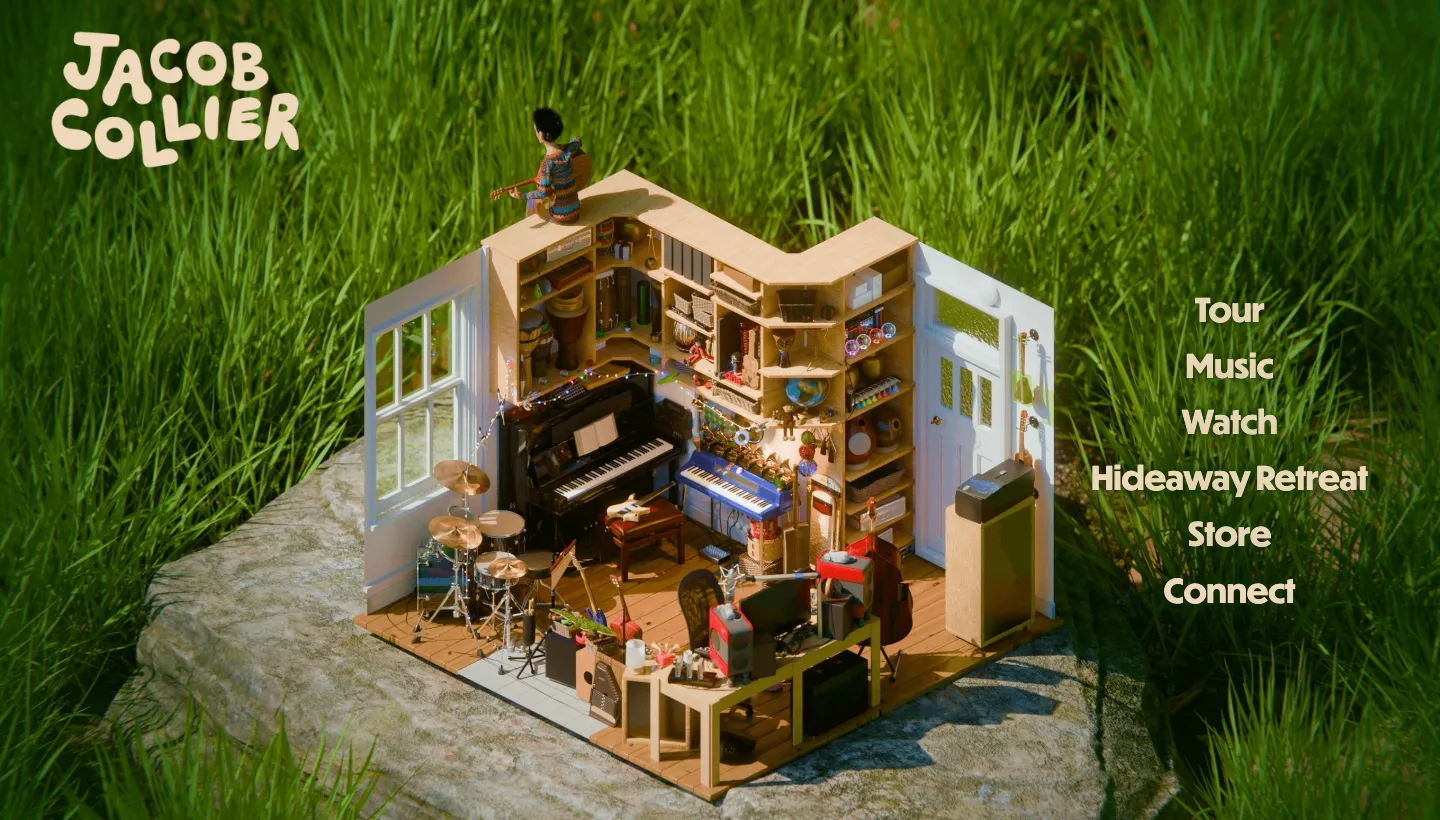
Jacob Collier's site has a short menu of tour, music, watch, a retreat, store and connect, and its clearest call to action is "Jacob's Mailing List", which opens a sign up panel. Music, video and the store link out to their own homes.
An artist with a huge following on every platform still treats the mailing list as the most important thing on the site. That is the lesson: social followers belong to the platform, email subscribers belong to you.
Borrow this: make your mailing list the most visible action on your site, and say what subscribers get, such as first access to tickets or new music.
5. Ólafur Arnalds: giving something away
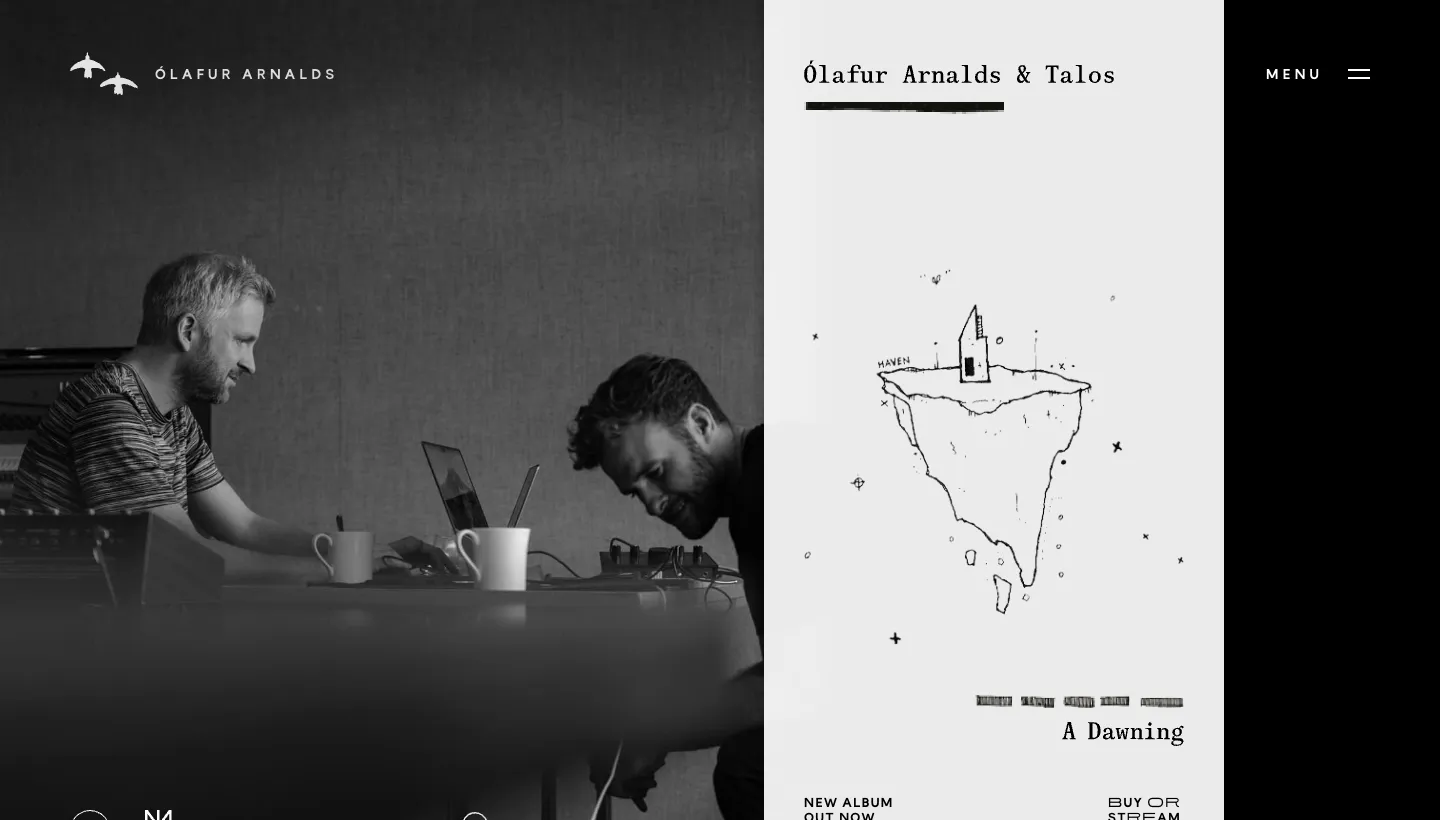
Ólafur Arnalds opens with the latest album and a "Buy or stream" button. Below, five tiles lead to the works, tour dates, a "Join" page promising "Exclusives, updates, community", sheet music to "Download for free" and the shop. A music player sits near the bottom.
Free sheet music is a generous idea that also works hard: it brings pianists and students to the site, gives them a reason to come back and connects them more closely to the music than streaming ever could.
Borrow this: offer something useful for free, such as sheet music, stems, a live recording or a lesson, in exchange for joining your list.
6. Khruangbin: a club for the closest fans
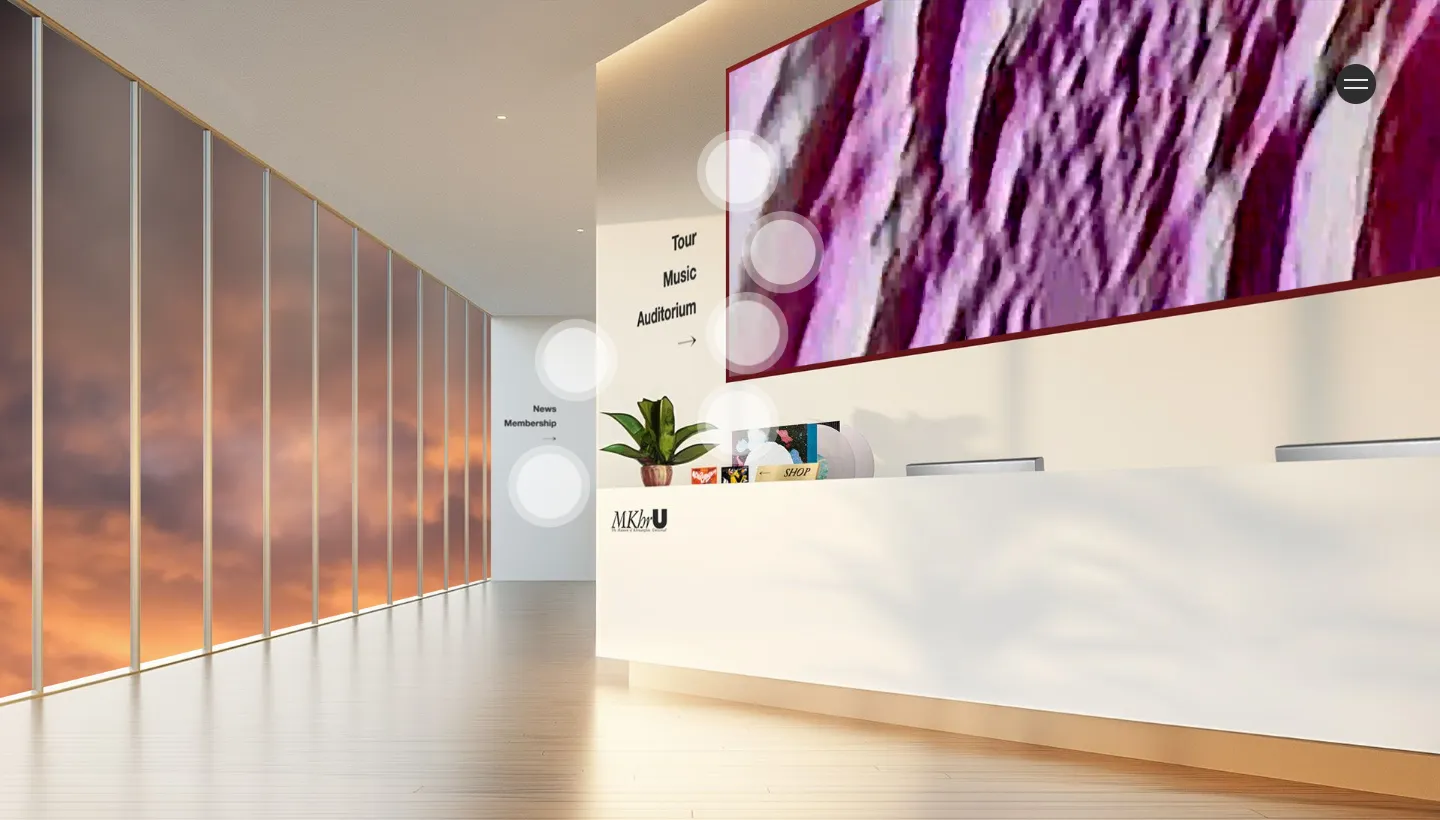
Khruangbin's site introduces itself as "The Official Website, Online Store & Khru Club" for the trio, and visitors enter through a single image with an "Enter" button. The menu includes shop, tour, music, news, videos and a membership page.
A membership club gives the most committed fans something more than a newsletter. It turns a website visit into a sense of belonging, and it gives the band a direct line to the people most likely to buy tickets and merch.
Borrow this: if you have a core of devoted fans, give them a named club with something only members get, even if it is just early ticket access.
Musician websites with a point of view
7. Yo-Yo Ma: the mission beside the music
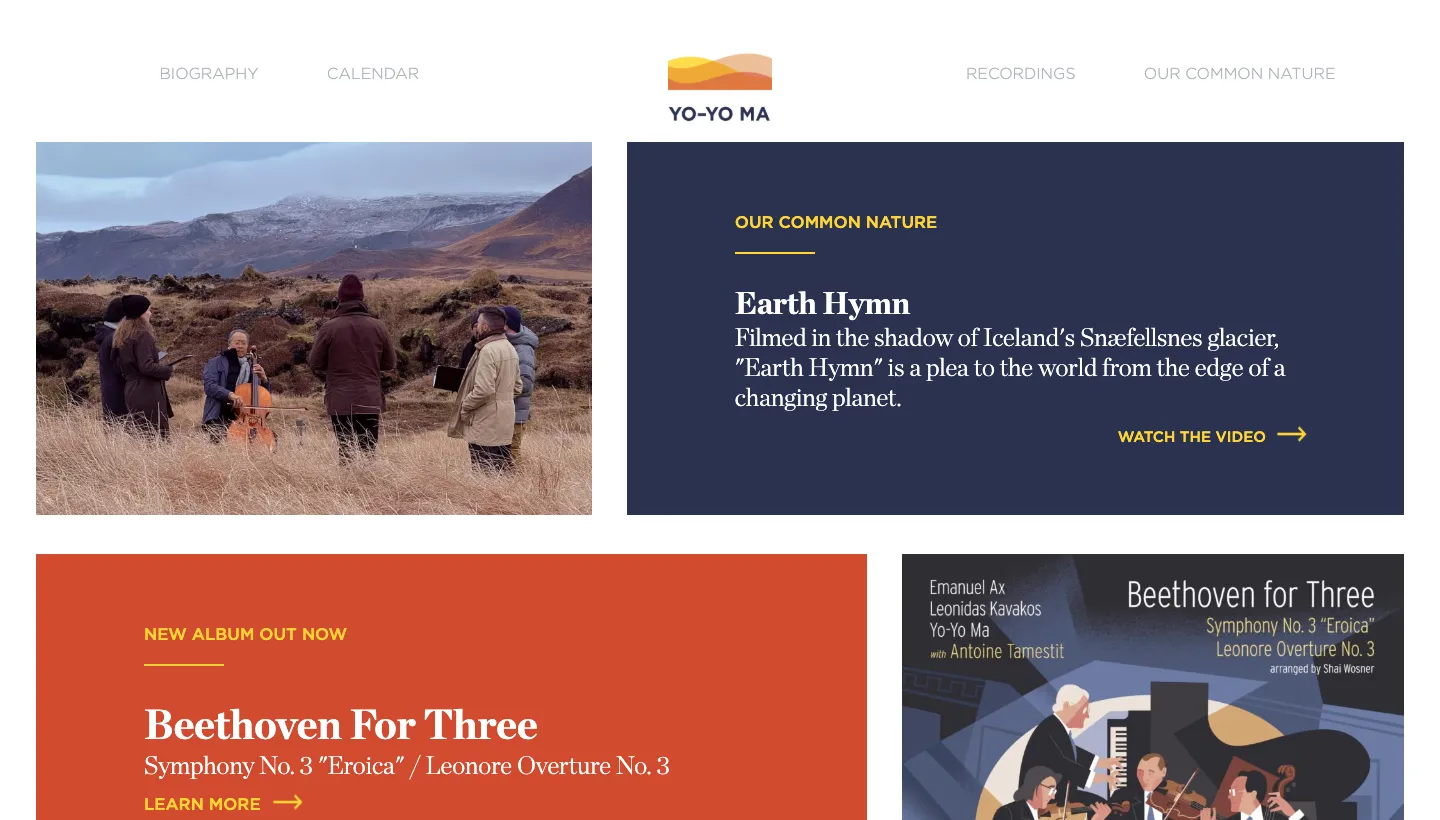
Yo-Yo Ma's homepage features the film project, Our Common Nature, and his newest album, then a short statement on why culture matters, arguing that it can turn "them" into "us." The menu is simply biography, calendar, recordings and the project, with bookings in the footer.
A clear belief gives people a reason to follow an artist beyond the next release. It also tells promoters and partners what kind of projects the artist wants to be part of.
Borrow this: if there is an idea behind your music, write it down in a few sentences and put it on your homepage, not only in interviews.
8. Nils Frahm: a personal welcome
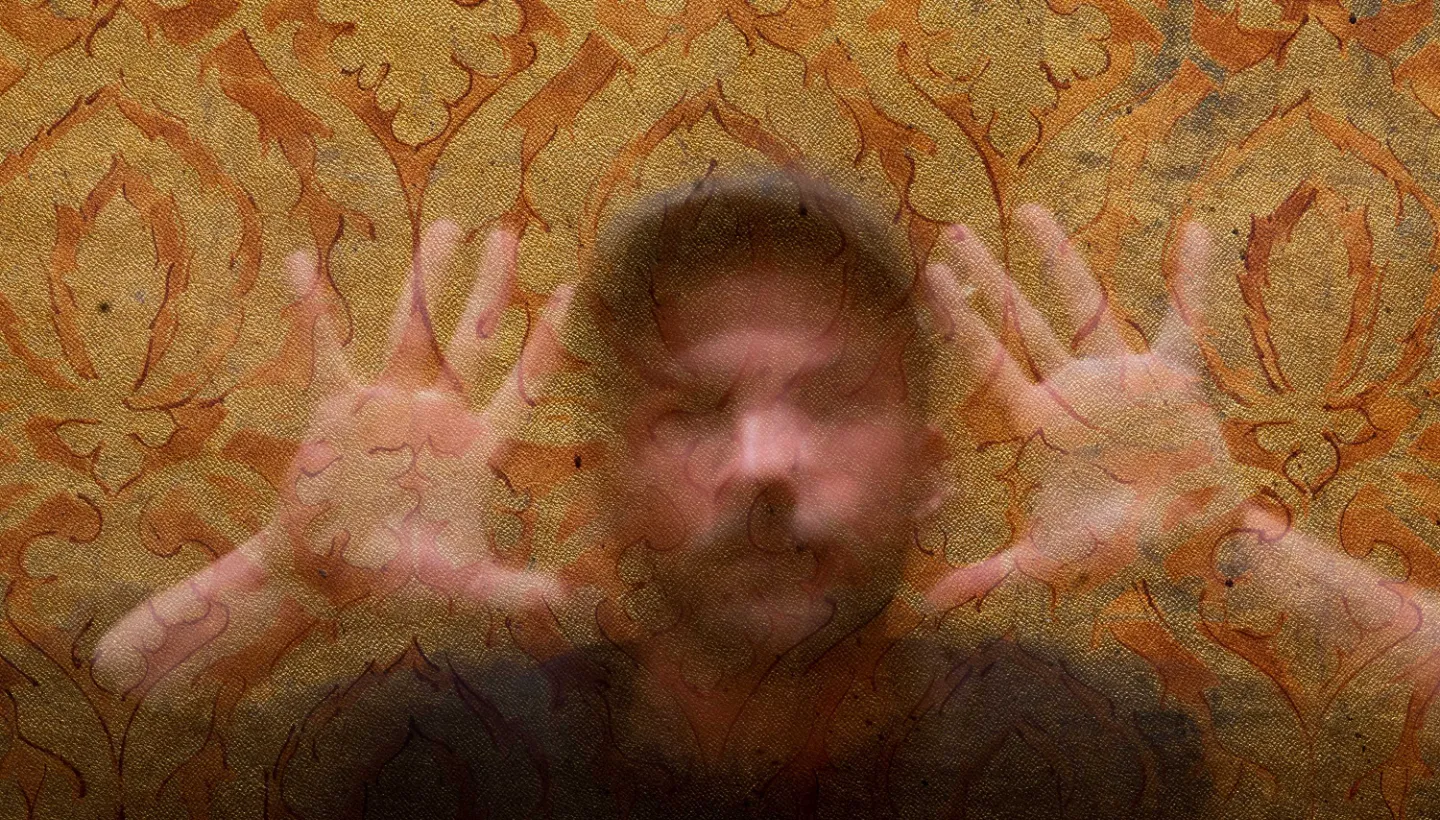
Nils Frahm greets visitors with "Dear Music Lover" and "Welcome to my gallery", followed by a link to the full biography and the latest news on releases and tours. Streaming links for every major platform sit in the footer, and a newsletter form asks only for a name and email.
The direct, personal tone makes the site feel like a letter from the artist rather than a marketing page, which suits the music and builds a closer bond with listeners.
Borrow this: write your homepage introduction in your own voice, as if to one listener. Keep your sign up form to a name and an email address.
9. Aria Melody: polished for bookers, fun for fans
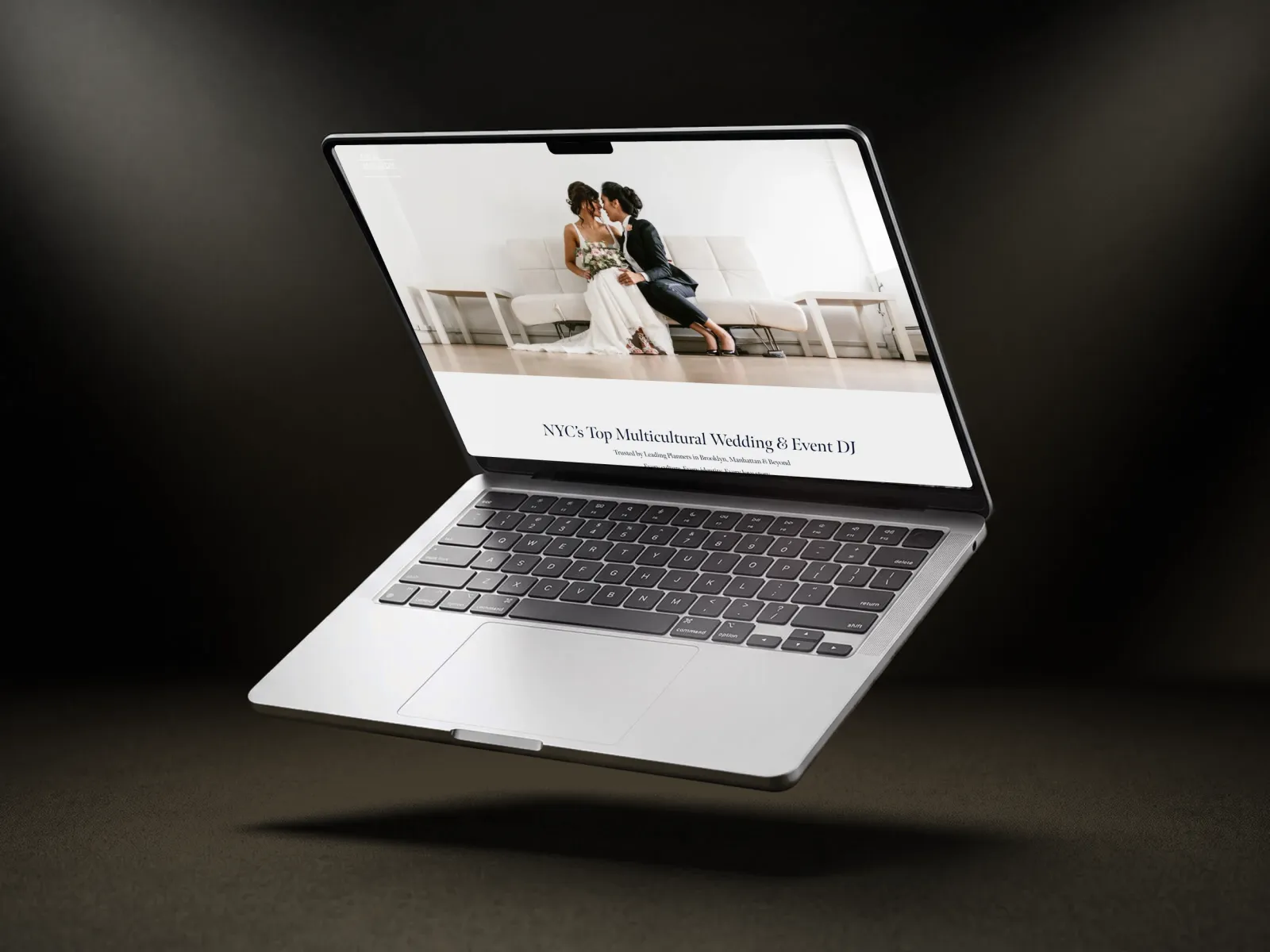
Aria Melody is a performer and event DJ whose website we redesigned. The old site had aged the way personal sites do, and for a performer that dates the artist as much as the website. Bookers notice. The brief asked for a site that felt both sophisticated and fun, two qualities most sites pick one of.
We split the job: the layout carries the sophistication, with generous space, assured typography and disciplined composition, and the details carry the fun, through colour, motion and small interactive moments. Performance media is shown large, because interest in a performer peaks while watching, and there is a clear route to a booking enquiry from anywhere on the site. New dates, releases and media are added in-house, without a developer. The Aria Melody case study has the full story.
Borrow this: if you are booked for events, make the booking enquiry reachable from every page, and show performance video large enough to feel like being there.
What the best musician websites have in common
Across all nine, the same habits show up.
The newest thing is first
Norah Jones, Tycho and Hania Rani lead with the latest release and one clear way to hear it.
The mailing list is the priority
Jacob Collier, Ólafur Arnalds and Nils Frahm all make it easy to join, and the best ones say what you get.
They serve fans and professionals
Bookings links, biographies, film work and press quotes give promoters, venues and commissioners what they need.
They sound like the artist
Nils Frahm's letter, Yo-Yo Ma's statement, Aria Melody's playful details. The site feels like the music.
The short version
The best musician websites aren't the ones with the most expensive artwork. They are the ones that put the newest release first with one way to listen, make the mailing list the easiest thing to join, give bookers and press what they need and sound like the artist. An independent musician can do all of it: a release block, a short sign up form, a current dates page, a bio with a booking contact and something free for subscribers.
Start with your mailing list. If a new fan can't join it from your homepage in ten seconds, fix that first.
FAQ
Does a musician need a website if they have social media?
Yes. Social platforms can change their rules or bury your posts at any time, but your website and your mailing list belong to you. It is also where bookers, promoters and press go to check you out before they get in touch.
What should a musician website include?
Your newest release with a way to listen and buy, a mailing list sign up, tour or show dates, a short biography, photos and video, a booking or contact route for professionals, and links to your streaming and social profiles. A press kit page helps if you are approached by media.
How do musicians get more people on their mailing list?
Put the sign up form on your homepage, ask only for a name and email, and say what subscribers get, such as early ticket access, new music first or something free like sheet music or a live recording.
Should a band website have its own store?
If you sell merch or physical music, a store link is worth having, whether it is built in or on a separate shop. Many artists link to an external store so the main site stays simple.
What makes a good website for a performer or event DJ?
Performance video shown large, a clear list of the events you play, and a booking enquiry reachable from every page. Interest in a performer peaks while watching, so the route to book should never be more than a click away.
Can musicians update their own website?
They should be able to. A site where you add new dates, releases and videos yourself stays current. Aria Melody adds new dates and media without a developer.