The best manufacturing websites are written for a harder audience than most. The people deciding are engineers, buyers and plant managers, and they want specifications, certifications, lead times and a way to get a price. Marketing language makes them suspicious. A stock photo of a smiling worker in a hard hat tells them nothing.
The examples below get this right in different ways. Some let a buyer upload a file and get a quote in minutes. Others are built around a catalogue, or a philosophy, or several very different audiences. For each one we say what it does well and what you could borrow. Everything described is visible on the live sites as of November 2026.
What makes a manufacturer's website work
Most manufacturing sites were built as brochures. They describe the company, list some capabilities and end with a contact form. The ones that win work behave more like a good sales engineer: they answer the technical questions first and make the next step obvious.
Three things show up again and again:
Proof up front. Certifications, materials, tolerances and lead times, stated plainly near the top of the page.
A clear way to get a price. An instant quote, a quote request with file upload, or a direct line to an engineer.
Paths for different buyers. A prototype engineer and a procurement manager want different things, and the best sites let each find their route quickly.
Sites that sell with a quote button
1. Protolabs: certifications before anything else
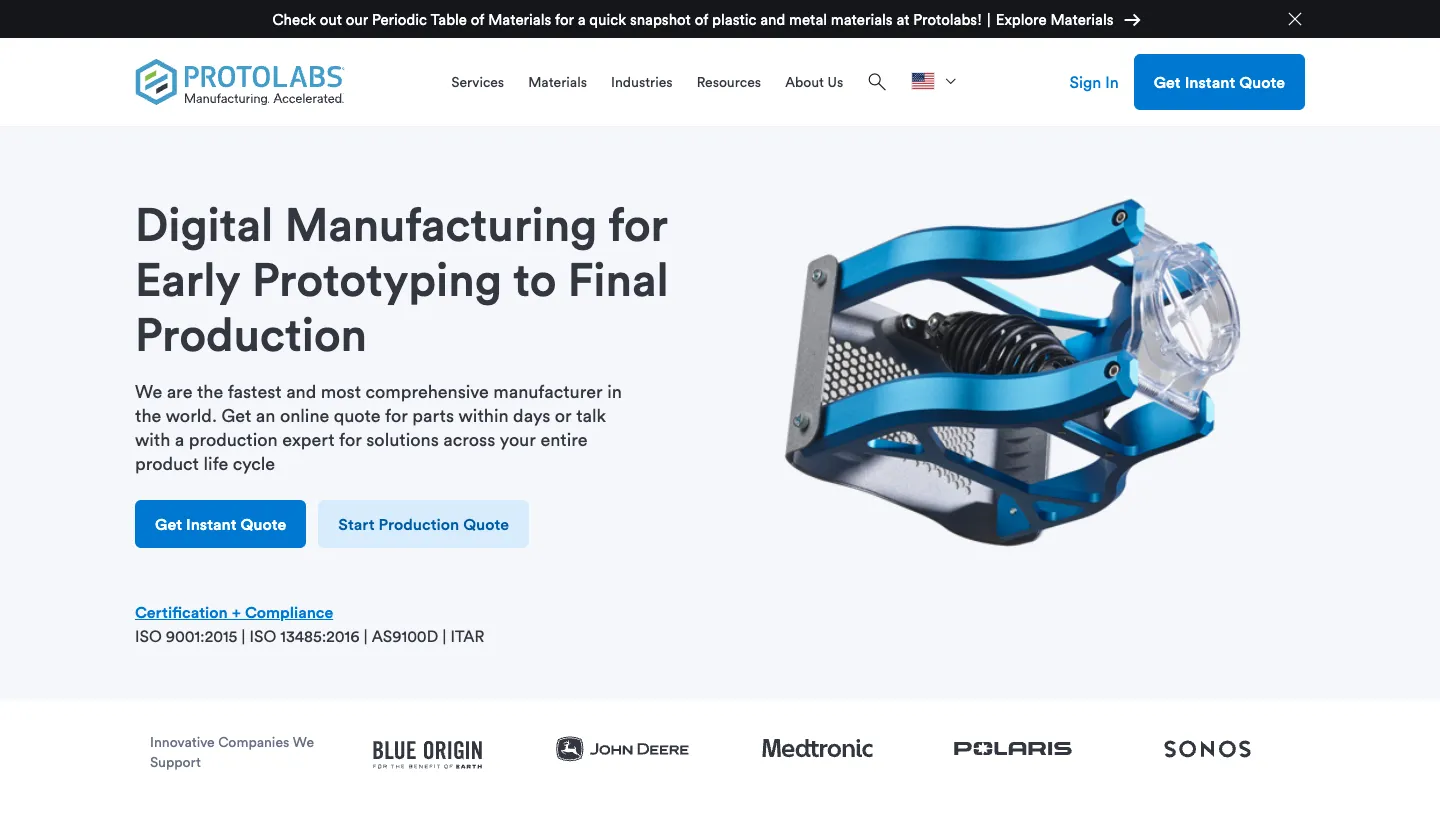
Protolabs opens with "Digital Manufacturing for Early Prototyping to Final Production" and two buttons: Get Instant Quote and Start Production Quote. Directly underneath sits a line of certifications (ISO 9001:2015, ISO 13485:2016, AS9100D and ITAR), followed by logos of companies it supports. The main services, injection molding, CNC machining, 3D printing and sheet metal fabrication, each have their own section with specifics such as low-volume molding "up to 100,000+ parts".
The two quote buttons are the clever part. A prototype buyer and a production buyer are on different journeys, and each gets a door of their own.
Borrow this: put your certifications in the first screen, not on an About page, and give different buyers different ways to ask for a price.
2. Xometry: a quote in the first sentence
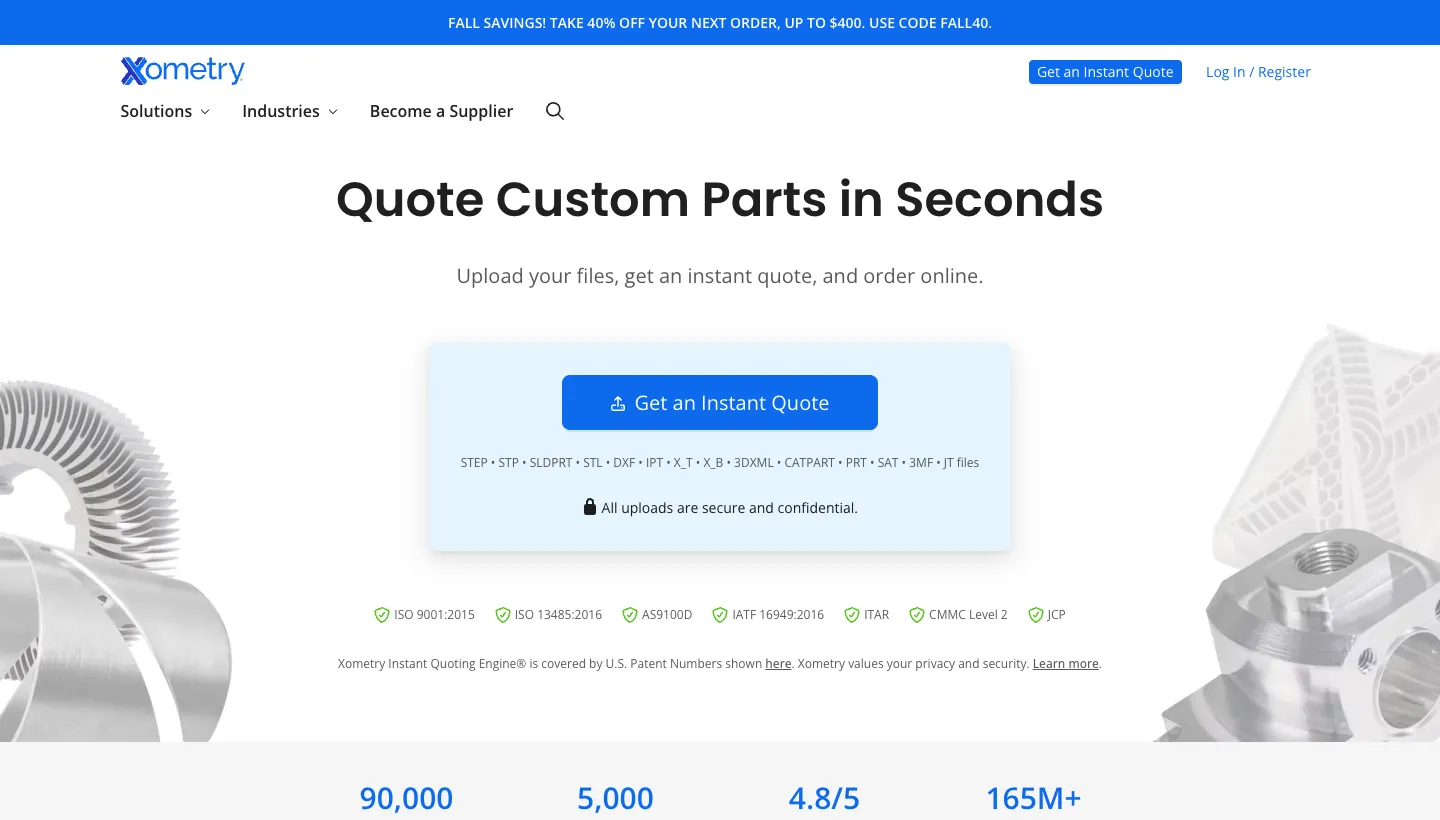
Xometry's homepage leads with "Quote Custom Parts in Seconds" and a single instruction: upload your files, get an instant quote and order online. The upload box lists every file type it accepts, from STEP to 3MF, and says uploads are secure and confidential. Below sit its certifications and four proof numbers, including 165M+ parts shipped and a 4.8 out of 5 Trustpilot score.
Everything on that screen exists to get a file uploaded. The list of file formats answers a question an engineer would otherwise have to ask.
Borrow this: if buyers send you drawings, tell them exactly which formats you accept and what happens to their files.
Sites built around speed and range
3. Fictiv: one partner from prototype to production
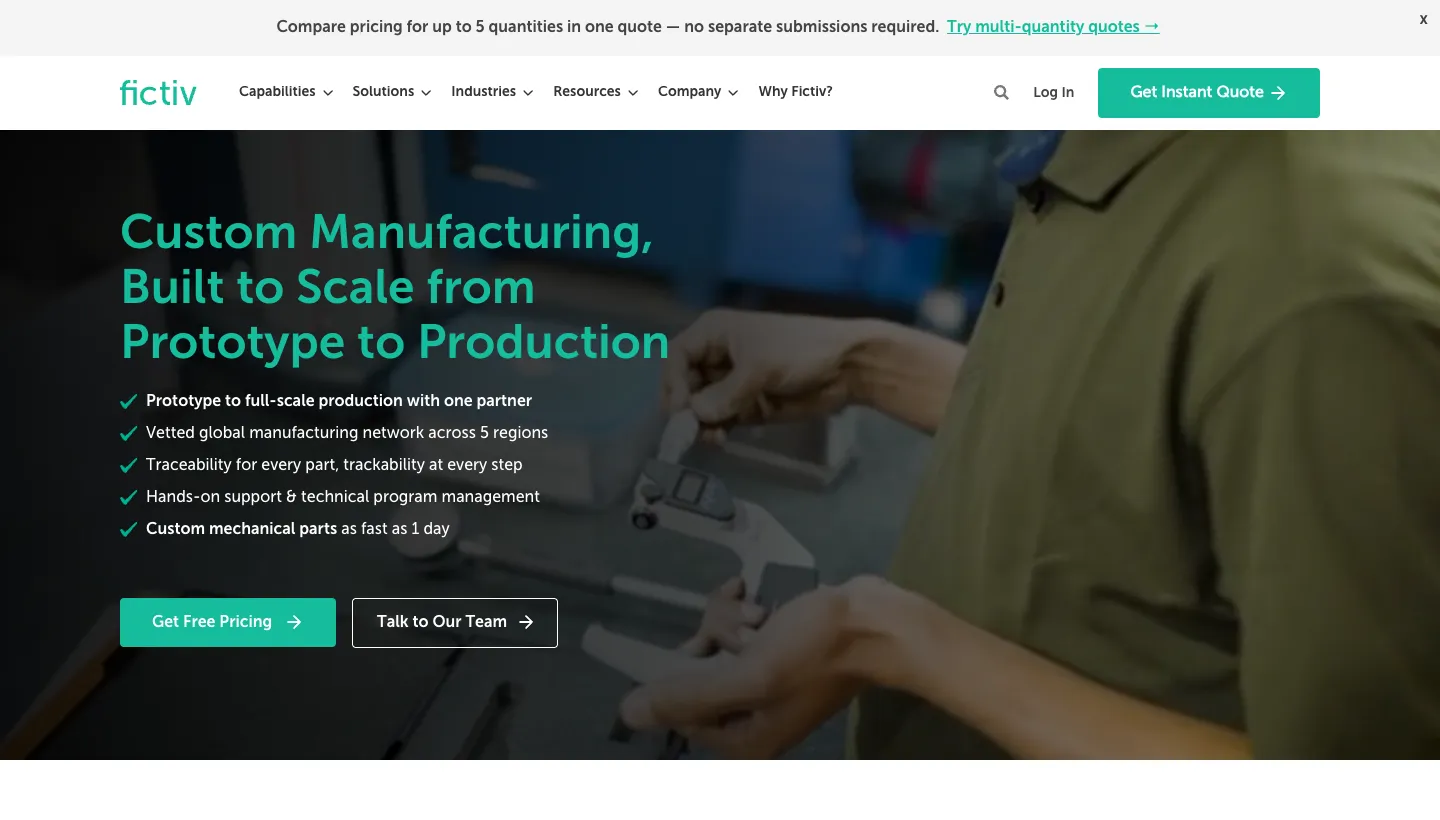
Fictiv uses its headline to make one promise, "Custom Manufacturing, Built to Scale from Prototype to Production," and backs it with five short points: one partner, a vetted network across five regions, traceability for every part, hands-on support and parts "as fast as 1 day". Each capability below has its own speed, such as injection molding samples in as little as 10 days and CNC machining in as little as two.
The specifics are what make it work. "Fast" means nothing to an engineer; "T1 samples as fast as 10 days" means something they can plan around.
Borrow this: replace every vague claim on your homepage with a number a buyer could hold you to.
4. Formlabs: the price is the headline
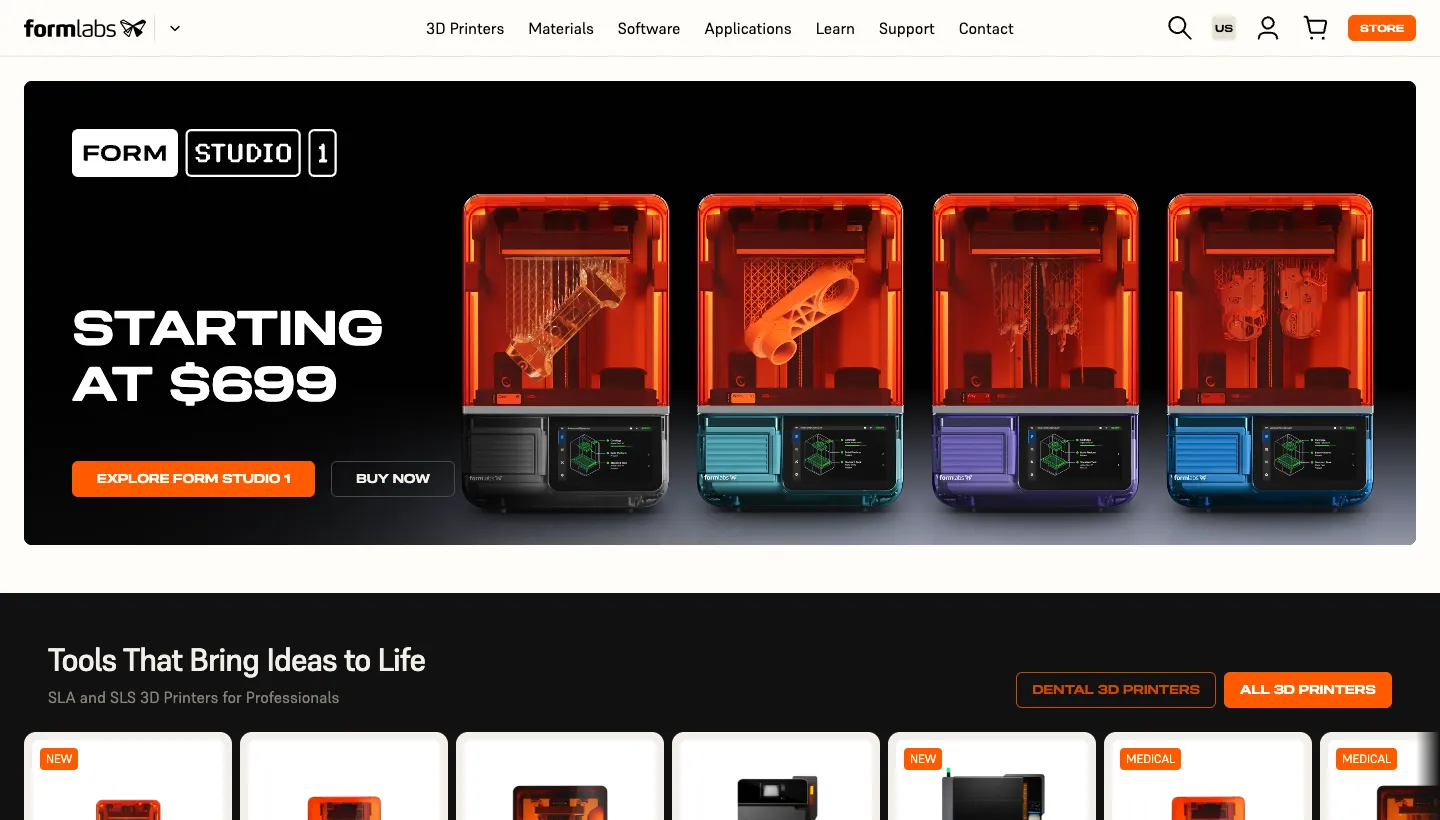
Formlabs sells 3D printers, and its homepage leads with a price: "Starting at $699". Below that, every printer appears as a card with its technology (SLA or SLS) and a one-line description, with separate filters for dental printers. The menu is short: 3D Printers, Materials, Software, Applications, Learn and Support.
For equipment sold to professionals, showing the starting price immediately filters out the wrong buyers and reassures the right ones.
Borrow this: if your products have list prices, show where they start. If they don't, say what the price depends on.
Sites built around a catalogue
5. Sandvik Coromant: the catalogue is the homepage
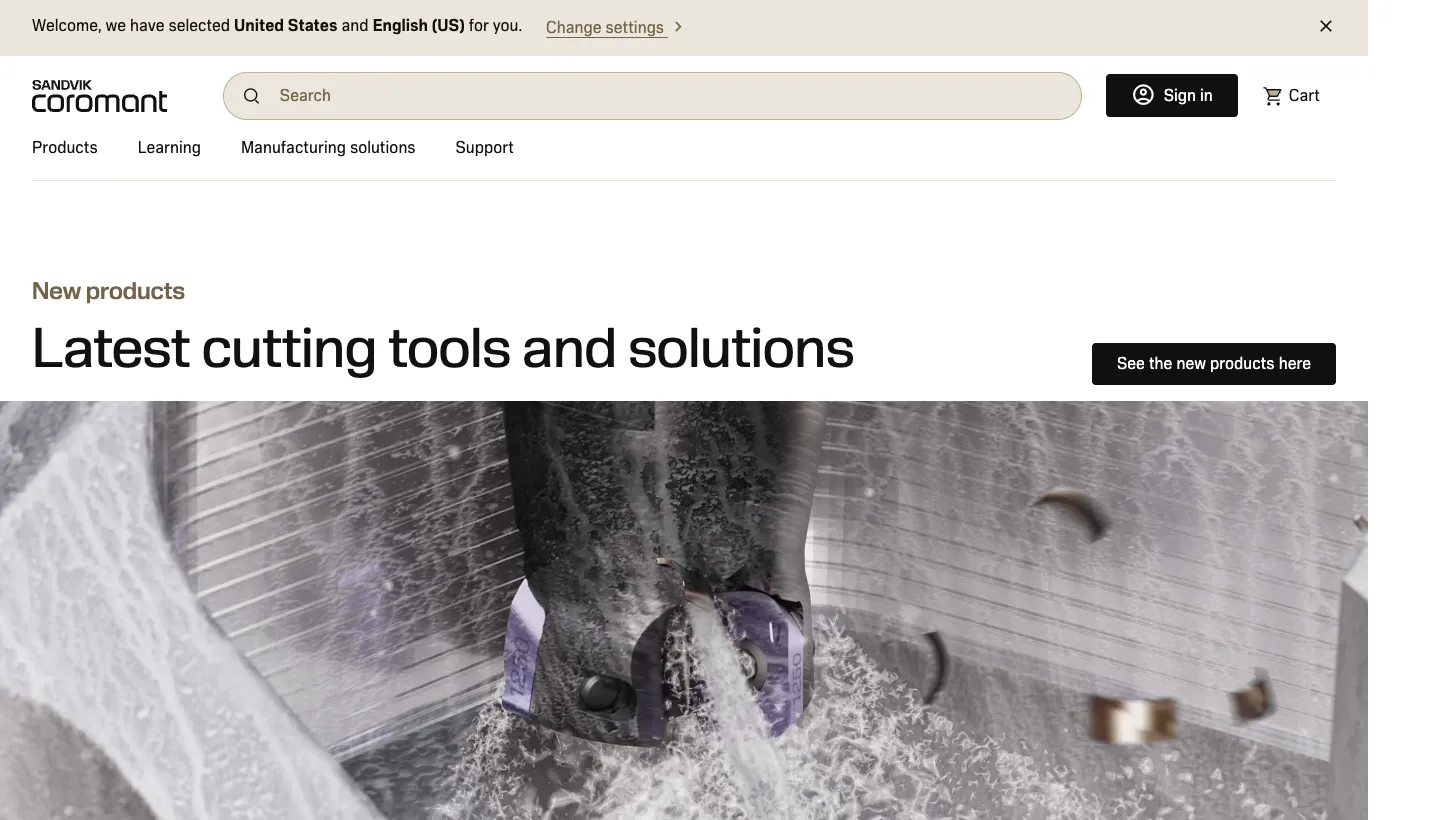
Sandvik Coromant sells cutting tools, and its homepage is mostly a way into the range. Under the latest products sits a row of categories, from turning and milling tools to threading and boring tools. Further down, it lists what an account gives you: price and stock information, tool customisation and access to 2D and 3D drawings. A tool guide offers recommendations for a specific job.
The account benefits are the lesson. Engineers will create an account when it gives them drawings and real stock levels, not just a newsletter.
Borrow this: if you have a large range, make the categories the first thing a buyer sees, and give them a practical reason to log in.
6. Graco: different doors for different buyers
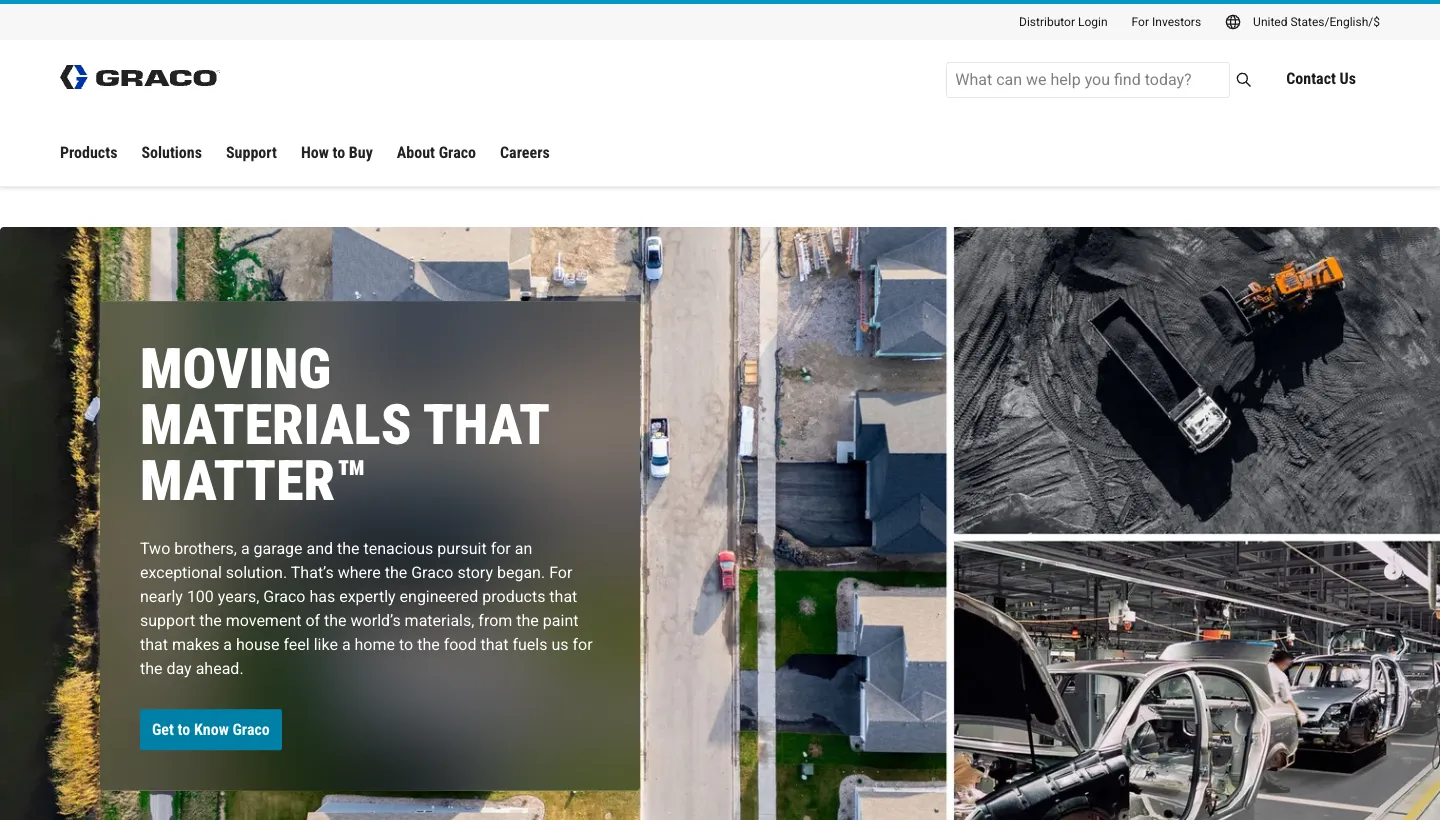
Graco makes fluid handling equipment for very different customers, and its homepage says so. After a short origin story ("Two brothers, a garage and the tenacious pursuit for an exceptional solution"), it splits visitors into four routes: Homeowner, Contractor, Service and Repair, and Manufacturing. Each route has a sentence explaining who it is for.
A homeowner buying a paint sprayer and an automotive plant buying a dispensing system shouldn't wade through each other's products. Four clear doors solve that in one screen.
Borrow this: if you sell to more than one kind of buyer, name each one on the homepage and send them to their own page.
Sites that sell a way of making things
7. Vitsœ: the manufacturer's beliefs are the pitch
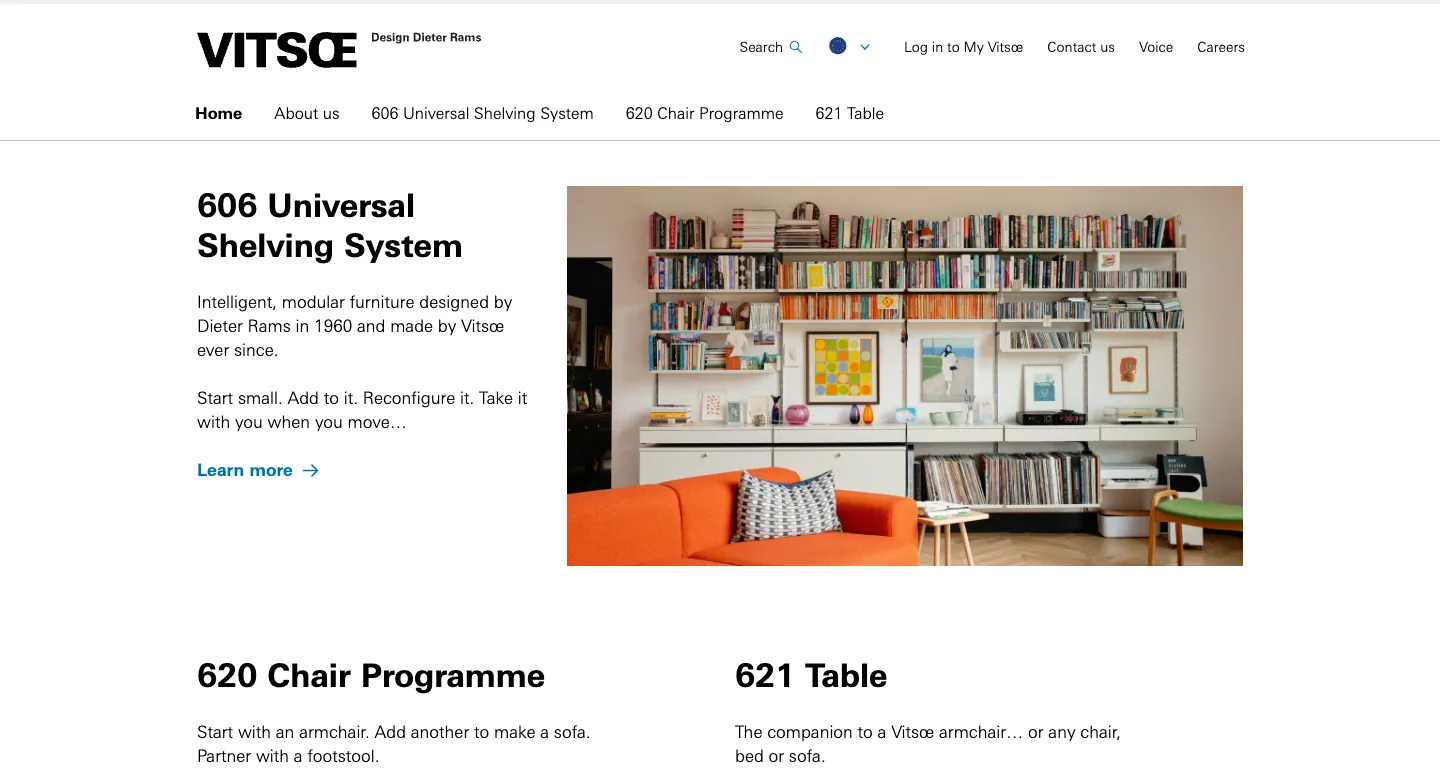
Vitsœ makes furniture, and its homepage introduces the 606 Universal Shelving System as "designed by Dieter Rams in 1960 and made by Vitsœ ever since." Below the products, a section headed "Why Vitsœ?" sets out four beliefs, including "Against obsolescence" and "Honest pricing," each with a sentence of explanation, such as selling directly at "a single, fair, honest price."
For a manufacturer whose products are built to last decades, the way they are made is the selling point, so the site explains it plainly.
Borrow this: if how you make things is what sets you apart, say it in a few short, specific statements, not a mission paragraph.
8. M1 Catalysts: written for the engineer
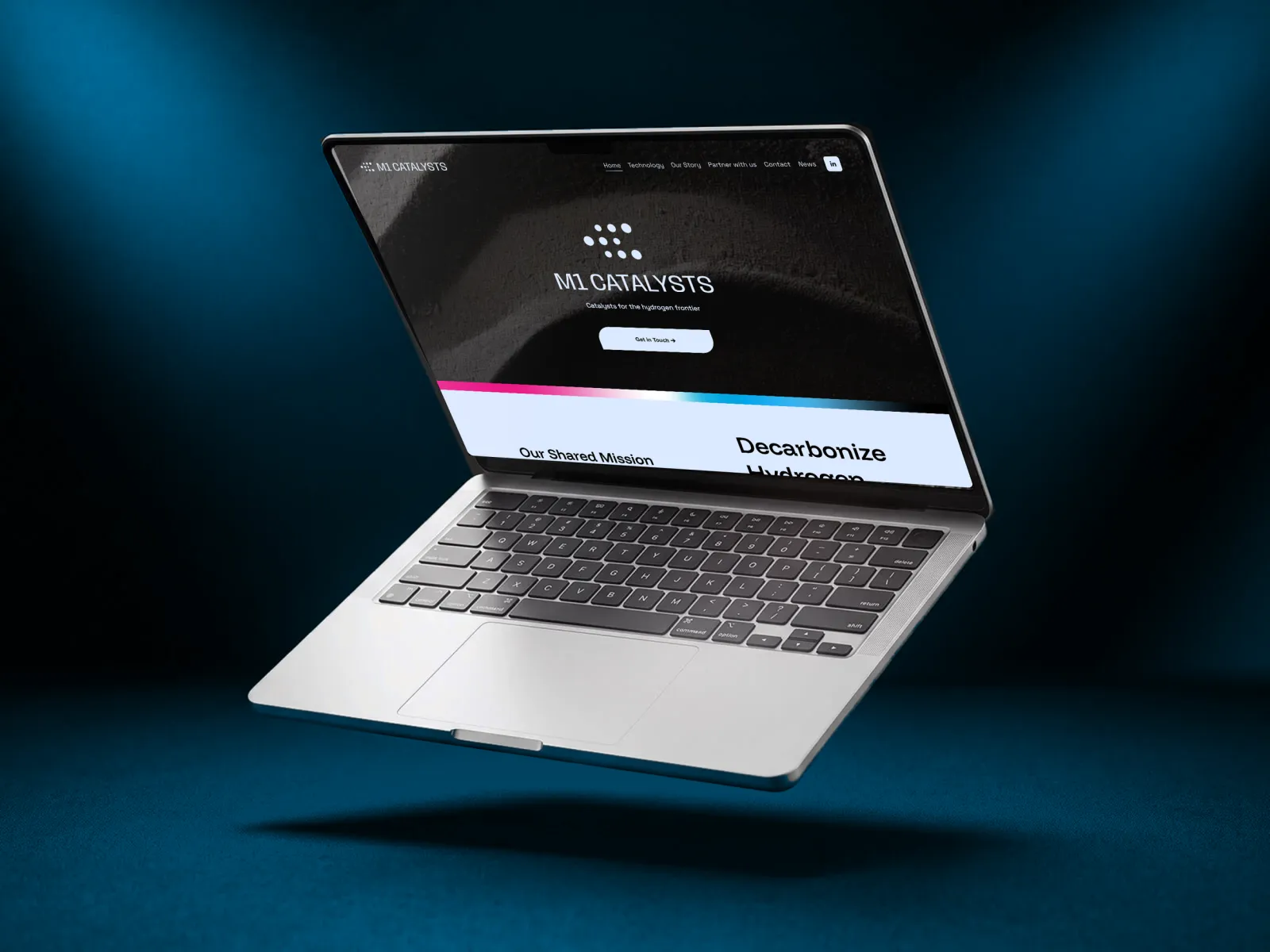
M1 Catalysts is a site we rebuilt, so we can explain the thinking. M1 supplies industrial catalysts to engineers and technical buyers who assess capability before they ever make contact, and who dismiss marketing language instantly. The old site gave them marketing copy.
We rewrote it around specifications, application detail and real operating conditions, so a buyer could verify capability without calling anyone. Then we structured it with schema and clear question-and-answer formatting so search engines and AI answer engines could cite it as a source. The full technical archive was migrated with every URL redirected, and the project took five weeks from kick-off to launch. Since then, M1 has appeared as a source in AI answers for technical queries, and enquiries arrive past the specification stage.
Borrow this: write for the most sceptical engineer who will read your site. If they are convinced, everyone else will be.
Mistakes these sites avoid
Adjectives instead of evidence
None of these sites leads with "innovative solutions" or "world-class quality". They lead with certifications, tolerances, prices and lead times.
Hiding the quote
Every one of them makes the next step obvious, whether that is an upload box, a quote button, a catalogue or a phone number.
One page for every buyer
The best sites recognise that an engineer, a buyer and a homeowner want different things, and give each their own route.
How to apply this to your own site
Start with the questions your sales team answers most often: which materials, which tolerances, which certifications, how long and how much. Put those answers on the website, near the top of the relevant pages. Then make it easy to send a drawing or request a quote from every product and capability page. Finally, check your site on a phone, because many buyers first look you up away from their desk.
For search, our guide to SEO for manufacturers covers how technical buyers search and what pages to build for them.
The short version
The best manufacturing websites behave like a good sales engineer. They put proof first, answer technical questions plainly, make getting a price simple and give each kind of buyer a clear route. Whether that is an instant quote, a catalogue or a set of beliefs depends on what you sell. Our page on website design for manufacturing companies shows how we approach these sites.
FAQ
What should a manufacturing website include?
Clear descriptions of your capabilities and products, certifications, materials, tolerances and lead times, examples of past work, and an easy way to request a quote or send a drawing.
How do manufacturers get leads from their website?
By answering the technical questions buyers ask before they call, and making the next step simple: an instant quote, a quote request with file upload, or a direct line to an engineer.
Should a manufacturer show prices online?
Where products have list prices, showing where they start filters buyers and builds trust. For custom work, explain what the price depends on and how quickly a quote comes back.
Why do engineers distrust marketing language?
Engineers buy on evidence. Vague claims suggest a company with nothing specific to say, while specifications and certifications let them check capability for themselves.
How long does it take to redesign a manufacturer's site?
It depends on page count, the size of the technical archive and how much copy is rewritten. Our M1 Catalysts project took five weeks, and our Rebuild projects usually take eight to sixteen weeks.
Do industrial websites need SEO?
Yes. Technical buyers search for specific processes, materials and part types. Pages that answer those searches plainly bring in enquiries that are already past the basics.