
Web design choices that attract clients.
An editorial breakdown of the subtle but powerful decisions that determine whether your website repels the wrong audience or magnetizes the right one—especially those seeking high-end, story-led, premium design.
Written by Mikkel Calmann
Dec 26, 2025

Clients don’t judge your brand slowly
When clients land on your site, they make a decision faster than most brands realize. Not a logical one. Not a rational one. A sensory one. The website either feels aligned with their standards, or it doesn't. This is why the web design choices that attract clients are rarely about trends and almost always about intention, taste, and restraint.
Most brands come to me with a website that technically works but strategically fails. It loads, it explains, it has pages—but none of the design choices build trust, confidence, or desire. Their site doesn’t repel unfit prospects or signal to high-end buyers that they’re in the right place.
The real problem is not functionality. It’s perception. And perception is built through design decisions that communicate clarity, precision, and leadership from the first frame.
Why choice-making is a brand’s most valuable signal
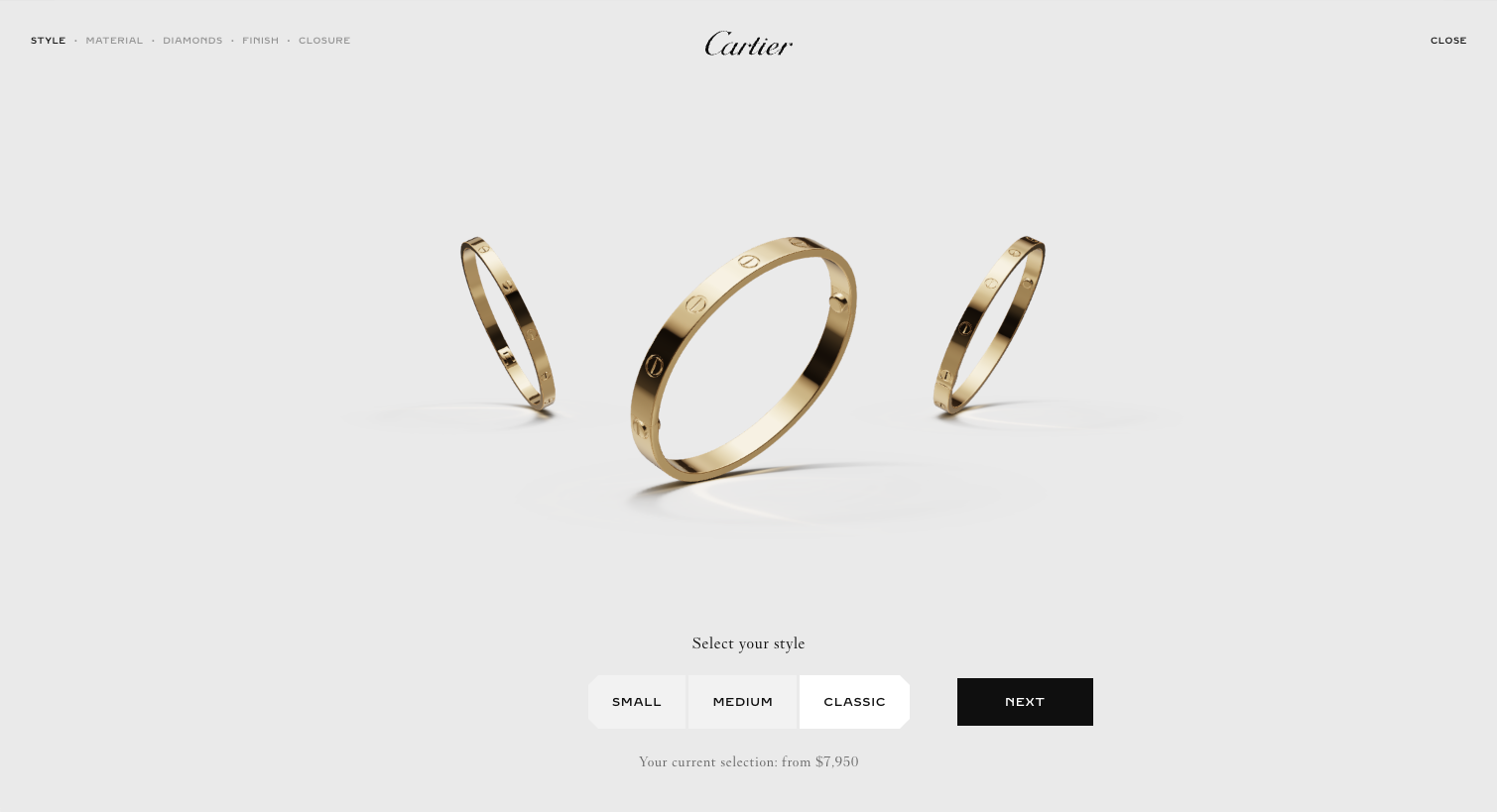
When I’m assessing a website, I’m not looking for what it contains—I’m looking for what it chooses to contain and what it chooses to leave out. Premium clients read choice-making as competence. They see intentionality as leadership. They see restraint as expertise.
This is why over-explaining, over-designing, or over-producing content sends the wrong message. High-end clients want to feel your ability to curate, not your need to impress.
Web design choices that attract clients operate at the intersection of psychology and aesthetics. They guide the visitor into a world where every detail communicates a message: “You’re in capable hands.”
Design choice #1: Visual pace
Luxury and premium audiences respond to pace more than anything else. Your site’s visual rhythm tells them everything about your brand’s maturity. A site that overwhelms, shouts, or feels chaotic automatically reads as inexperienced or mass-market.
Intentional visual pacing looks like:
Spacious compositions
Calm transitions
Editorial structure
Confident breathing room
A sense of visual flow
When the visual pace is calm and controlled, high-end clients feel taken care of. When it’s rushed or cluttered, they feel like they need to work.
A boutique architecture studio once came to me with a site full of motion, overlapping gradients, and multiple headlines competing for attention. Their work, however, was highly sculptural, serene, and grounded. The disconnect was instantly visible.
We rebuilt the pacing entirely, shifting from noise to narrative. The result? Inquiries from clients who immediately referenced the “calm confidence” of the site.
Design choice #2: Hierarchy as a trust signal
Hierarchy is the invisible structure guiding a client’s attention. It decides what they see first, what they interpret next, and what they conclude about your brand. When hierarchy is weak or inconsistent, the visitor loses trust. They feel unsure about where to look or what matters.
Web design choices that attract clients begin with a refined hierarchy:
A bold, intentional headline
A supporting line that clarifies the offer
A CTA that feels natural, not forced
Imagery that supports the narrative
Sections that unfold with purpose, not noise
Hierarchy is not simply layout. It is leadership. When a brand organizes its story with clarity, clients subconsciously understand that the brand leads with clarity in its work too.
Design choice #3: Editorial storytelling
Premium brands are not selling services—they are selling worlds. What clients invest in is not just capability, but perspective. This is why editorial storytelling creates an immediate sense of distinction.
A refined website reads like a curated publication. Each section has something to say. The pacing, the imagery, the typography—they all contribute to a story that feels lived-in, not manufactured.
For a high-end lifestyle brand I worked with, the breakthrough moment wasn’t a new color palette or photo style. It was shifting their site into an editorial narrative structure. Instead of explaining what they did, we revealed why their work mattered and how they shaped experiences. Engagement doubled, and their inquiries became more aligned than ever.
Design choice #4: Restraint as a premium design strategy
One of the most powerful web design choices that attract clients is knowing what not to include. Luxury is defined by curation, not abundance.
Premium audiences are not seeking volume—they are seeking precision. When a site is full of text, graphics, banners, or noise, the viewer interprets it as insecurity. When a site is quiet but intentional, the viewer interprets it as confidence.
Restraint shows:
You know who you are
You know who you serve
You’re not trying to appeal to everyone
Your value is inherent, not embellished
This is the foundational difference between high-ticket positioning and mid-tier design.
Design choice #5: Depth over detail
Depth is the emotional foundation of premium branding. It’s not about giving more information—it’s about giving meaningful information.
Premium audiences are perceptive. They don’t skim—they interpret. They sense nuance. They recognize when visuals and words are in conversation.
Depth is created by:
Cohesive visual language
Image selection that reflects identity
Copy that communicates perspective
Layouts that feel cinematic, not formulaic
When a site has depth, clients feel the brand’s intelligence before they understand the brand’s offer.
Design choice #6: Elevated imagery that sets tone
Imagery is often the first point of emotional connection. It communicates tone, authority, and value instantly. Poor imagery lowers perceived value more than almost anything else on a site.
Imagery that attracts premium clients is:
Understated
Editorial
Intentional
Concept-driven, not decorative
When designing a site for a luxury interior designer, I removed 80% of their existing images. They were technically beautiful but lacked narrative cohesion. We replaced them with a curated selection of atmospheric shots that showcased texture, scale, and emotion. The shift was immediate: clients described the site as “museum-level.”
Design choice #7: Typography that speaks before the words do
Typography is the brand’s attitude. It tells the viewer whether the brand is refined, bold, modern, classic, conceptual, or practical. Most brands drastically underestimate its power.
The web design choices that attract clients always include a strong typographic strategy. The typography sets the stage before the visitor has read a single word.
Premium typography is:
Confident
Legible
Editorial
Balanced
Atmospherically aligned with the brand
A well-chosen type system instantly elevates perceived value.
Design choice #8: The CTA that feels like an invitation
Premium clients don’t respond well to demands or pushy CTAs. They prefer invitations. A CTA is not just a button—it is the brand’s tonal signature.
The right CTA communicates:
Maturity
Ease
Direction
Intentionality
Instead of “Book Now,” a premium CTA might say “Begin Your Enquiry” or “Explore the Experience.” These subtle tonal shifts attract clients who are looking for an elevated, personalized engagement rather than a transactional interaction.
Design choice #9: A homepage that curates, not catalogs
The homepage isn’t an index. It’s an experience. Many websites collapse under the weight of trying to show everything, when the site should instead function like a guided gallery.
A homepage that attracts clients:
Establishes tone
Introduces narrative
Reveals depth
Curates key highlights
Leads the viewer gently into deeper pages
Your homepage determines whether the viewer continues reading or makes a mental exit. Curation keeps them moving.
Design choice #10: The signature moment
Every premium website needs a signature moment—a single, standout design element that becomes memorable. This could be:
A cinematic hero section
A beautifully crafted transition
A striking typographic lockup
A portfolio feature with editorial storytelling
A scroll experience that feels artistic rather than gimmicky
This moment doesn’t need to be dramatic. It needs to be unmistakably intentional.
A premium fashion brand once said to me, “This section is the reason we hired you.” That is the power of one unforgettable, well-executed design choice.
Case insight: The client who shifted their entire market
One of the most impactful transformations I guided involved a consultancy whose website felt tactical rather than elevated. The design choices were functional but lacked distinction. They blended into their industry instead of rising above it.
We rebuilt their site around elevated design choices:
Calm visual pace
Editorial hierarchy
Atmospheric imagery
Narrative-led positioning
A signature transition that echoed their methodology
Within a month, their inquiries shifted from budget-conscious shoppers to high-caliber clients who referenced the site as the deciding factor.
This is what intentional design does: it changes who shows up.
Beyond design: The audience you attract is the audience you design for
The web design choices that attract clients ultimately reflect clarity of intention. If a brand desires high-end clients but designs for general audiences, the disconnect becomes visible instantly. Premium clients can tell when they’re not the intended audience.
Design is not decoration.
Design is filtration.
Premium clients want to feel like the site was built for them—visually, emotionally, and strategically.
Conclusion
Web design choices that attract clients are not about trends, technology, or visual tricks—they’re about intention, clarity, and the ability to articulate identity through design. Premium brands succeed because every decision is strategic. Every visual choice is curated. Every narrative element serves a purpose.
When design decisions reflect leadership, high-end clients feel it immediately. They don’t need to be convinced—they simply recognize that the brand operates at the level they expect.
If your upcoming consultation is the moment you want to shift into a more premium market, your design choices can do the heavy lifting long before you speak to your prospects. The clients you want are already looking for brands that communicate through refinement, narrative, and elevated design.
Your website can either invite them—or lose them.
Flexible custom packages.
Three tiers scoped for where you are and where you're going. Not sure which fits? Book a call — we'll go over your project together and make sure you land on the right one.
Launch build
Look credible, fast.
$2,500starting from
A focused, conversion-aware website that gives you confidence sharing your link anywhere.
- Up to 4 structured pages
- 1 focused revision round
- Fully mobile-optimised
- SEO foundations included
- Launch-ready in 3 weeks
- 30 days email support
Best for businesses launching or replacing an outdated site.
Start your projectAuthority build — Most popular
Elevate your brand.
$4,000starting from
A refined, strategically designed website that positions your business as established and credible.
- Everything in Launch, plus:
- Up to 7 pages
- Custom styling & layouts
- 2 revision rounds
- Blog integration
- 5-week build timeline
- Training walkthrough
Best for growing businesses that want their site to reflect their expertise.
Start your projectScale build
No limits. Full depth.
$8,000starting from
A fully bespoke build with advanced functionality, custom code, and no artificial constraints.
- Everything in Authority, plus:
- Unlimited pages
- Unlimited custom code
- Unlimited revisions
- Plugin costs covered
- Priority support
- Complete SEO setup included
Best for established businesses investing in a long-term digital foundation.
Start your project
Mikkel Calmann
I’m Mikkel Calmann, a certified Squarespace designer and Circle Member. We’ve worked with businesses of all sizes, crafting strategic websites that look great and perform even better. If you’d like to discuss a project, feel free to email us at mikkel@typza.com or reach out to us here. You can also book a free 15-minute consultation here.