
How minimal web design layouts increase client trust
Minimal web design layouts are more than aesthetic choices, they are strategic tools that communicate clarity, authority, and credibility. By reducing visual clutter and emphasizing intent, they foster trust and guide premium clients toward engagement.
Written by Mikkel Calmann
Dec 28, 2025

Why minimal web design layouts build credibility
In a saturated digital world, visitors form judgments about your brand in seconds. Overloaded interfaces, cluttered navigation, and excessive visual elements can overwhelm users and undermine perception. A minimal web design layout communicates confidence and authority. Every space, every visual cue, and every interaction is intentional, signaling to visitors that the brand values clarity and precision.
High-end clients respond to restraint because it implies mastery. When a website is stripped to its essentials, it demonstrates that the brand is thoughtful, deliberate, and professional. A minimal layout creates a sense of calm authority, allowing the message to resonate without distraction. For brands positioning themselves in the premium tier, this approach is not optional, it is essential.
How minimal web design layouts influence perception
Trust is largely psychological, and minimal design directly influences perception by controlling visual hierarchy and focus. When elements are reduced to the essentials, users are guided through a carefully orchestrated journey. Typography, color, imagery, and spacing are not decorative, they are communicators of intent.
For example, a minimal layout often places a single hero statement prominently, followed by clean visual cues that guide users deeper into the brand narrative. There are no competing calls-to-action, no unnecessary animations, and no distractions. Visitors understand instantly what the brand represents and what is expected of them, which strengthens credibility and fosters confidence in the offering.
Whitespace plays a critical role. It is not empty; it is active, creating breathing room for the brand to communicate, giving prominence to what truly matters, and signaling that the brand is selective, precise, and high-value.
Minimal web design layout in action
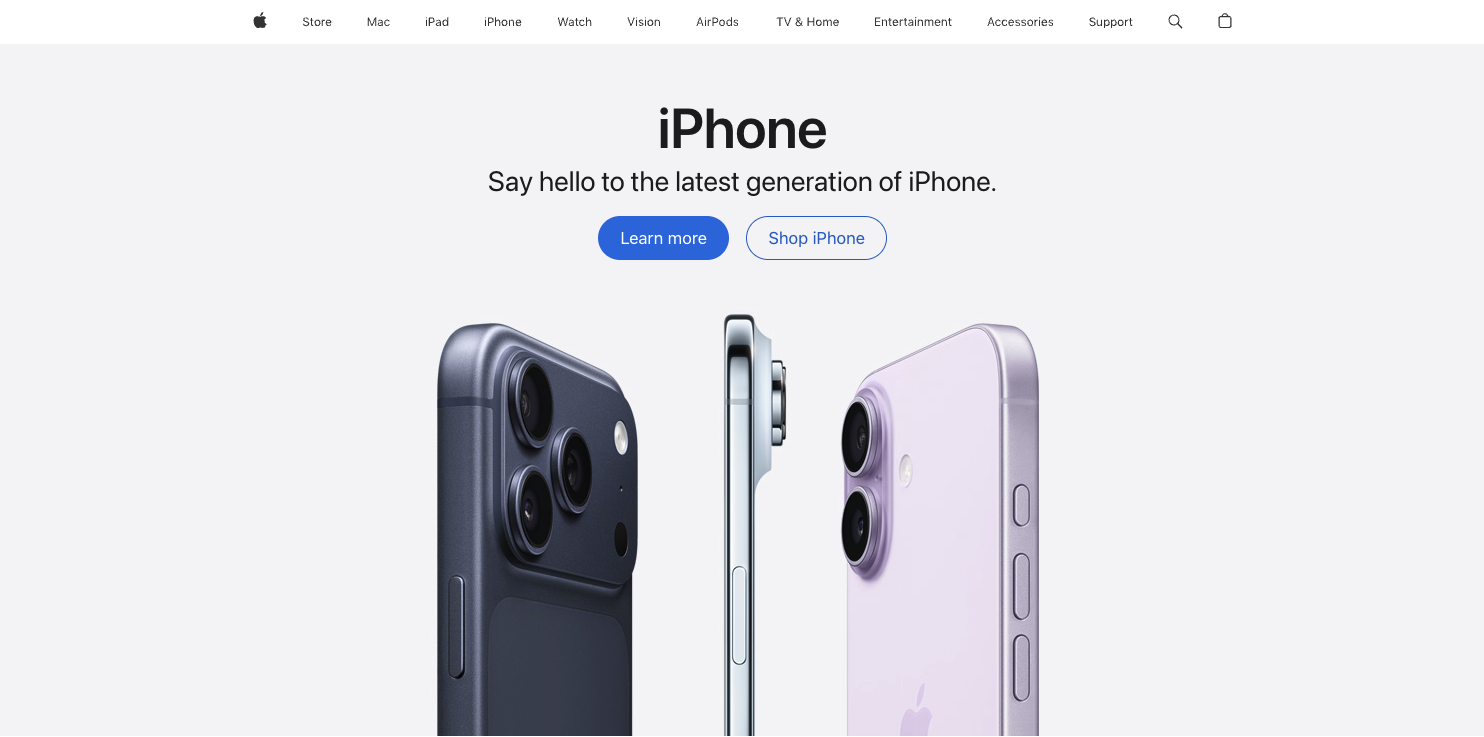
Several premium brands have embraced minimal web design layouts to reinforce trust. Consider the website of Apple, where every scroll, visual, and interaction feels deliberate. The homepage is uncluttered, emphasizing product excellence and brand ethos rather than overwhelming visitors with options. Every section communicates quality, reliability, and authority, demonstrating how minimalism builds trust while sustaining desire.
Another example is Aesop, the luxury skincare brand. Their website relies on subtle typography, restrained color palettes, and generous spacing. Visual storytelling is achieved through carefully curated imagery that conveys quality and care. The minimal layout ensures the focus remains on product value and brand integrity, making visitors feel confident in engaging with the brand.
Even in creative industries, websites like Sagmeister & Walsh use minimalism strategically. By removing visual clutter, they highlight portfolio work and narrative storytelling, allowing potential clients to experience the sophistication and refinement of the agency without distraction.
How minimal layouts enhance usability
Beyond aesthetics, minimal web design layouts improve usability, which in turn strengthens trust. Simplified navigation, intuitive flows, and intentional interactions reduce cognitive load. When visitors can find information effortlessly, their confidence in the brand increases.
A minimal layout often uses clear hierarchy to guide attention naturally from the hero section to value propositions, case studies, and engagement opportunities. Subtle transitions and micro-interactions reinforce this flow, creating a seamless journey that feels premium at every touchpoint.
For high-ticket clients, the perception of efficiency and thoughtfulness matters as much as the visual aesthetic. A minimal layout communicates that the brand respects the user’s time, understands their needs, and delivers with confidence.
Case study: How a minimal layout elevated a boutique brand
A boutique consultancy approached a web design agency to transform its website. The previous site was overcrowded, confusing visitors and undermining authority. The redesign focused on a minimal layout that emphasized hierarchy, whitespace, and refined typography.
The homepage opened with a concise brand statement, followed by curated portfolio highlights and testimonial sections. Every visual and interactive element was intentional, reinforcing credibility without overwhelming the visitor. The result was a measurable increase in high-value inquiries and a stronger perception of the brand as a premium authority in its field.
This example demonstrates how minimal web design layouts function strategically. They are not simply about removing elements—they are about thoughtful reduction to maximize impact and trust.
Visual storytelling in minimal design
Minimal design is a powerful vehicle for visual storytelling. By removing unnecessary decoration, images, typography, and color become narrative tools. Photography is curated to tell a story, type hierarchy conveys emphasis and tone, and motion is applied subtly to guide the eye.
For instance, a luxury interior design firm might use minimal layouts to showcase portfolio work. Full-width imagery paired with concise captions allows viewers to focus on the craft, materials, and design philosophy. Each scroll tells a story, and the minimal layout ensures that nothing detracts from the message.
In this way, minimal web design layouts create an immersive, aspirational experience that reinforces trust and pre-qualifies visitors who are aligned with high-ticket positioning.
Why premium brands prefer minimalism
Minimalism in web design signals refinement, discipline, and intentionality. For high-ticket brands, every visual decision reflects the overall brand promise. A minimal layout communicates that the brand is selective, discerning, and confident in its value.
By contrast, cluttered designs can feel desperate or amateurish, eroding confidence. High-end clients are trained to recognize these subtleties and gravitate toward experiences that feel effortless yet curated. Minimal web design layouts create a psychological cue: the brand is credible, trustworthy, and capable of delivering quality at every level.
The strategic impact of minimal layouts
In addition to building trust, minimal layouts improve conversion and engagement. By guiding attention through a clear visual hierarchy, visitors understand what the brand offers and how to interact without distraction. Calls-to-action appear natural rather than forced, and the journey feels intuitive.
High-value clients respond to this level of clarity. They appreciate the effortless elegance, the absence of noise, and the implicit promise that the brand can deliver with precision. Minimal web design layouts are not about simplicity alone—they are about clarity, authority, and premium positioning in every detail.
Conclusion
Minimal web design layouts are a critical tool for premium brands seeking to inspire trust, command authority, and attract high-ticket clients. By emphasizing clarity, hierarchy, and visual storytelling, these layouts create websites that feel deliberate, confident, and refined.
When executed well, minimal design reduces cognitive load, strengthens perception, and guides visitors through a carefully crafted narrative. Luxury brands like Apple, Aesop, and Sagmeister & Walsh exemplify how intentional restraint communicates value and builds credibility.
For boutique and high-end brands, adopting a minimal layout is not merely an aesthetic choice, it is a strategic investment in client trust, brand authority, and premium positioning. Every visual decision reinforces the message: this is a brand that knows its value, communicates with precision, and delivers excellence at every digital touchpoint.
Flexible custom packages.
Three tiers scoped for where you are and where you're going. Not sure which fits? Book a call — we'll go over your project together and make sure you land on the right one.
Launch build
Look credible, fast.
$2,500starting from
A focused, conversion-aware website that gives you confidence sharing your link anywhere.
- Up to 4 structured pages
- 1 focused revision round
- Fully mobile-optimised
- SEO foundations included
- Launch-ready in 3 weeks
- 30 days email support
Best for businesses launching or replacing an outdated site.
Start your projectAuthority build — Most popular
Elevate your brand.
$4,000starting from
A refined, strategically designed website that positions your business as established and credible.
- Everything in Launch, plus:
- Up to 7 pages
- Custom styling & layouts
- 2 revision rounds
- Blog integration
- 5-week build timeline
- Training walkthrough
Best for growing businesses that want their site to reflect their expertise.
Start your projectScale build
No limits. Full depth.
$8,000starting from
A fully bespoke build with advanced functionality, custom code, and no artificial constraints.
- Everything in Authority, plus:
- Unlimited pages
- Unlimited custom code
- Unlimited revisions
- Plugin costs covered
- Priority support
- Complete SEO setup included
Best for established businesses investing in a long-term digital foundation.
Start your project
Mikkel Calmann
I’m Mikkel Calmann, a certified Squarespace designer and Circle Member. We’ve worked with businesses of all sizes, crafting strategic websites that look great and perform even better. If you’d like to discuss a project, feel free to email us at mikkel@typza.com or reach out to us here. You can also book a free 15-minute consultation here.