




Industrial marketing has an unusual problem: the people you most need to reach are the people most suspicious of marketing. Engineers, plant managers and technical buyers want specifications, tolerances, materials, certifications and proof that a part or process works in conditions like theirs. Adjectives like "innovative" and "world-class" don't just fail to persuade them. They suggest a company with nothing concrete to say.
Most of these buyers also do their research alone, long before they contact anyone. By the time they send an enquiry, they have usually narrowed their list. So the job is to be on that list, which means giving them what they need to verify you without a phone call.
Here are nine strategies that do that, roughly in the order we would tackle them. We design websites for industrial companies, manufacturers and engineering firms, so where we mention how we do something, those are our own terms.
Why the right approach matters for an industrial company
Industrial sales cycles are long, involve several people and often start with a search for a specific problem, material or part. A design engineer may find you, a procurement manager may compare you, and a plant director may sign off. Each needs something different, and none of them want to be sold to. The companies that win are the ones that make research easy for all three.
Give engineers what they search for
1. Specification pages for every product or capability
Each product, material or process should have its own page with the details an engineer checks first: dimensions, tolerances, materials, operating conditions, standards met and downloadable data sheets. If something depends on the application, say what it depends on.
Do this: pick your three best-selling products and check that an engineer could decide whether each one fits without contacting you.
2. Application pages written by problem
Engineers often search by the problem they need to solve, not your product name. A page for each common application, explaining the challenge, the conditions and how your product or process handles it, meets them where they start.
Do this: list the five problems customers most often describe on first contact, and write a page for each in their words.
3. Downloads that save engineering time
CAD models, data sheets, installation guides and compliance certificates are some of the most useful things an industrial site can offer. Make them easy to find and, where possible, free to download without a form. Each one saves a buyer time and keeps your part in their design.
Do this: count how many clicks it takes to download your most popular data sheet. Aim for two.
Prove you can deliver
4. Case studies with real conditions and results
Technical buyers trust evidence. A short case study describing the application, the conditions, what you supplied and what changed is more persuasive than any claim on your homepage. Name the industry and the problem even if you can't name the customer.
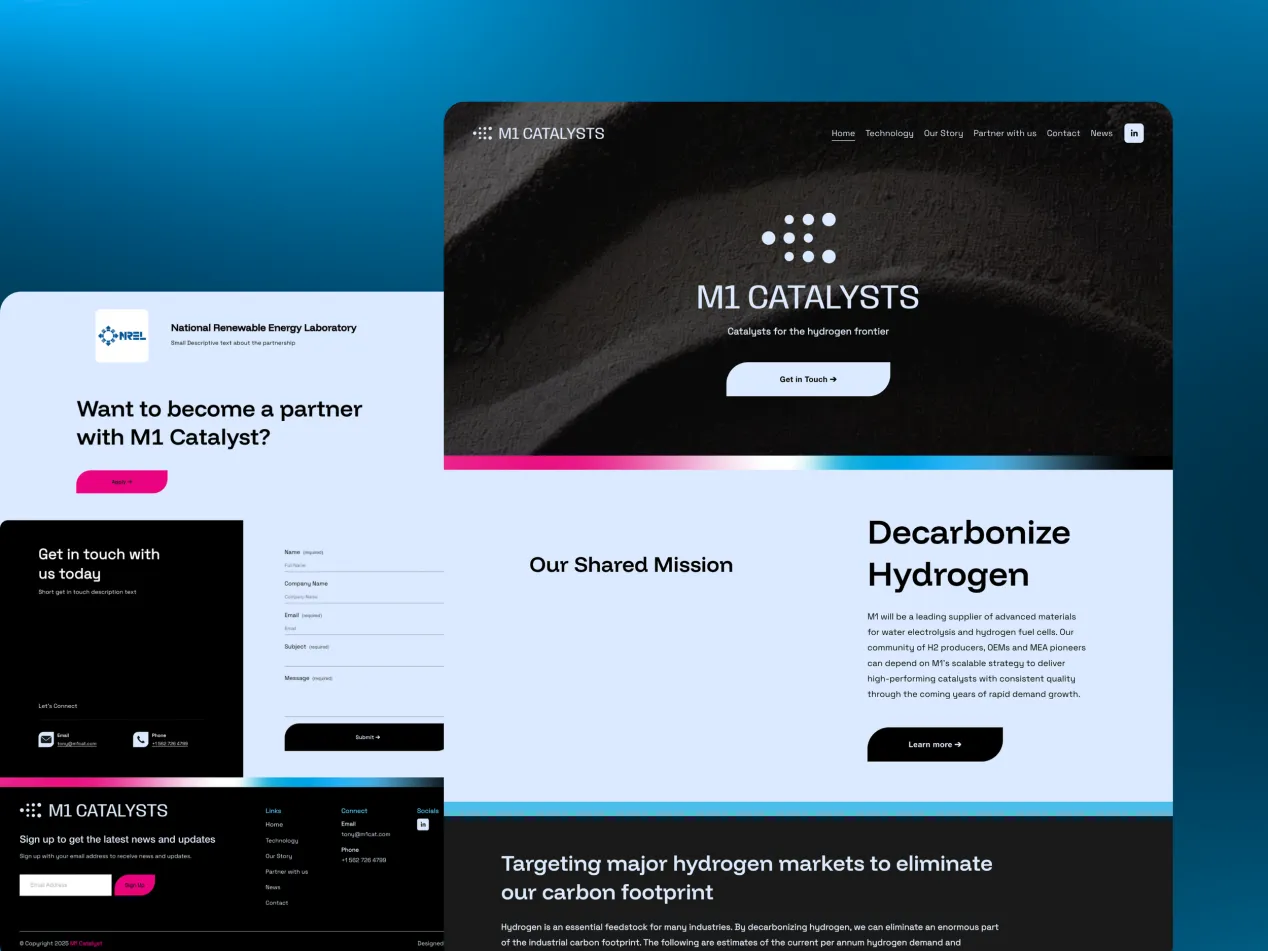
We saw this with M1 Catalysts, an industrial catalyst supplier. Their old site spoke in marketing language to engineers who wanted specification and application detail. We rewrote it for the engineer, with real detail a buyer could verify alone, and structured it with schema and clear question-and-answer formatting so search engines and AI answers could cite it.
Do this: write up one recent project in under 400 words, with the conditions and the outcome.
5. Certifications, standards and quality processes in plain view
ISO certificates, industry approvals, testing procedures and quality controls are often decisive for procurement teams. Put them on a dedicated page and link to it from every product page, rather than burying them in a footer.
Do this: list every certification a procurement team might ask for and check each one is on your site with its scope and a current date.
Get found by the right people
6. Content that answers technical questions
The questions your engineers answer on the phone every week are the questions buyers type into search. Turning them into clear, specific articles brings in people at the start of their research. Google's guidance on helpful, people-first content says its systems aim to reward content made to benefit people rather than to rank. Detailed technical answers are exactly that.
Do this: ask your sales engineers for the ten questions they answer most often, and publish one answer a fortnight.
7. Search basics on every page
Specific page titles, clear headings, fast loading and a sensible structure help search engines understand what each page covers. Google's SEO starter guide covers the basics and notes that changes can take from a few hours to several months to show, so start early.
Do this: check that every product and application page has a unique title naming the product and its main use.
Turn research into enquiries
8. A quote or sample request that respects the buyer
Industrial buyers often know exactly what they need. Let them request a quote, a sample or a technical call with a short form that asks for the essentials, and let them attach drawings. Say how quickly you reply, and keep to it.
Do this: submit your own quote form and time how long it takes to fill in and how long the reply takes.
9. Separate routes for engineers, buyers and distributors
An engineer wants specs, a procurement manager wants lead times, certifications and terms, and a distributor wants partnership details. A homepage that lets each one choose a route quickly serves all three better than one generic message.
Do this: ask someone from each group to find what they need on your site, and note where they get stuck.
Measure what matters
Track enquiries, quote requests, sample requests and downloads by source, not just visits. Ask every new enquiry how they found you and which pages helped. Industrial sales take time, so review the numbers quarterly and follow enquiries through to orders where you can. A page that brings in five qualified enquiries a quarter is worth more than one that brings in hundreds of visits from students.
It also helps to talk to your sales team regularly. They hear which pages buyers mention, which questions come up again and again and which competitors are on the same shortlist. That is the best source of new pages you will find.
Where to start if you have one quarter
If you only have time for a few things this quarter, rewrite your three most important product pages with full specifications, publish one case study with real conditions and results, make your data sheets downloadable in two clicks and shorten your quote form. Those changes help every buyer who reaches your site, whichever channel brought them, and make every trade show, email and sales call work harder.
Red flags in industrial marketing
Marketing language on technical pages
"Cutting-edge solutions" tells an engineer nothing. Replace adjectives with specifications.
Everything behind a form
Gating every data sheet and CAD file puts off engineers who are still comparing suppliers. Gate selectively, if at all.
Stock photos of factories
Generic images of machinery that isn't yours undermine trust. Real photos of your facility, team and products are far more convincing.
No mention of lead times or capacity
Procurement teams need to know whether you can deliver. If you can't give exact figures, explain what they depend on.
Questions to ask before hiring help
Have you worked with industrial or engineering companies before? How will you learn our products and our buyers? Who writes the technical copy, and who checks it? How will data sheets and CAD files be managed? How will we measure quote requests from the site? Who owns the website and content?
The short version
Technical buyers research alone and distrust marketing language. Specification pages, application pages, easy downloads, real case studies, visible certifications, technical content, search basics, a respectful quote form and separate routes for each buyer do most of the work. Give engineers what they need to verify you without a call, and the enquiries that arrive will be further along. Our page on website design for industrial companies shows how we build these sites.
FAQ
What is the best marketing strategy for an industrial company?
Give technical buyers what they need to verify you without a call: full specification pages, application pages, easy downloads, real case studies and visible certifications, then make the quote request simple.
How do industrial companies generate leads?
Through search, trade shows, distributors, referrals and direct outreach, all sending buyers to a website that answers technical questions and makes quote and sample requests easy.
Should industrial companies gate their data sheets?
Usually not. Engineers comparing suppliers often skip a supplier rather than fill in a form. Keep core data sheets open and gate only in-depth resources, if anything.
What should an industrial website include?
Specification pages, application pages, downloadable data sheets and CAD files, case studies, certifications, lead time information and short forms for quotes, samples and technical calls.
How long does SEO take for an industrial company?
It varies. Google says changes can take from a few hours to several months to show. Specific technical content tends to attract smaller but more valuable audiences, so measure enquiries, not just visits.
How much does an industrial website cost?
It depends on page count, technical copy and features such as product catalogues. Our Rebuild projects start from $9,500, with the exact price agreed in writing before work starts.