The best construction websites mostly belong to national contractors with marketing departments, and lists of them usually stop at "great drone footage." That doesn't help a regional builder with a project manager who updates the site between site visits. So for each website below we picked one decision that wins work, and that a smaller construction company could copy without a large budget.
Everything described here is visible on the live sites as of November 2026. Contractors change their featured projects often, so we focus on the structure and wording rather than whichever job is on the homepage this month.
What a construction website has to do
A construction company website serves three audiences at once. Clients want proof you have built something like their project, on time and safely. Trade partners and suppliers want to know how to work with you and whether you pay on time. And future employees want to know what it is like to work for you, which matters more every year as skilled labour gets harder to find.
Most construction sites serve the first audience with a gallery and ignore the other two. The best construction websites give each audience a clear route, and they back their claims with specific projects, numbers and people.
Here are eight construction company website examples, grouped by what they teach.
Construction websites that make projects easy to find
1. DPR Construction: work sorted by what clients build
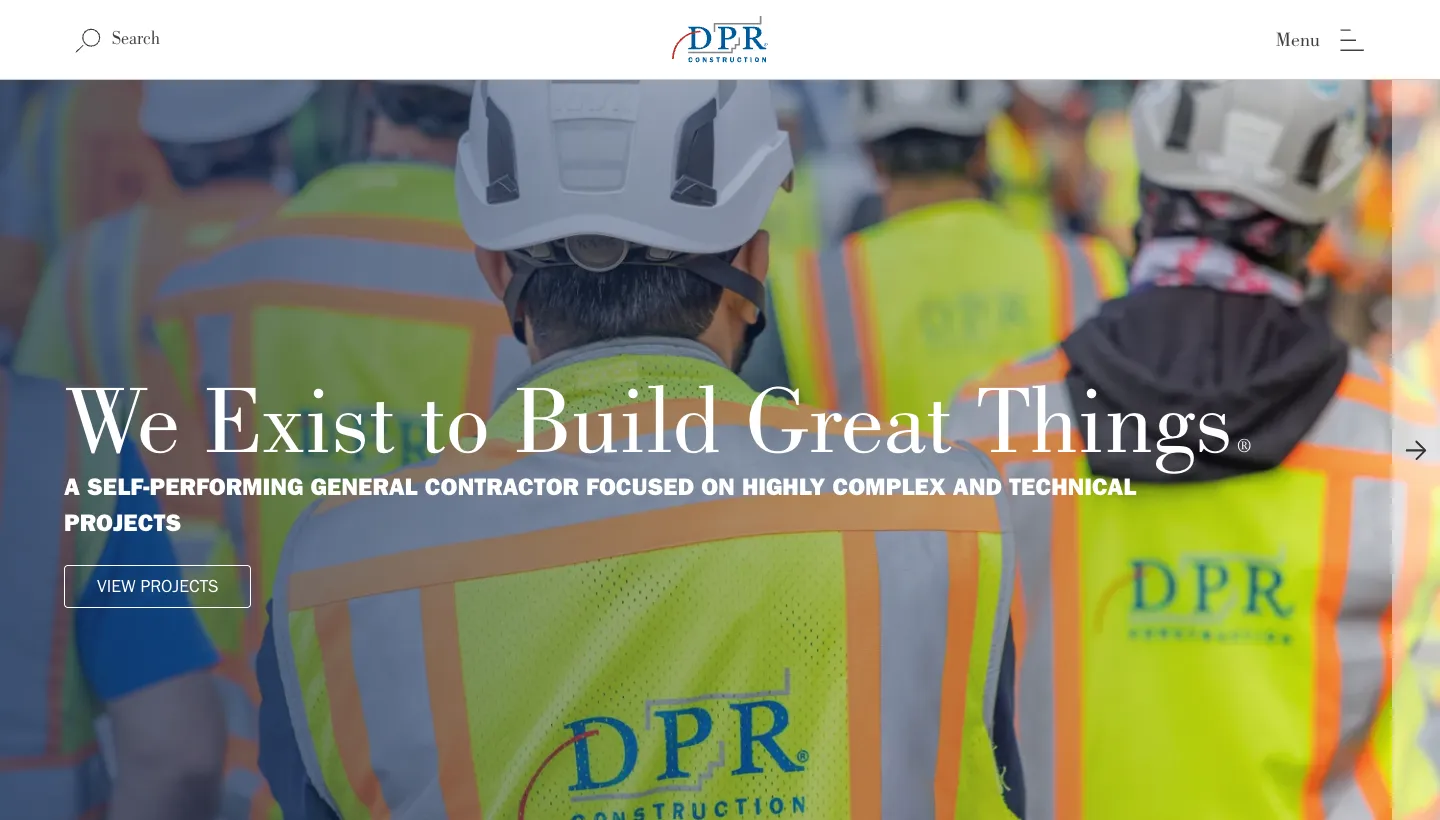
DPR Construction opens with "We Exist to Build Great Things" and a one line description: "A self-performing general contractor focused on highly complex and technical projects." Its menu separates "What We Build" (healthcare, higher education, hospitality, manufacturing, mission critical, office, research and development) from "How We Build" (safety, preconstruction, prefabrication, self-perform work and more). Each sector has a short line, such as "Delivering more than just a hotel."
A hospital board and a hotel developer care about different things. Sorting by sector lets each one find their own kind of project, and the line per sector shows DPR understands what that client is really buying.
Borrow this: split your menu into what you build and how you build it, and write one line for each sector that speaks to that client's main worry.
2. Mortenson: projects with a place
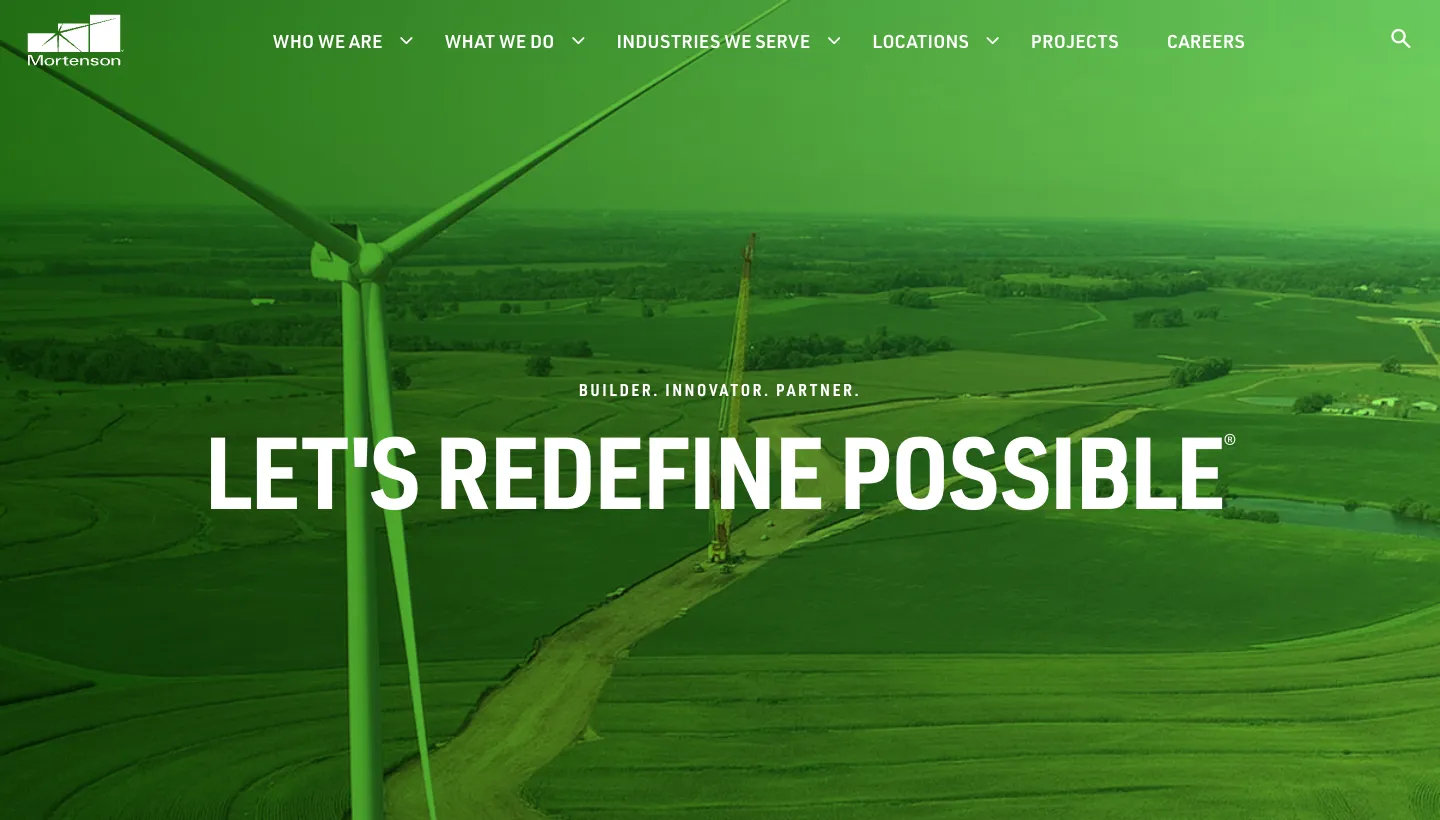
Mortenson opens with "Builder. Innovator. Partner." and "Let's Redefine Possible." Projects appear as image cards, each with the city, state and project name, and the menu lists the industries it serves and its office locations. A client quote sits on the homepage: "Mortenson was in this with us."
Construction is local even for national firms. Showing the place on every project card lets a client see straight away whether you have built near them, and the office list shows who they would actually work with.
Borrow this: put the town or city on every project in your portfolio. "We've built three of these within ten miles of you" is a strong argument.
3. Bechtel: a history that proves capability
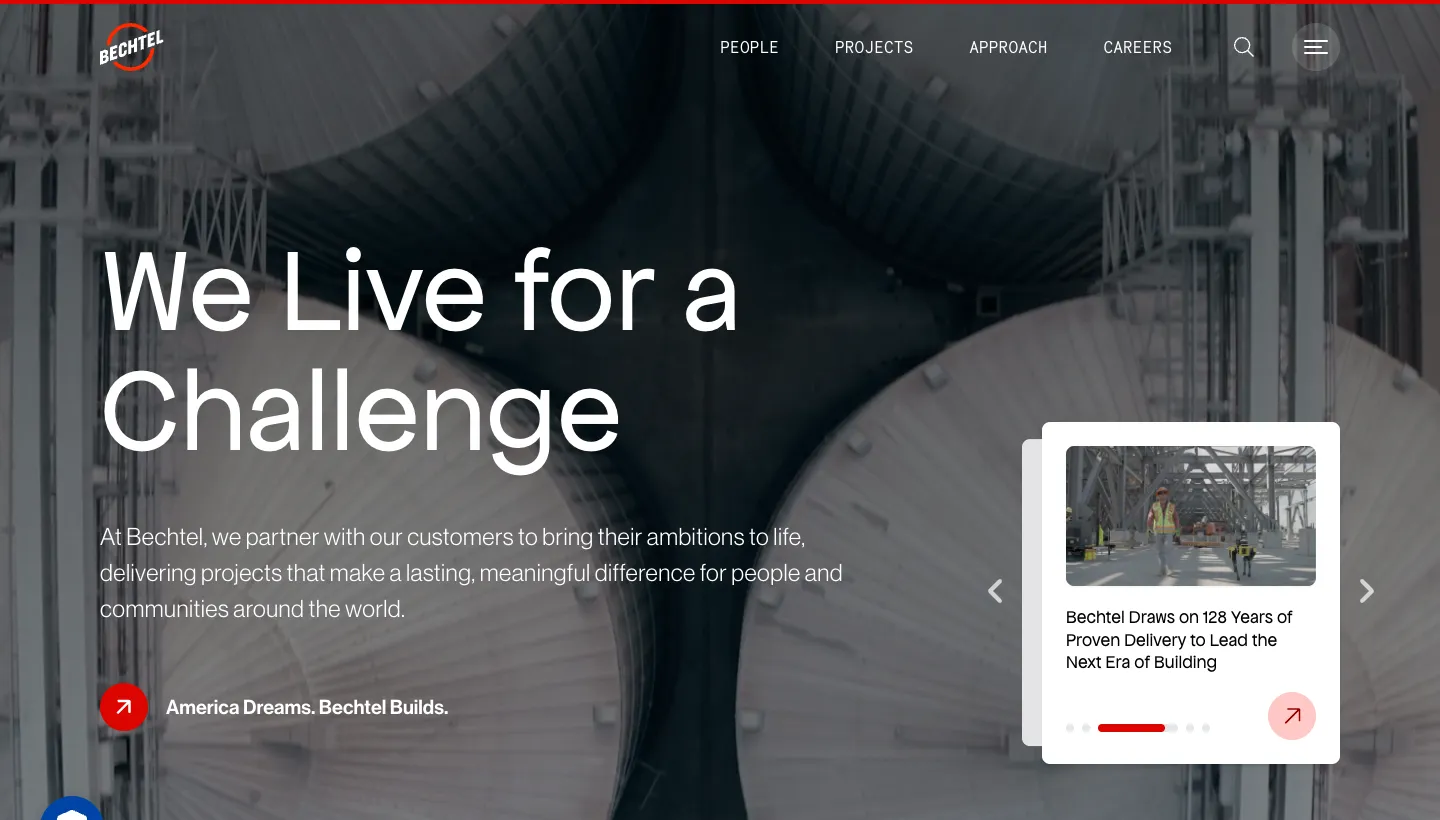
Bechtel opens with "We Live for a Challenge." Featured projects each show a location, a name and a short description, and projects can be browsed by market and region. A "Building History" section runs decade by decade from the 1930s, each with a landmark project, and some projects carry specific outcomes, such as the number of homes a power plant serves.
A long track record is only convincing when it is specific. A timeline of named projects turns "decades of experience" into something a client can check.
Borrow this: if you have been building for years, show it as a list of named projects by year, not as a number in your tagline.
Construction websites that back claims with proof
4. Gilbane: the numbers up front
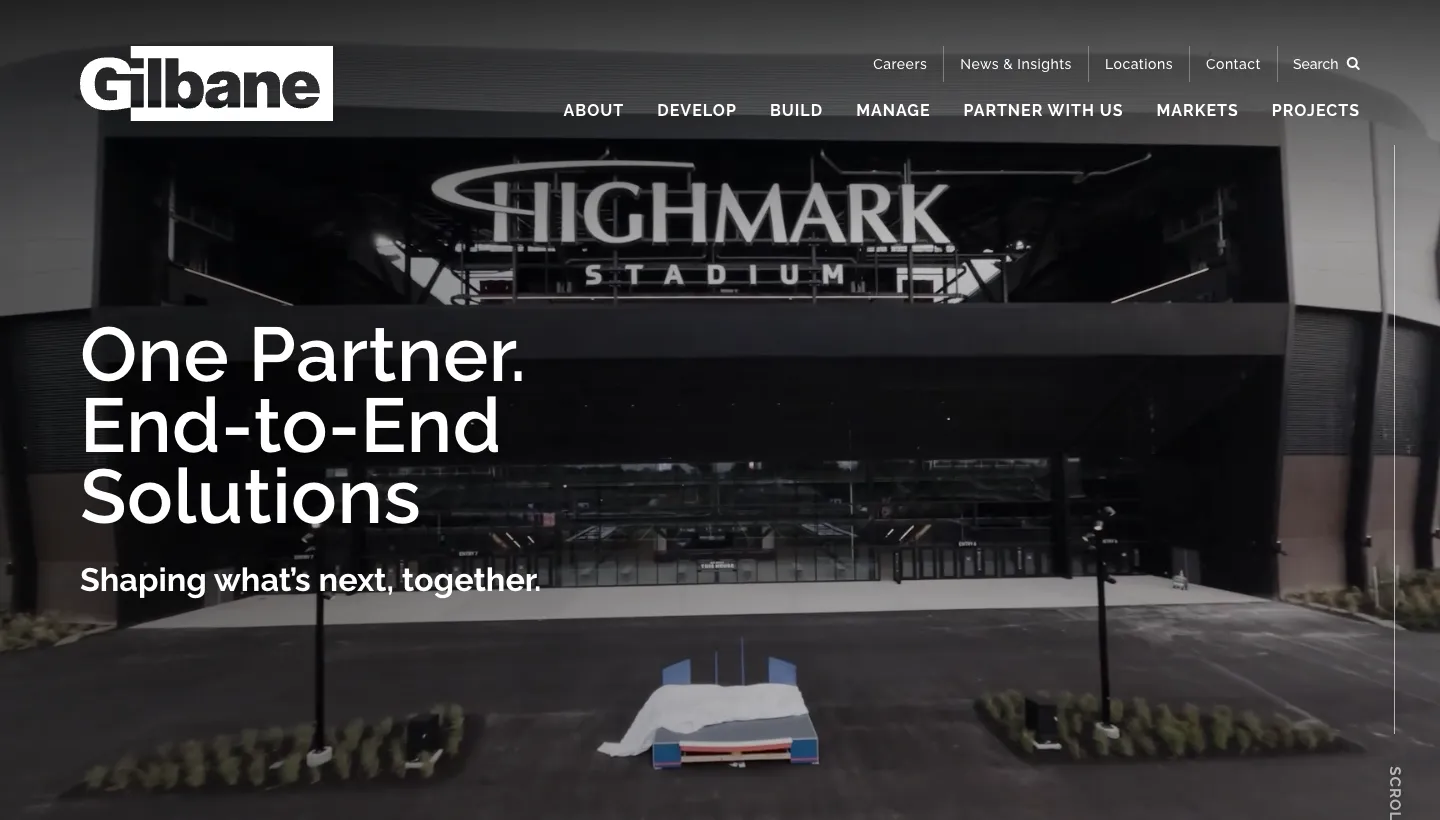
Gilbane opens with "One Partner. End-to-End Solutions" and organises its services into three pillars: develop, build and manage. A row of figures follows, covering years as a family business, employees, countries and office locations, alongside the line "Family-owned and built on trust since 1870." Project cards carry a sector tag, and a drone video shows a stadium build.
A row of simple figures answers the question every client has about a contractor, "are you big and stable enough for this?", in a few seconds.
Borrow this: pick four facts that show stability, such as years trading, projects completed, team size and repeat clients, and put them in one row on your homepage.
5. Clark Construction: a concrete detail in every project
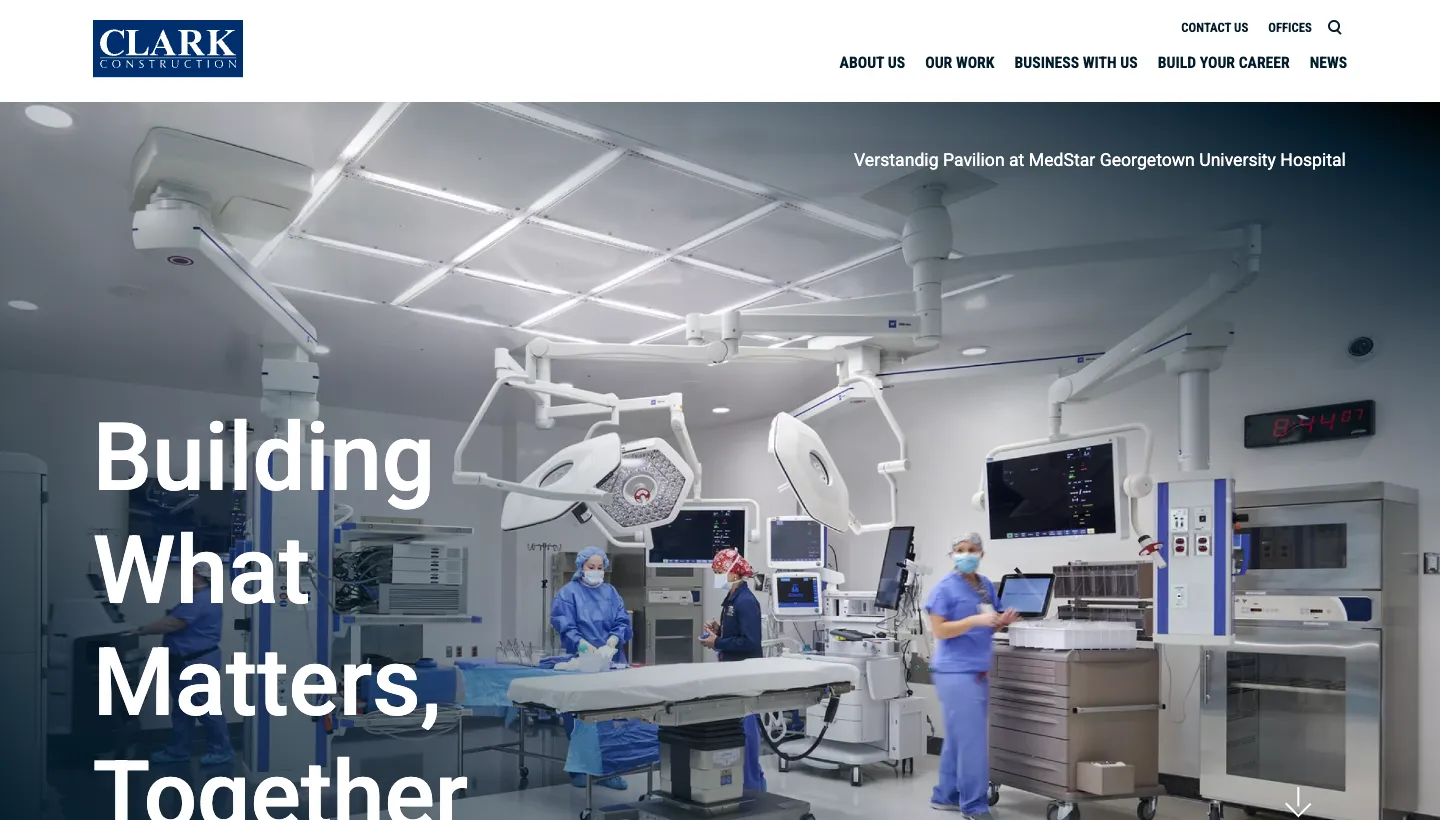
Clark Construction opens with "Building What Matters, Together" and the line "Hospitals where we heal. Museums that inspire. Highways that connect us." Featured projects alternate image and text, and each description includes a concrete detail, such as a LEED Platinum certification or the size of a facility. Named employees with their titles are quoted on the homepage.
A specific detail is what makes a project description believable. And quotes from named superintendents and project executives show clients the people who would actually run their job.
Borrow this: give every project at least one hard fact (size, certification, timeline or budget range) and show the people who lead your sites by name.
6. McCarthy: the difference stated plainly
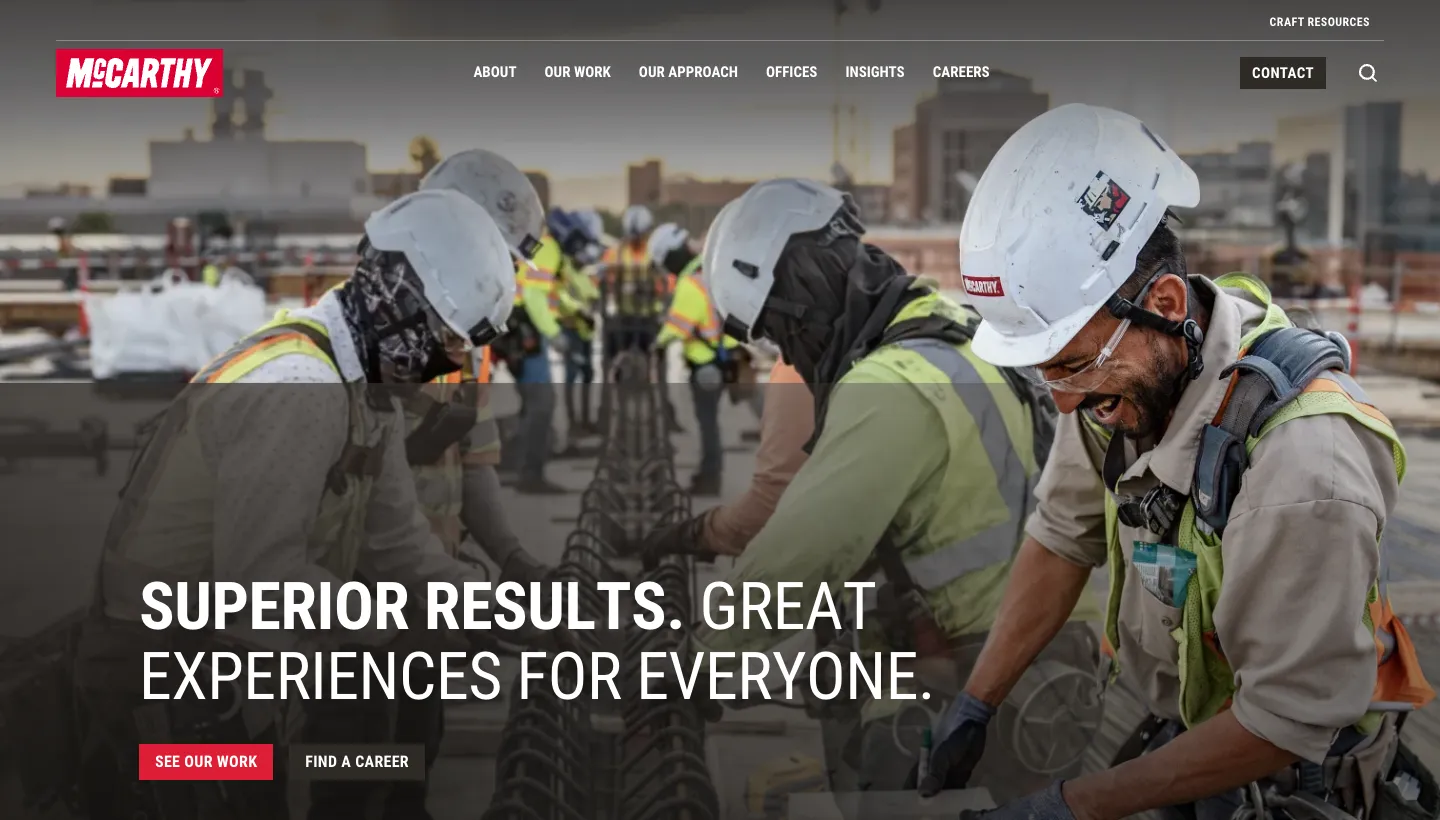
McCarthy opens with "Superior Results. Great Experiences for Everyone." and "We Love to Build." It says plainly that it is 100% employee owned, and a "Solving Problems Before They Happen" section lists what it does differently, including safety and virtual design and construction. Work is split into buildings, infrastructure and expertise.
Many contractors claim the same things. McCarthy leads with a fact a competitor can't copy, employee ownership, and connects it to how the company works.
Borrow this: find one fact that is true of you and not of your competitors (ownership, a specialism, a way of working) and say it near the top.
Construction websites that serve more than clients
7. Turner Construction: a door for every audience
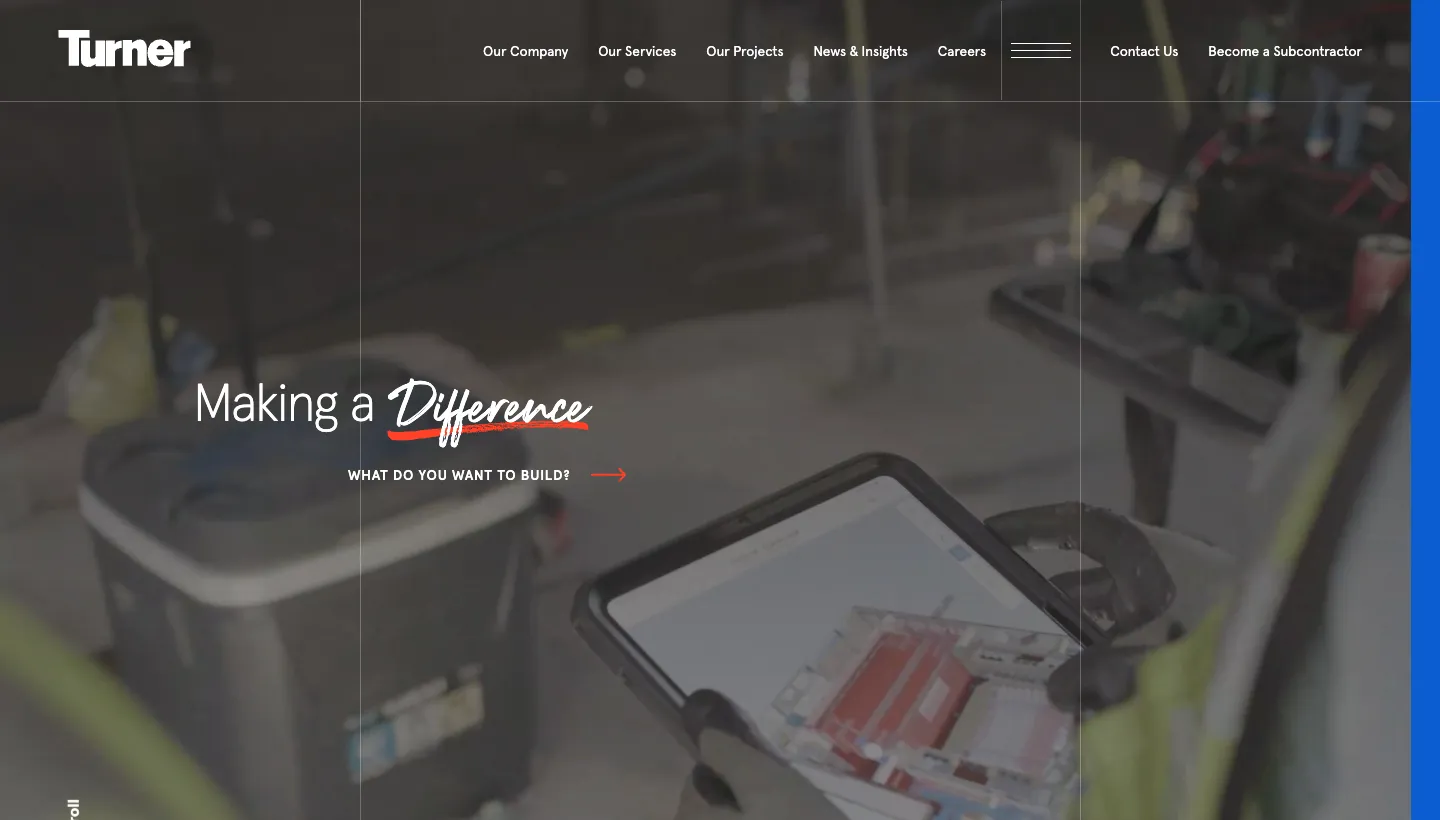
Turner Construction asks "What do you want to build?" and offers three answers: a project, a career or a better future. "Become a Subcontractor" sits in the top bar, and the menu includes safety and wellness, a cost index and training resources.
Clients, recruits and trade partners all land on the same homepage. Turner's three choices send each one the right way immediately, and the subcontractor link makes it easy for the trades it depends on to get in touch.
Borrow this: add a clear route for trade partners and job seekers, not only clients. A "Work with us" page for subcontractors and a "Careers" page can fill your pipeline and your crews.
8. Pinnacle Homes: answering the fear, not just showing the house
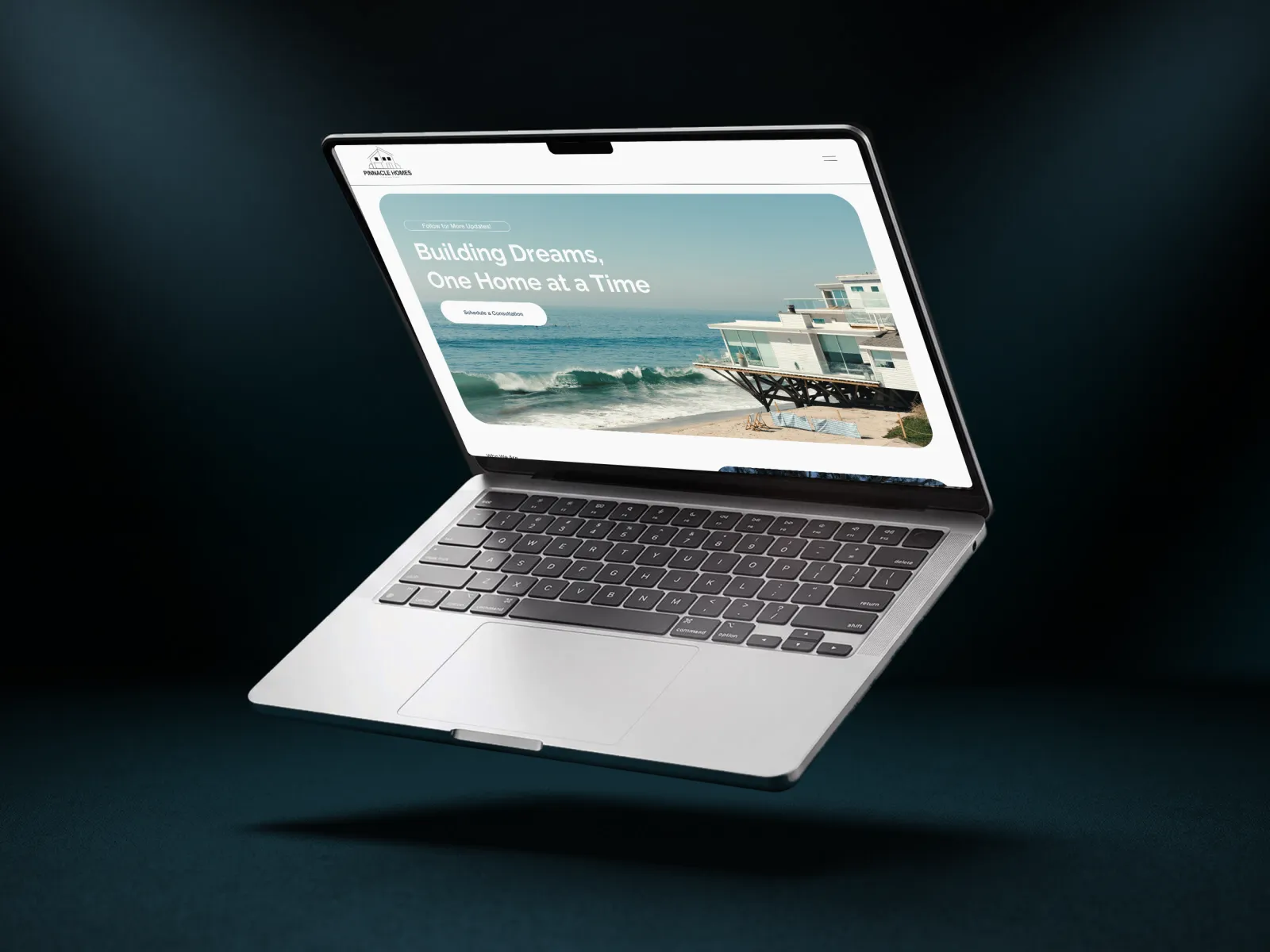
Pinnacle Homes is a luxury home builder we designed a website for. Commissioning a home is among the largest decisions a person makes, and the fear is not about looks, it is about process: will it run late, will it run over, will anyone answer the phone in month seven? Most builder websites answer none of that and lead with finished photography.
So the site leads with the finished work, shown large, then immediately answers the process questions: what the stages are, what happens at each one, and what the client handles versus what Pinnacle handles. There are two paths to get in touch, one for people ready to build and one for those still exploring, and the team adds completed projects themselves. Enquiries now arrive from people who already understand the process and the commitment. The Pinnacle Homes case study has the full story.
Borrow this: after your gallery, explain your process stage by stage, including who does what. It answers the worry that actually delays an enquiry.
What the best construction websites have in common
Across all eight, the same habits show up.
Projects are easy to find by type and place
DPR sorts by sector, Mortenson by place, Bechtel by market and region. A client should find a project like theirs in seconds.
Claims come with specifics
Gilbane's figures, Clark's certifications, Bechtel's outcomes. Specific facts are believable; "quality and integrity" is not.
People are visible
Clark quotes named employees, Mortenson quotes a named client. Construction is a people business, and showing them builds trust.
Every audience has a route
Clients, trade partners and recruits each get a clear way in. Turner's three choices are the clearest example.
The short version
The best construction websites aren't the ones with the biggest drone budgets. They are the ones that make projects easy to find by type and place, back every claim with a specific fact, show the people behind the work and give clients, trade partners and recruits their own way in. A regional builder can do every one of these: a sector menu, a location on every project, one hard fact per job, a process page and a page for subcontractors and careers.
Start with your project pages. If each one doesn't say where it is, what it was and one hard fact about it, fix those first. For more on standing out, read our piece on construction company website differentiation.
FAQ
What should a construction company website include?
Your projects, sorted by type and location, with a hard fact about each one; the services you offer; your process from first meeting to handover; your safety record and accreditations; the people who lead your projects; and clear routes for clients, subcontractors and job seekers.
How do construction companies show their work online?
With project pages, not just a gallery. Each project should show where it is, what was built, one or two hard facts such as size, timeline or certification, and photos of the finished work. A client quote or a short story about a challenge you solved makes it stronger.
Should a construction website show prices?
Most construction projects are priced individually, so exact prices are rarely possible. You can still explain what affects the cost, typical ranges for common jobs if you are comfortable sharing them, and how your quoting process works.
Why do construction companies need a careers page?
Skilled labour is hard to find, and many good candidates check a company's website before applying. A careers page that shows the work, the people and the training you offer can help fill your crews.
How can a home builder make clients feel confident before they enquire?
Explain the process clearly: the stages of a build, what happens at each one and who is responsible for what. For Pinnacle Homes, showing this after the finished work meant enquiries arrived from people who already understood the process.
What is the best platform for a construction website?
One your team can update without a developer, so new projects go up as soon as they are finished. Squarespace suits many smaller and mid-sized builders, while very large contractors with complex project databases may need a custom build.