
Why a custom Squarespace site outperforms templates
A creative director’s perspective on why premium brands choose custom-built Squarespace experiences over pre-made templates—and how that decision directly impacts perception, positioning, and conversion.
Written by Mikkel Calmann
Dec 16, 2025

The real reason a custom Squarespace site matters
A custom Squarespace site is not about avoiding templates for the sake of originality. It’s about control. Control over narrative, perception, and the way your brand is experienced by high-value clients. Most templates are built to serve everyone, which means they are optimized for no one in particular—especially not premium brands.
If you’re operating at a high level, or planning to, templates eventually become a ceiling. They dictate structure, flow, and visual hierarchy before your brand story is even considered. This is where many brands unknowingly plateau. They grow in expertise, pricing, and ambition, yet their website remains constrained by someone else’s assumptions.
A custom Squarespace site removes those assumptions entirely.
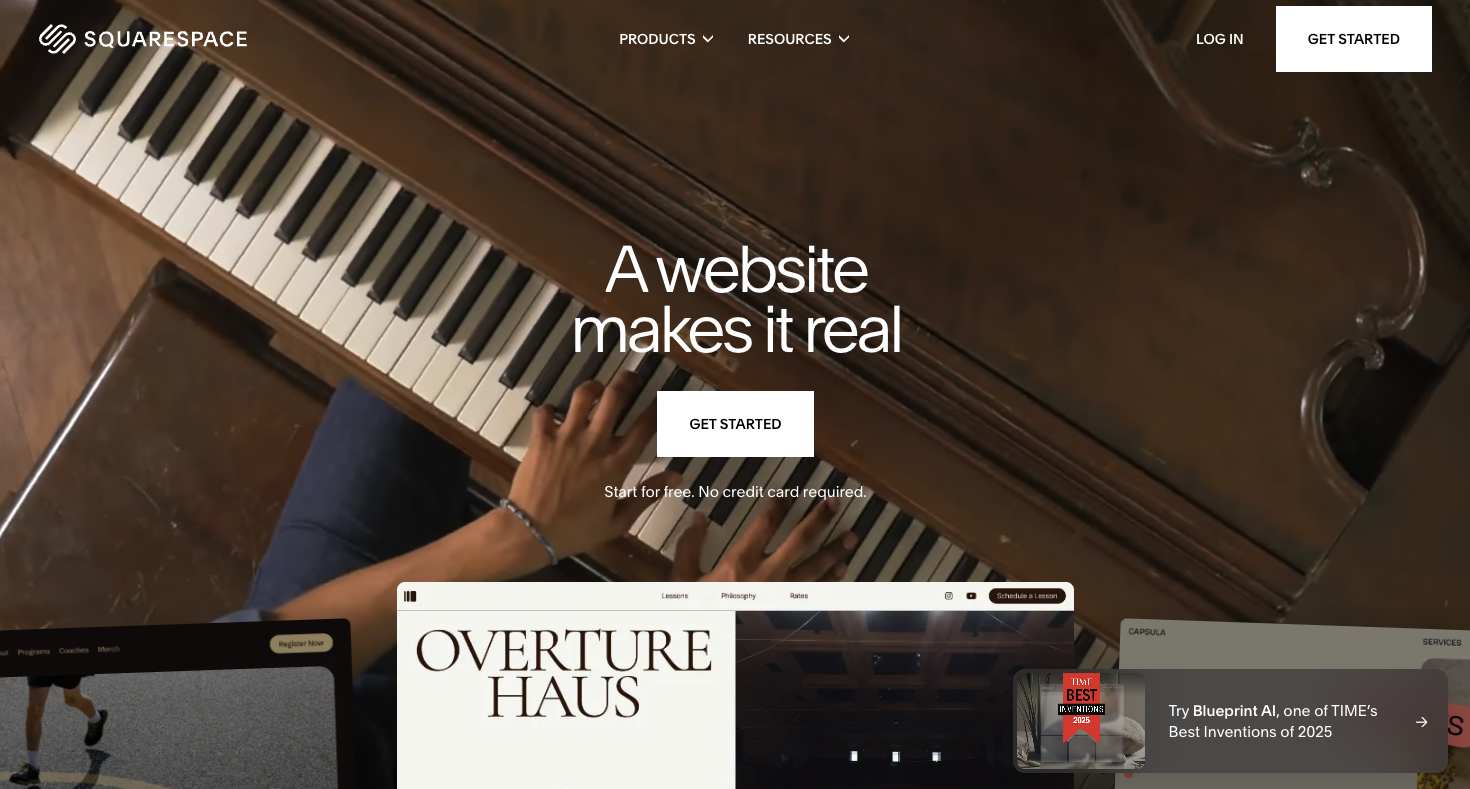
Templates are designed for speed not positioning
Templates are built for accessibility. They’re meant to help someone get online quickly with minimal decision-making. That’s not inherently bad—but it comes with trade-offs that premium brands can’t afford.
Templates prioritize:
Generalized layouts that work “well enough” for many industries
Predefined spacing, typography, and section order
Familiar visual patterns that feel safe but predictable
What they don’t prioritize is differentiation. When high-ticket clients land on a templated site, they often can’t articulate what feels off—but they feel it. The experience feels familiar, interchangeable, and ultimately forgettable.
A custom Squarespace site is designed around your brand’s specific rhythm, not a generic one.
Custom Squarespace design starts with narrative
Premium brands don’t sell services. They sell perspective, trust, and outcomes. That requires narrative structure, not modular convenience.
With a custom Squarespace site, the layout is built from the story outward. The flow is intentional. The hierarchy reflects importance, not default settings. Each page is designed to guide the visitor through a sequence of understanding.
This means:
The homepage functions as a brand introduction, not a content dump
Service pages feel like experiences, not lists
Case studies are structured as stories, not galleries
Calls to action appear when trust has been earned, not forced
Templates can’t do this well because they aren’t built to think. They’re built to repeat.
Why templates undermine premium perception
Premium perception is fragile. It’s built on subtle cues: spacing, pacing, proportion, and restraint. Templates often collapse these cues into something overly efficient.
Even well-designed templates tend to:
Compress too much content into limited sections
Rely on predictable scroll patterns
Overuse visual symmetry where asymmetry would add interest
Flatten brand voice into generic layouts
A custom Squarespace site allows intentional imbalance, breathing room, and editorial pacing. These are the elements that communicate confidence without explanation.
High-end brands don’t look like they’re trying to impress. They look like they don’t need to.
Visual hierarchy is where custom wins
Hierarchy is one of the most overlooked aspects of conversion. Not every element deserves equal attention, yet templates often treat them that way.
Custom Squarespace sites establish hierarchy through:
Controlled spacing rather than stacked sections
Typographic scale that reflects importance
Visual breaks that create chapters, not blocks
Strategic use of white space to slow the experience
This hierarchy guides premium clients effortlessly. They don’t have to search for meaning—it’s revealed to them in the right order.
Templates rarely allow this level of nuance without heavy compromise.
Custom layouts attract better clients
One of the most immediate differences between templates and a custom Squarespace site is the quality of inquiries.
Templates tend to attract:
Price-sensitive leads
Clients comparing options rather than seeking alignment
Visitors looking for speed and convenience
Custom sites tend to attract:
Clients who value taste and intention
Buyers comfortable with premium pricing
Prospects who already trust your expertise
This isn’t accidental. Custom design acts as a filter. It quietly signals who the site is for—and who it isn’t.
Case example: From template to authority
A strategy consultant came with a polished but templated Squarespace site. The content was strong, but the experience felt compressed and generic. The redesign focused entirely on creating a custom Squarespace site structured around authority.
The changes included:
Rebuilding the homepage around a single, confident narrative arc
Introducing editorial spacing and typography
Redesigning service pages to emphasize outcomes over deliverables
Curating social proof into the flow rather than isolating it
The result was fewer inquiries—but significantly better ones. Discovery calls shifted from explanation to alignment. Pricing resistance disappeared. The site began doing the qualifying before the conversation.
Templates limit brand evolution
Brands evolve. Templates don’t.
As your business grows, your messaging becomes more refined. Your offers become more specific. Your positioning sharpens. Templates, however, remain static in their logic.
Over time, this creates friction:
New services feel forced into old layouts
Messaging becomes dense because space is limited
Pages expand vertically instead of becoming clearer
The site feels heavier instead of more confident
A custom Squarespace site is designed with evolution in mind. It can expand or contract gracefully, without losing coherence.
Custom Squarespace sites support editorial design
Editorial design is one of the strongest signals of premium positioning. It borrows principles from magazines, publishing, and luxury print—industries where pacing and restraint matter deeply.
Custom Squarespace sites can incorporate:
Asymmetrical layouts that feel curated
Large margins and intentional negative space
Text-image relationships that feel authored, not automated
Section breaks that feel like chapters, not dividers
Templates rarely support editorial sensibility without feeling hacked or constrained.
The role of custom design in trust building
Trust is not built through features alone. It’s built through consistency, clarity, and tone.
A custom Squarespace site ensures:
Visual language matches verbal language
Tone feels intentional across every page
Design supports credibility rather than distracting from it
The experience feels calm, not rushed
Premium clients are assessing risk. A composed, confident site reduces perceived risk without saying a word.
Templates optimize for convenience not confidence
Convenience is attractive to beginners. Confidence is attractive to buyers.
Templates are optimized for:
Ease of setup
Familiarity
Broad appeal
Custom Squarespace sites are optimized for:
Perception
Differentiation
Long-term positioning
At a certain level, convenience stops being impressive. What matters is coherence.
Custom Squarespace design as a strategic investment
A custom Squarespace site is not a design upgrade. It’s a business decision.
It supports:
Higher pricing without friction
Stronger first impressions
Shorter sales cycles
Better client alignment
Most importantly, it ensures your digital presence matches the level you operate at offline.
Why premium brands outgrow templates
There is a natural lifecycle to templates. They’re useful early on, when speed matters more than nuance. But premium brands eventually outgrow them—not because they look bad, but because they no longer fit.
You’ve likely outgrown templates if:
Your work is bespoke but your site feels standardized
Your pricing has increased but your site feels safe
Your expertise is deep but your message feels surface-level
At that stage, a custom Squarespace site isn’t indulgent. It’s necessary.
Custom Squarespace sites communicate restraint
One of the defining traits of premium brands is restraint. They don’t over-explain. They don’t overcrowd. They don’t chase attention.
Custom design allows restraint because:
Space can be used deliberately
Content can be edited rather than accumulated
Visual hierarchy can replace excessive copy
Confidence replaces persuasion
Templates often encourage more content because they lack structure. Custom design encourages less, but better.
Conclusion
A custom Squarespace site outperforms templates because it’s built around intention, not convenience. It aligns design with narrative, structure with strategy, and aesthetics with authority.
For premium brands, the website is not a checklist item. It’s a positioning tool. Templates may get you online, but they rarely get you remembered. A custom Squarespace site creates clarity, filters the right clients, and supports high-ticket growth without shouting for attention.
When your brand is ready to be experienced, not explained, templates stop being sufficient. That’s where custom design begins to do the real work.
Flexible custom packages.
Three tiers scoped for where you are and where you're going. Not sure which fits? Book a call — we'll go over your project together and make sure you land on the right one.
Launch build
Look credible, fast.
$2,500starting from
A focused, conversion-aware website that gives you confidence sharing your link anywhere.
- Up to 4 structured pages
- 1 focused revision round
- Fully mobile-optimised
- SEO foundations included
- Launch-ready in 3 weeks
- 30 days email support
Best for businesses launching or replacing an outdated site.
Start your projectAuthority build — Most popular
Elevate your brand.
$4,000starting from
A refined, strategically designed website that positions your business as established and credible.
- Everything in Launch, plus:
- Up to 7 pages
- Custom styling & layouts
- 2 revision rounds
- Blog integration
- 5-week build timeline
- Training walkthrough
Best for growing businesses that want their site to reflect their expertise.
Start your projectScale build
No limits. Full depth.
$8,000starting from
A fully bespoke build with advanced functionality, custom code, and no artificial constraints.
- Everything in Authority, plus:
- Unlimited pages
- Unlimited custom code
- Unlimited revisions
- Plugin costs covered
- Priority support
- Complete SEO setup included
Best for established businesses investing in a long-term digital foundation.
Start your project
Mikkel Calmann
I’m Mikkel Calmann, a certified Squarespace designer and Circle Member. We’ve worked with businesses of all sizes, crafting strategic websites that look great and perform even better. If you’d like to discuss a project, feel free to email us at mikkel@typza.com or reach out to us here. You can also book a free 15-minute consultation here.